
To tack on a wing foil, carve upwind with speed, fly the wing high above your head so it floats with no pull, release your back hand and swap hands as the nose passes through the wind, then grab the new back handle and sheet in gently once the wing has dropped back into riding position.
The tack is the transition that keeps the ground you fought upwind for. It is also the one that humbles riders who can already jibe, because you cross the eye of the wind with no power in the wing to hold you up. This guide breaks the turn into steps, shows where the wing belongs at every stage, and covers the stalls that end most attempts. Once the tack and jibe are both dialled, you’re ready to chain them into a wing foil 360.
What is a tack in wing foiling?
A tack is an upwind turn that takes the nose of your board through the eye of the wind onto the other tack. A jibe turns downwind and keeps power in the wing through most of the arc; a tack does the opposite, which is why it costs you speed and gains you ground.
That trade-off is the whole reason to learn it. Every jibe drifts you downwind, so a session made only of jibes slowly walks you away from your launch.
| Tack | Jibe | |
|---|---|---|
| Direction of turn | Upwind, through the eye of the wind | Downwind, around the back of the wind |
| Wing power through the turn | None. The wing floats neutral overhead | Partial. Power returns early in the arc |
| What it costs you | Speed, and the foil is close to stalling | Ground. You finish further downwind |
| What it gains you | Upwind ground, kept rather than given back | An easier, more forgiving transition |
| Learn it | Second | First |
Wing brand AK is direct about the order in its transitions guide: “The jibe is probably the most important move, as it is easier than the tack.” If your jibe is not consistent yet, start with our wing foil jibe guide and come back to this one.

What are the steps to tack on a wing foil?
A foiling tack is eight steps, and patience with the wing is the one that decides the outcome. You need a comfortable jibe and, for the toeside versions, a stable toeside before this is worth attempting.
- Approach upwind, but not too close. Ride upwind with the wing low and sheeted in, carrying real speed. You cannot use wing power once the turn starts, so momentum is your only fuel.
- Set an offset stance. Slide your rear foot further across the centreline. Tonic Mag calls this a “dynamic offset stance” and says it makes the foil feel more stable and the carve upwind more intuitive.
- Fly the wing up around the edge of its window. Sheet out gently and guide the wing up and forward. Steering it straight up creates downwind pull that stops you carving upwind.
- Wait for the wing to float neutral. Once it hangs overhead with no pressure on your back hand, it is at zenith and you are free to move.
- Release the back hand and carve. Let go of the rear handle, turn your head upwind, flex your knees and ankles and commit to the turn. Keep enough weight on the front foot that the nose stays down.
- Swap hands as you pass head to wind. The wing feels light at this point. Push the handle across your face to the new side, then release your old front hand.
- Know whether your version needs a foot swap. Tonic Mag’s carving toe to heel and heel to toe tacks change stance without a step mid-carve. Where you do step, it is a two-step action: front foot back, then back foot forward, landing near where the old front foot was.
- Power on last, not first. Reach for the new back handle without looking back, keep carving, and only sheet in once the wing has dropped into normal riding position. AK places the foot change here rather than earlier: “Once your wing is powered up, your front foot steps to the back, and your back foot steps to the front.”
World champion Paula Novotna adds one detail for the exit in her Sailing World tack breakdown: the board wants to rise as you complete the turn, so shift weight onto your front foot immediately afterwards. If you are short of speed on the exit, a light pumping motion keeps you going.
Where should the wing be during the tack?
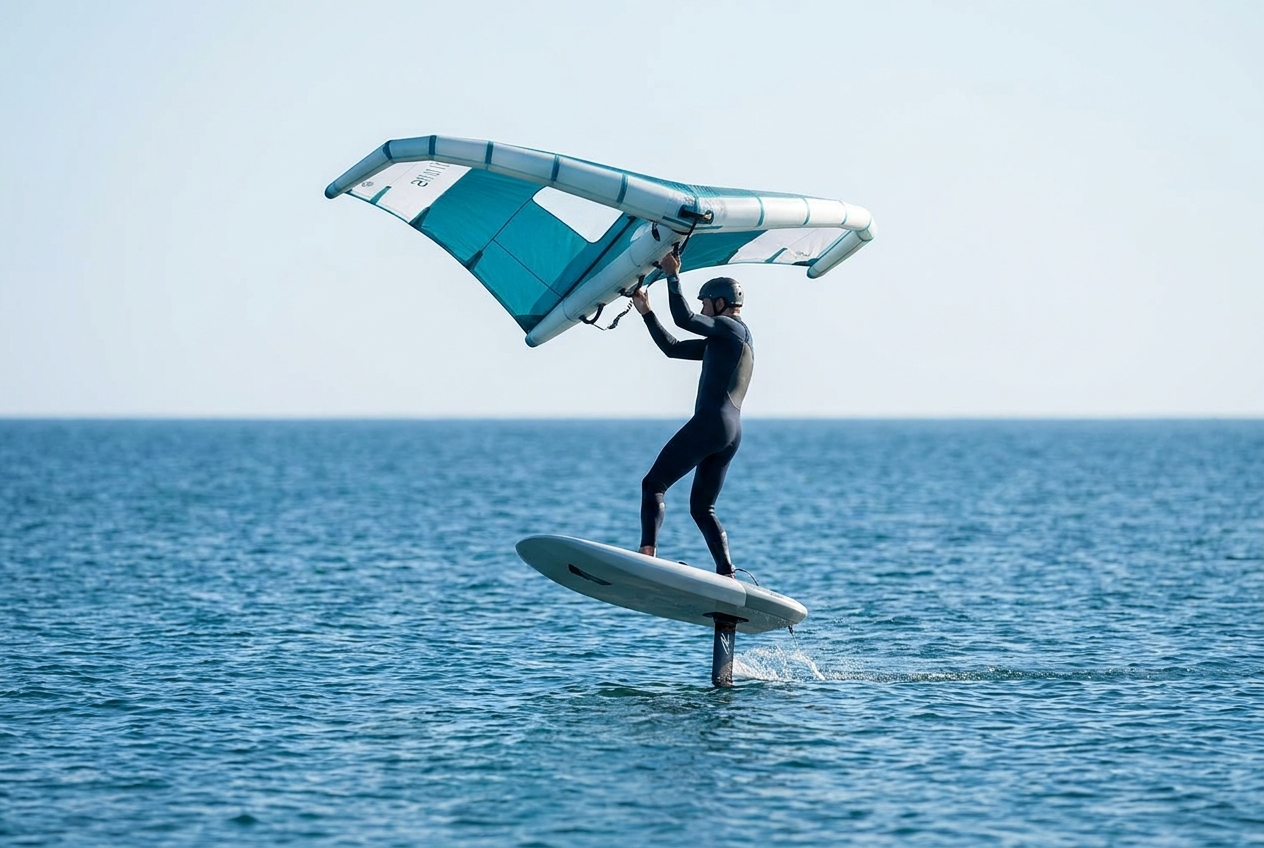
High and neutral, directly above you, before anything else moves. Riders coming from kiting will know this as the zenith: the wing hangs in the air with no pull, which is what buys you the free hands and free feet to swap sides.
- Route it around the side of the window, not straight up. Tonic Mag’s heel to toe tack guide is explicit: “lifting the wing around the side of its window, rather than steering it straight up.” Straight up drags you downwind exactly when you want to go up.
- Give it time to get there. The longer route takes longer to fly, so start moving the wing as you begin turning upwind, not once you are already there.
- Never use the wing as a crutch. If you are hanging off it for balance on the approach, you have nothing to release when the carve starts.
- Keep it high and forward through the hand swap. A wing that drops behind you pulls your weight back, and back weight is what stalls the foil.
AK offers a useful mental image for the whole turn: “Imagine that your body is an extension of your mast, where your board must always maintain a 90-degree angle to your body.” Stay stacked over the foil and the board keeps flying.
Should you learn to tack off the foil first?
Yes, and it is the fastest way in. Tonic Mag recommends starting your tacking journey off the foil in light wind, because the hand and wing movements are the same ones you will need at speed.
Two conditions make or break the drill. Hardly any wind makes it harder rather than easier, since you cannot turn the board far enough into the wind, and a big board is far more forgiving while you are stomping around the deck. If you are not sure yours has the volume for that, our wing foil gear calculator will size it against your weight. Flat, shallow water helps as much as the board does, which is why a lagoon spot like Lo Stagnone in Sicily is where a lot of riders get their first tacks down.
- Turn upwind until the board stops. Move the wing slightly back, twist your shoulders to look upwind and push across the board with your back foot. Do not over-sheet, or the wing pushes the board back downwind.
- Fly the wing high and let it support itself. Lift your front arm, push gently down with your rear hand, then sheet out so the wing floats neutral and points into the wind.
- Release, step and swap. Let go of the back hand, step your front foot back, turn your hips, then bring the rear foot forward and take the front handle with an overhand grip.
- Sheet in and push the nose through. Grab the new back handle, sheet in until you feel the pull, then stiffen through your front leg to steer the nose away from the wind and get moving again.
Rehearse the hand and foot movements on land before you get wet. The common land-drill error is stepping too far forward, which makes bearing away difficult and can sink the nose.
Which version of the tack should you learn?
Start with the off-foil tack, then pick the foiling version that matches the toeside you already have. There are four in common use and they differ mainly in which stance you enter and exit on.
| Version | How it works | Best for |
|---|---|---|
| Off-foil tack | Board stops head to wind, you dance the wing and feet around, then bear away and go | Everyone, first. Light wind and a big board |
| Heel to toe | Carve upwind on your heels, exit riding toeside on the new side | Riders with a solid toeside. Needs “one good toe side” to exit cleanly |
| Toe to heel | Enter toeside, carve up, exit in your normal heelside stance | Riders who can already gybe and hold a balanced toeside |
| Heel to heel | The complete tack. Feet out of the back strap and toward the middle of the board, full stance switch mid-turn | Advanced riders. Novotna calls it great for upwind progress |
None of these is a shortcut past the others. The wing, hand and upper body movements carry across, which is why the off-foil version transfers so well. The feet do not: Tonic Mag notes they will not necessarily be doing the same thing off the foil as on it.
Why does my foil stall in the middle of the tack?
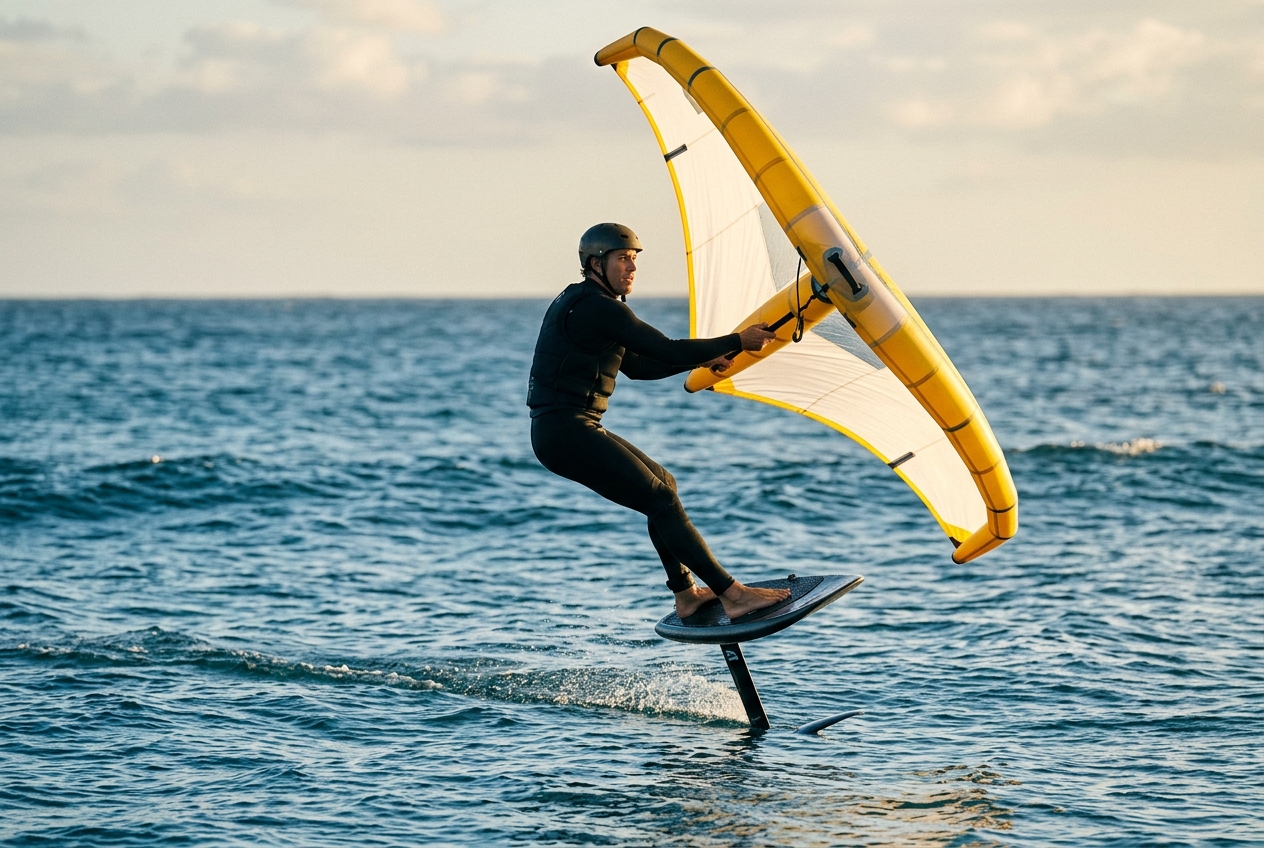
Almost always because your weight moved back, or because you tried to get power on too early. Tonic Mag’s toe to heel tack guide puts it plainly: sheet in before you are ready and “you’ll stall your wing, stall your foil, and, at best, pivot around your mast and touch down.”
| Mistake | What happens | Fix |
|---|---|---|
| Powering up too early | Wing and foil both stall, you pivot around the mast | Keep carving. Sheet in only once the wing has dropped into riding position |
| Looking back for the rear handle | Weight shifts onto your rear foot and the foil stalls | Keep looking forward and reach for the handle as you turn onto it |
| Steering the wing straight up | Downwind pull stops the board carving upwind | Fly it up around the side of the window |
| Rushing the wing across you | You start swapping before the wing is neutral, so it yanks you off balance | Get the wing high first, every time |
| Entering too slow | Nothing carries you through the powerless zone head to wind | Build speed upwind with the wing low and sheeted in |
| Leaning on the wing for balance | Releasing the back hand collapses your stance | Stand on your own feet, body stacked over the foil mast |
| Nose rising on the exit | The board pitches up and breaches as the turn completes | Shift weight onto the front foot straight after the tack |
| Overpowered wing | Nothing floats neutral and every phase happens too fast | Pick appropriate conditions and size down |
The pattern behind most of these is impatience. Everything in a tack happens more slowly than it feels, and the riders who land them are the ones willing to keep carving with no power for another second.
Conditions matter too. Our wing foil wind range guide covers how to judge a session, and if you are still building the flight time this move needs, start with how long wing foiling takes to learn.
Wing foil tack FAQ
Is the tack harder than the jibe on a wing foil?
Yes, for nearly everyone. A tack crosses the eye of the wind, so the wing gives you no power and no support through the turn, and the foil is close to stalling the whole way. Wing brand AK puts the jibe first for exactly this reason: it is the easier move and the one that unlocks continuous sessions.
Why do I keep touching down halfway through a tack?
You are most likely sheeting in before the wing has come back down into riding position, which stalls both the wing and the foil and pivots you around the mast. The other usual culprit is turning your head back to find the rear handle, which loads your back foot. Keep carving, keep looking forward.
Do I need a good toeside before I can tack?
For the versions that exit toeside, yes. The heel to toe tack exits toeside, and Tonic Mag is clear that you need one solid toeside to get the power back on and stay up on the foil. The off-foil tack has no such requirement, which is another reason to start there.
When do you switch your feet in a wing foil tack?
In the off-foil tack, after the wing is floating neutral overhead and you have released your back hand. It is a two-step action: front foot back first, then rear foot forward to land near where the old front foot was, and stepping too far forward makes bearing away difficult. On the foil it comes later. AK has the feet move once the wing is powered up again, and the carving toe to heel and heel to toe tacks change stance without a step mid-carve.
What wind is best for learning to tack?
For the off-foil version, light wind on a big board, though not so light that you cannot turn the nose far enough into the wind. For foiling tacks, avoid being overpowered: an overpowered wing will not float neutral overhead, and every phase of the turn arrives faster than you can react to it.
Why bother learning the tack at all?
Because it keeps the upwind ground you worked for. Every jibe gives some of it back, so a session built only on jibes gradually walks you downwind of your launch. Tacking lets you turn without losing position, which matters most in a cross-shore spot with a short usable stretch of water.
