
To wing foil upwind, tilt the board onto its heel edge (counter-heeling) so the foil angles into the wind, hold the wing low and slightly forward with steady sheet tension, and keep your hips and shoulders stacked upright instead of bending at the waist. Progress comes in a zigzag of close-hauled tacks, not a straight line.
Upwind is the skill that makes you self-sufficient on the water. Without it, every session drifts one way and every return trip is a slog. It also gets harder the lighter the wind gets, so it is worth drilling in a light-wind session as much as a strong one. This guide covers the board and foil angle, where the wing belongs, body position, and the specific mistakes that turn upwind effort into downwind drift.
How do you ride upwind on a wing foil?
You ride upwind by angling the board and foil into the wind while the wing pulls you forward, in a series of diagonal legs rather than a straight line. No wing, sail or kite can point directly into the wind, so upwind progress always happens at an angle.
Sailors call that angle close-hauled. As French wing brand Sroka Company puts it in their upwind guide, close-hauled “is the point of sail that will allow us to ride upwind; it is located between a beam reach and directly into the wind.” You hold that angle, ride it out, then tack onto the opposite angle and zigzag your way back to your launch spot.
Everything below breaks into two phases: pointing upwind before you’re on the foil, and holding an upwind line once you’re flying.
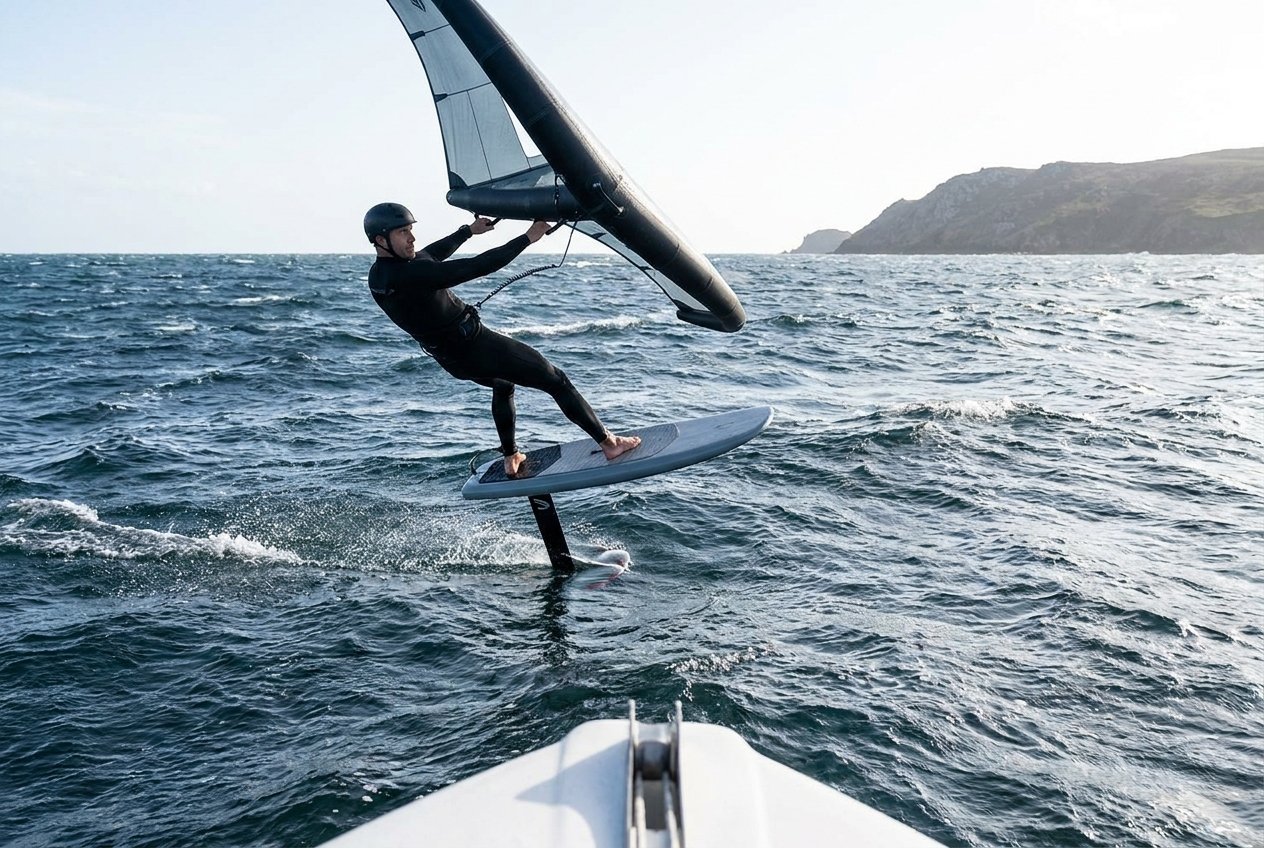
How do you point upwind before you’re up on the foil?
Before you’re flying, your body weight on the board does the steering, and getting the balance wrong turns the board downwind instead of up. MACkite Boardsports lays out the two jobs in their upwind techniques guide: stance and wing control.
- Weight your back foot. To stop the board turning downwind, “focus on pushing your heel or back foot while keeping your front foot slightly lighter.”
- Hold the wing higher, not lower. A higher wing position “provides lift and helps propel you forward and upward,” which is the opposite of the low, flat wing that works once you’re foiling.
- Relax your arms between pulls. Depower the wing between drive phases and keep it angled into the wind rather than hauling on it constantly, which “may result in losing control and going downwind.”
- Keep pushing forward. Weight slightly forward on the board, with continuous pressure, keeps you tracking up and into the wind rather than stalling out.
- Lean from the hips, not the waist. Tonic Mag warns that bending at the waist to lean upwind “has the opposite effect to the intended one,” dumping weight onto your heels and killing balance and power.
- Keep your feet still. “To add ballast and cant the board and foil over it’s all in the hips. Your feet stay put, and your head and shoulders stay up.”
- Bend the back knee and core away from the wing. Tonic Mag calls the resulting shape “banana-ing out,” and pairs it with a touch more wing power to lean into.
- Hauling on the wing. Excessive pulling “may result in losing control and going downwind” rather than adding drive.
- Bending at the waist. Named by both MACkite and Tonic Mag as the single most common posture fault, and the one that shifts weight the wrong way.
- Letting the wing flag out. Without tension, angling the wing into the wind stops working and it “acts as a flag,” which drifts you downwind instead of holding your line.
- Coming off the foil repeatedly. Every touchdown costs momentum, and momentum is what “allows you to glide through lulls and puffs” without losing ground.
- Letting your shoulders creep forward. Jules Bustin’s read on the most common fault, above: straighten up, shoulders back, chest out.
How do you angle the board and foil once you’re flying?
Once you’re up, the board and foil do the angling instead of your paddling weight. Sroka Company’s guide describes it as counter-heeling: “you will need to put the foil in a particular position (counter-heeling, meaning the board must be tilted towards the wind by mainly pressing on your heels),” which points the nose of the board slightly into the wind.
MACkite frames the same edge from the foil’s side: “maintaining a stable foil angle is crucial for directional control,” and tilting the board or foil “just a little” creates “pressure against the mast, ensuring a direct and predictable response.” Too little edge and you slide off the wind; too much and the foil tips can ventilate.
The wing sits differently here too. Sroka’s guide places it lower once you’re foiling, “almost in front of you,” because that “allows for a stronger horizontal force” pulling you upwind rather than lifting you off the water, and warns not to dip the wingtip in the process. From there you sheet in gradually with the back hand until you find the point where the wing develops the most power, which varies by wing and profile.
| Before you’re foiling | Once you’re flying | |
|---|---|---|
| Weight | Back foot, front foot light | Buttocks back, pressing on your heels |
| Wing height | Held higher, for lift | Lower, almost in front of you, for horizontal force |
| Board/foil angle | Board flat, weight forward | Slight heel-side edge (counter-heeling) |
| Main failure mode | Board turns downwind | Too much edge, foil ventilates |
How should your body be positioned riding upwind?
Stay tall and stack your hips and shoulders over the board rather than folding at the waist. MACkite is direct about the failure mode: bending over “shifts your weight onto your toes and makes the board unstable,” and the fix is to “lean into the wind, maintaining an edge on the board for added stability.”
Sroka Company’s guide backs this with a named instructor’s read on the most common fault. In a testimonial included in their piece, sailing instructor Jules Bustin says: “The most common mistake I observe is body position. Riders let their shoulders go forward with the wing. You need to straighten up, your shoulders should almost go slightly back to contain the pull of the wing. So straighten up and be proud.”
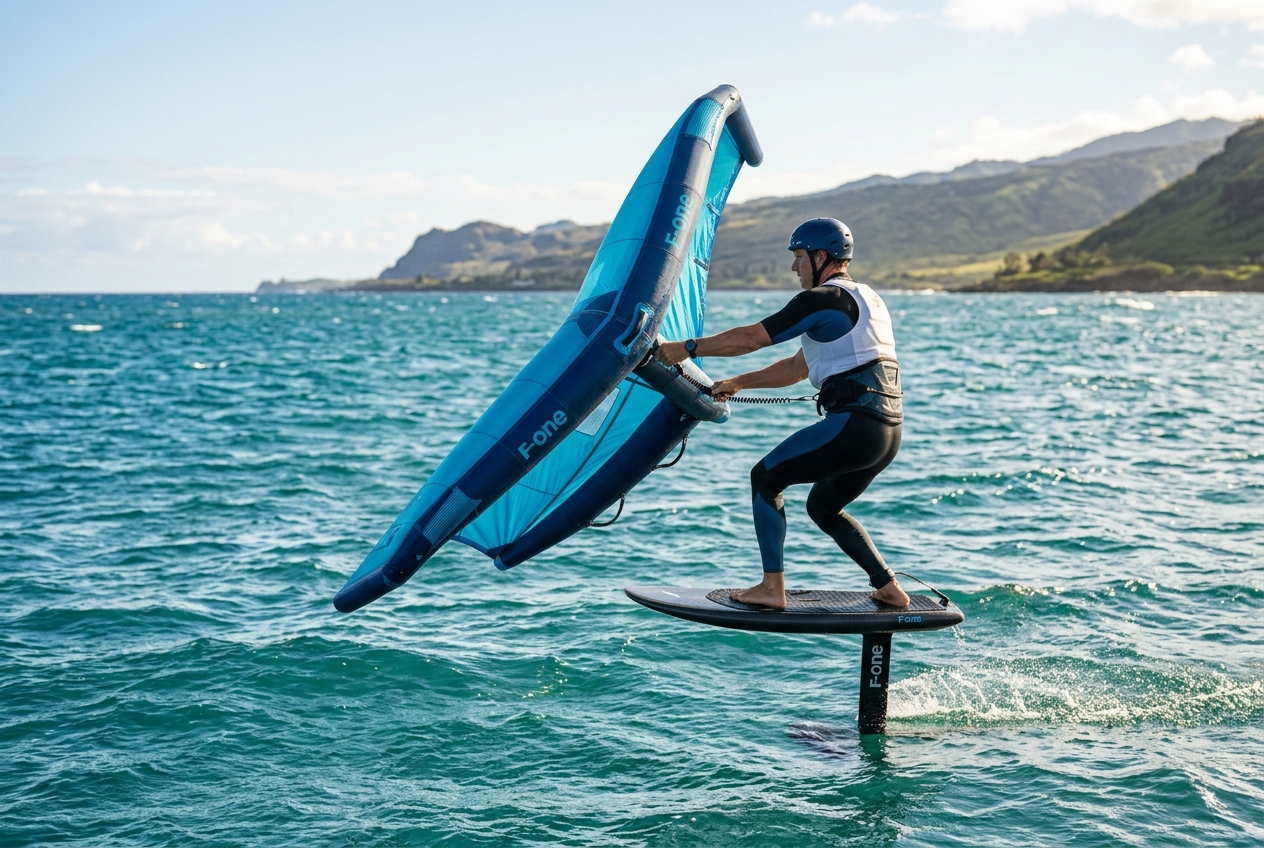
Toe side upwind adds a wrinkle. Tonic Mag’s riding toe side guide notes that “many riders find that they need a little bit more oomph from the wing to ride upwind toe side,” because that power “gives you something to resist, and therefore to push against, which makes forcing the board upwind a little easier.”
What mistakes send you downwind instead of upwind?
Most upwind failures trace back to one of five habits, all documented in MACkite’s and Sroka’s guides above.
Can tacking, pumping or wing position gain you more upwind ground?
Yes, three separate tools help beyond the base position: your tacking angle, pumping, and how far forward you carry the wing.
Sailors and Sroka’s guide both use VMG, velocity made good, to describe the trade-off: point too close to the wind and your speed drops even though the angle looks better; sail too wide and your speed is high but the distance to cover grows. The best tacking angle sits between those extremes, and it shifts with gusts and lulls: “a lift is when the wind shifts in your favor, allowing you to gain even more ground. A header is the opposite.”
Pumping adds a few degrees on top of that, and Sroka’s guide splits it into two techniques: “wing pumping should be done with both arms simultaneously,” using shoulder elasticity for power, while foil pumping means “alternately press[ing] on your front and back leg to make the foil oscillate and accelerate the board.” Both are more common in competition than casual sessions.
Wing position is the third lever. In a first-hand account on the Progression Sports blog, the writer describes pushing the wing forward toward the nose of the board: “suddenly the wing gets even lighter but you also can point an extra 5, 10, 15 degrees higher upwind.” They compare it to raking a windsurf mast track forward, an old trick for the same effect.
Frequently asked questions
Why do I keep drifting downwind on a wing foil?
Usually one of five habits: hauling on the wing, bending at the waist, letting the wing flag out without tension, coming off the foil repeatedly, or letting your shoulders creep forward with the wing. Each one either kills drive or shifts your weight the wrong way, so the board slides off the wind instead of holding an upwind line.
Do you need a harness to ride upwind on a wing foil?
No, but it changes your stance. Sroka Company's guide notes that with a harness you can "bend your legs a bit more to press as hard as possible on the foil," while without one the wing's pull tires your arms, so riders straighten up and ride with more finesse, aligning feet, pelvis and shoulders.
Why do I keep sliding downwind on my toe side?
You likely need a little more wing power to push against, plus a hip-driven lean rather than a waist bend. Tonic Mag's toe side guide says extra power "gives you something to resist," and that the lean should come from bending the back knee and core away from the wing, with your feet staying put.
Does pumping help you gain ground upwind?
Yes, in small amounts. Sroka Company's guide describes two versions: wing pumping with both arms together, and foil pumping by alternating pressure on your front and back leg. Both help you gain a few degrees and hold your speed, and both are more common in competition than in casual sessions.
How do you point higher upwind on a wing foil?
Once you have a stable upwind line, try pushing the wing forward toward the nose of the board. One rider's account on the Progression Sports blog describes the wing getting lighter while pointing "an extra 5, 10, 15 degrees higher upwind," the same principle as raking a windsurf mast track forward.
