
Most people can learn to wing foil in 10 to 20 hours of water time. With professional lessons and a board-sports background, expect your first sustained flights within 6 to 10 hours. Complete beginners without prior experience typically need 15 to 20 hours to foil consistently. The single biggest factor is whether you take lessons or go it alone.
How Many Hours Does It Actually Take to Get Up on Foil?
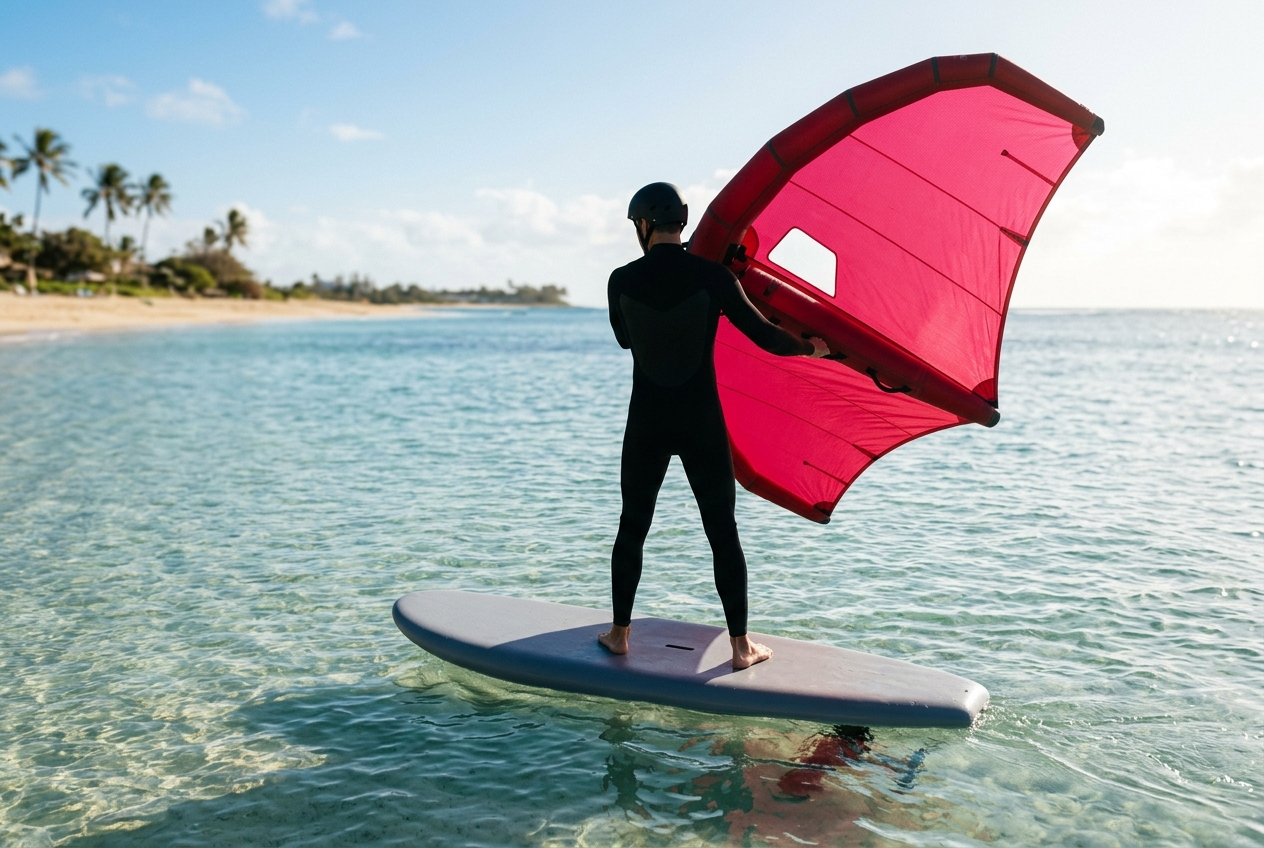
The honest answer is somewhere between 5 and 30 hours, and where you land in that range depends almost entirely on your starting point and how you learn. Riders with experience in kitesurfing, windsurfing or wakeboarding tend to reach consistent foiling in 8 to 12 hours on the water (windsurfers can see exactly how their skills transfer in our wing foil vs windsurfing guide). Complete beginners with no board-sports background are looking at 15 to 20 hours to hit the same milestone.
Those numbers assume you are getting regular sessions in reasonable wind (15 to 25 knots on a properly sized wing). Sporadic once-a-month sessions will stretch the timeline considerably, because muscle memory fades between long gaps. Riders who can string together three or more sessions in a week tend to progress noticeably faster than those spacing sessions weeks apart.
A Typical Session-by-Session Breakdown
Here is a rough breakdown based on structured coaching at schools like SF Wingfoil Academy:
| Session | Time | Focus |
|---|---|---|
| Session 1 | 2 to 3 hours | Wing handling on land, board balance and basic steering |
| Sessions 2 to 3 | 2 to 3 hours each | Water starts, controlled wing power and short rides |
| Sessions 3 to 5 | 2 to 3 hours each | Consistent rides, smooth tacks and first foil flights |
Does Prior Experience Speed Things Up?
Yes, significantly. Your athletic background is probably the single biggest predictor of how fast you will progress, after quality of instruction.
| Background | Sessions to confident foiling | What transfers |
|---|---|---|
| Kitesurfers and windsurfers | 3 to 5 | Wind angles, board trim and harness use. The main new skill is the handheld wing, which most wind-sport riders pick up within a session or two |
| Surfers, wakeboarders and skateboarders | 5 to 8 | Balance and board feel transfer well; wind power is learned from scratch |
| General athletes (gym regulars, swimmers, cyclists) | 6 to 10 | Core strength and coordination help with endurance and recovery between falls |
| True beginners | 10 to 15 | No head start, but patience and consistent practice get you there |
Wing foiling rewards finesse and technique over raw strength, so being a gym-goer is less important than being willing to practise consistently. Endurance still buys you more attempts per session, though, which is what our off-water training plan for wing foilers is built around. If you already kitesurf and are weighing up which sport deserves your time, our wing foil vs kitesurfing comparison breaks down the learning curves side by side.
Should You Take Lessons or Teach Yourself?
Take lessons. At least a few. This is the single most impactful decision you will make for your learning speed, and our lessons vs self-teaching breakdown walks through the real trade-offs.
According to Hydrofoiling.org, even one or two professional lessons can slash your learning curve by up to 80%. The physics of foiling are unforgiving enough that a single hour of expert guidance teaches more than a month of solo attempts. One documented case: a former windsurfer spent three years self-teaching before a single 90-minute lesson unlocked the sustained flight he had been chasing.
Why Lessons Beat Self-Teaching
Instructors correct the micro-errors you cannot see yourself: foot position on the board, wing angle relative to wind, weight distribution at takeoff. Self-taught riders commonly develop habits like death-gripping the wing, standing too far forward, or pumping inefficiently. These feel like they work until you hit a plateau, and unlearning them costs more time than the original lessons would have.
What Lessons Cost
| Lesson format | Typical price |
|---|---|
| Private lesson (gear included) | USD 100 to 200 per hour |
| Semi-private (two students) | USD 120 to 150 per person per hour |
Most instructors recommend starting with 3 to 5 structured lessons, which is enough to establish safe habits and get you through the critical first-flight stage. Multi-session packages offer better value than single lessons. If you are choosing where to book, our guide to the world’s best spots to learn wing foiling covers beginner-friendly locations with quality schools. For the full picture of lessons, gear and hidden extras, see our breakdown of how much wing foiling costs.
What Are the Key Milestones in the Learning Progression?
Wing foiling has a satisfying progression curve where each milestone is clearly distinct. Here is what to expect and roughly when, assuming regular practice with some instruction:
| Hours | Milestone | What to expect |
|---|---|---|
| 1 to 3 | Wing handling and board balance | Beach and shallow water: learning to hold the wing, generate power and steer. On the board, the goal is standing and moving in a controlled direction without the foil lifting |
| 3 to 8 | Water starts and powered riding | Getting up consistently and riding powered across the water with the board flat (not yet foiling). Managing gusts, steering upwind and recovering from falls. The most physically tiring phase |
| 8 to 15 | First flights and basic control | The foil starts lifting. Early flights are short, wobbly and punctuated by frequent crashes. The key skill is subtle ankle pressure to regulate foil height, not big body movements |
| 15 to 25 | Sustained foiling and turns | Longer, smoother flights. Linking runs, attempting tacks and riding a wider range of conditions. Most riders can now enjoy an uninterrupted session in moderate wind |
| 25+ | Refining and advancing | Jibes, riding toeside, handling chop, stronger wind and first downwind runs. This is where “learning” becomes “riding” |
What Gear Helps Beginners Learn Faster?
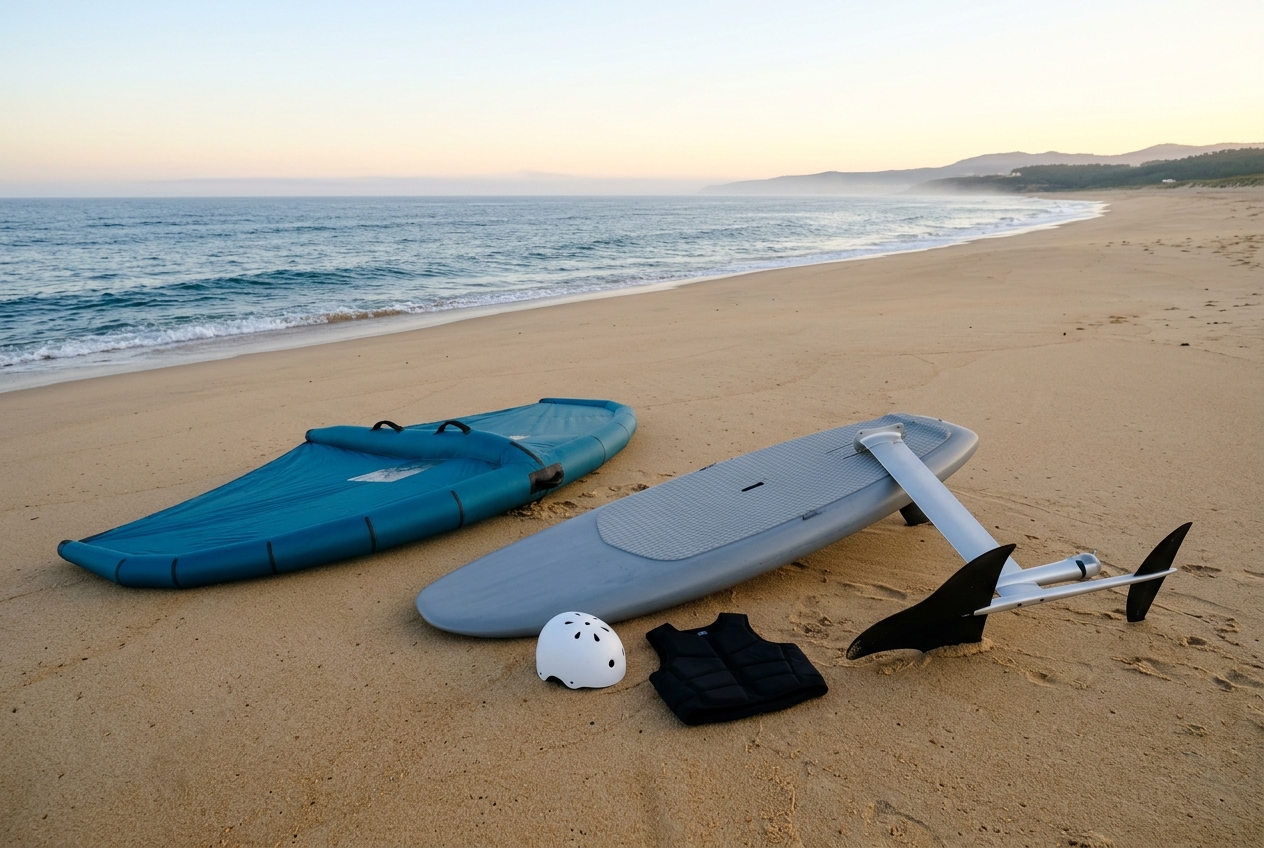
The right gear makes a measurable difference to learning speed. The wrong gear can add months of frustration. Here are the key choices that affect your progression:
| Gear choice | Beginner spec | Why it matters |
|---|---|---|
| Board volume | Your body weight in kg + 30 to 40 litres (110 to 140 L for most adults) | A stable platform to practise wing handling before adding the complexity of foiling. Starting too small just means more swimming |
| Foil front wing | Large, low-aspect, 1400 to 1800 cm² | Lifts earlier, flies slower and forgives technique errors. High-aspect race wings are faster but dramatically harder to learn on |
| Wing size | 5 to 6 m² for a 75 to 85 kg rider in moderate wind | The best balance of power and control. Too small and you cannot generate enough lift; too large and you will be overpowered and exhausted |
| Mast length | 70 to 80 cm | Shorter masts limit flight height and bounce; longer masts (85 cm+) are better once you have consistent height control |
As one Windsurf Magazine tip puts it: riders on big, low-aspect wings learn to jibe in two sessions, while riders who start on high-aspect race wings can take years to achieve the same thing.
Use our wing foil calculator to match your weight, wind range and skill level to the right wing size. If you would rather buy everything in one go, our guide to beginner wing foil packages covers what a complete starter setup should include.
What Are the Most Common Mistakes That Slow Progression?
A few recurring errors account for most of the wasted time in learning to wing foil. If you are aware of them going in, you can avoid the plateaus that trip up the majority of self-taught riders:
- Starting on gear that is too advanced. Small boards, high-aspect foils and small wings look fast and cool, but they punish beginners relentlessly. Stable, forgiving gear is not a crutch; it is the fastest path to the skills that let you ride more advanced equipment later.
- Skipping the on-land wing handling phase. Twenty minutes on the beach with the wing teaches you power control without the added chaos of water and a board. It feels pointless until you are on the water and the wing does what you expect it to.
- Trying to foil before you can ride the board flat. If you cannot comfortably ride powered on the board without the foil lifting, adding foil flight just adds another variable you are not ready for. Get smooth on the surface first.
- Infrequent sessions. Three sessions in one week beats three sessions spread across three months. Muscle memory and confidence build cumulatively, and long gaps between sessions effectively reset your progress each time.
- Not taking at least a few lessons. This one cannot be overstated. The difference between one lesson and zero lessons is bigger than the difference between five lessons and ten. Even a single session with an instructor gives you a framework that makes every solo session after it more productive.
Frequently Asked Questions
Can you learn to wing foil in one day?
You can learn the basics of wing handling and board balance in a single day, and some riders with strong board-sports backgrounds manage brief foil flights by the end of a full-day lesson. But consistent, controlled foiling takes most people several sessions spread across multiple days. A realistic one-day goal is comfortable powered riding on the board without foiling.
Is wing foiling harder to learn than kitesurfing?
Most instructors consider wing foiling easier to pick up initially. The wing is simpler to handle than a kite (no lines to tangle, no launch sequence), and you can self-rescue by simply dropping the wing and paddling. The hydrofoil adds complexity, but the overall learning curve for basic riding is shorter than kitesurfing, which typically takes 9 to 15 hours of lessons before independent riding.
Do you need to be fit to learn wing foiling?
Moderate fitness helps with endurance, especially in the early sessions when you fall frequently and haul yourself back onto the board. Core strength and upper-body stamina matter more than cardio. That said, wing foiling relies more on technique and balance than brute strength. People of all fitness levels learn successfully; fitter riders simply recover faster between attempts.
How much do wing foil lessons cost?
Private lessons generally cost USD 100 to 200 per hour, with gear included. Semi-private sessions (two students) run USD 120 to 150 per person per hour. Multi-day beginner packages (covering 3 to 5 sessions) typically range from USD 500 to 1,000, offering the best per-hour value and the highest success rate for reaching independent foiling.
What is the minimum wind needed to learn wing foiling?
Most beginners need at least 15 knots of steady wind to generate enough power with a mid-sized wing. Below 12 knots, even a large wing struggles to provide consistent pull for learning. The sweet spot for first-timers is 15 to 20 knots: enough power to practise water starts and early foiling without being overpowered. Gusty or offshore winds make learning significantly harder regardless of speed.
Ready to get started? Our complete beginner’s guide covers everything from first gear purchases to your first session on the water.
Frequently asked questions
Can you learn to wing foil in one day?
You can learn the basics of wing handling and board balance in a single day, and some riders with strong board-sports backgrounds manage brief foil flights by the end of a full-day lesson. But consistent, controlled foiling takes most people several sessions spread across multiple days. A realistic one-day goal is comfortable powered riding on the board without foiling.
Is wing foiling harder to learn than kitesurfing?
Most instructors consider wing foiling easier to pick up initially. The wing is simpler to handle than a kite (no lines to tangle, no launch sequence), and you can self-rescue by simply dropping the wing and paddling. The hydrofoil adds complexity, but the overall learning curve for basic riding is shorter than kitesurfing, which typically takes 9 to 15 hours of lessons.
Do you need to be fit to learn wing foiling?
Moderate fitness helps with endurance, especially in early sessions when you fall frequently. Core strength and upper-body stamina matter more than cardio. Wing foiling relies more on technique and balance than brute strength. People of all fitness levels learn successfully; fitter riders simply recover faster between attempts.
How much do wing foil lessons cost?
Private lessons generally cost USD 100 to 200 per hour, with gear included. Semi-private sessions run USD 120 to 150 per person per hour. Multi-day beginner packages (3 to 5 sessions) typically range from USD 500 to 1,000, offering the best per-hour value and the highest success rate for reaching independent foiling.
What is the minimum wind needed to learn wing foiling?
Most beginners need at least 15 knots of steady wind to generate enough power with a mid-sized wing. Below 12 knots, even a large wing struggles to provide consistent pull for learning. The sweet spot for first-timers is 15 to 20 knots: enough power to practise water starts and early foiling without being overpowered.
