
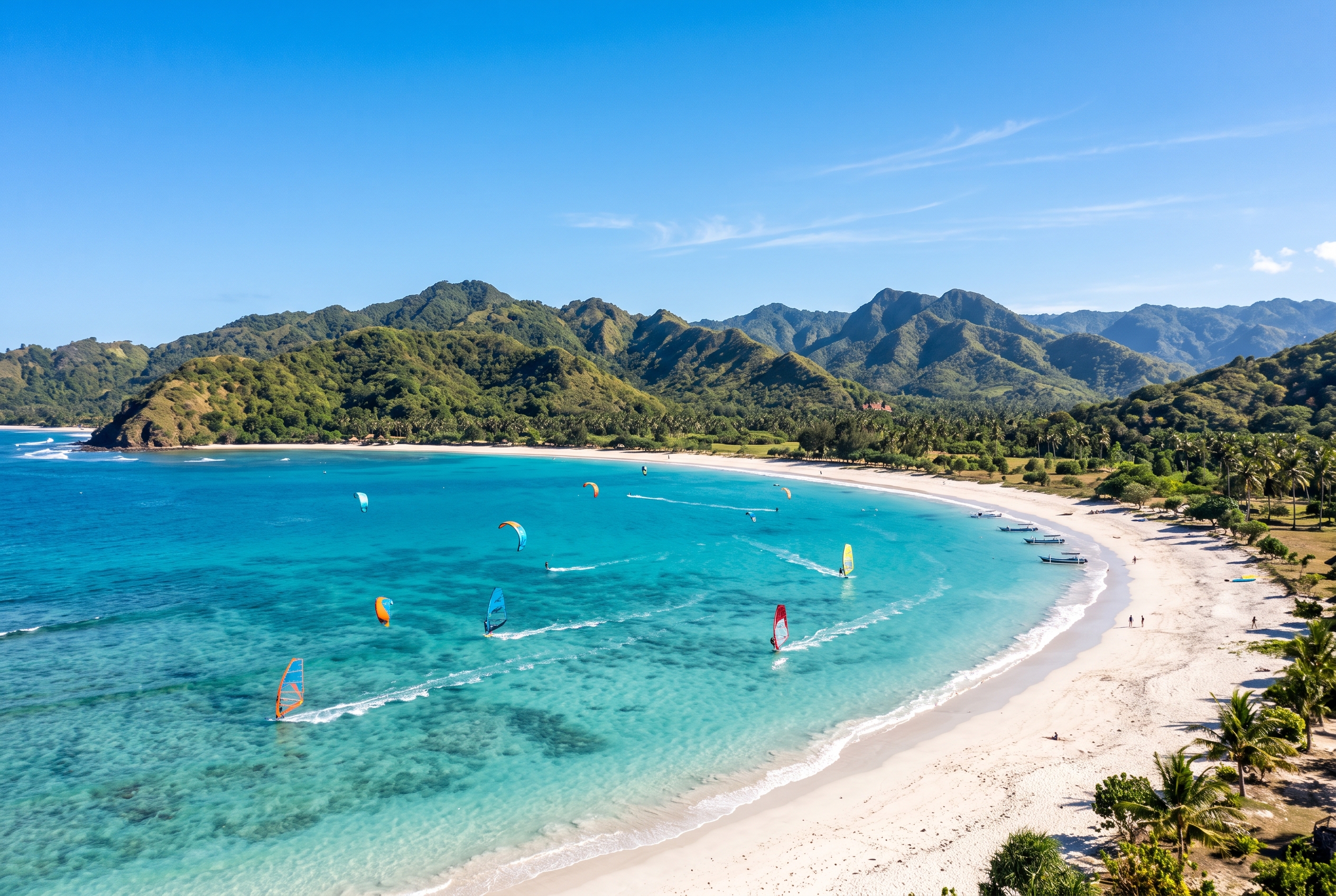
Lombok’s south coast is a dry-season wing foiling destination. The southeast trades blow from around May to September or October, are most consistent in July and August, and in season tend to average somewhere in the 15 to 20 knot range. The water sits at roughly 27 to 29°C all year, the main spot is a shallow lagoon several kilometres long at Kaliantan, and the lineups are far emptier than anything you will find in Bali.
Bali gets the headlines, the traffic jams and the Instagram queues. Lombok, its quieter neighbour just across the strait, gets the wind. While most foilers are elbow-fighting for water in Sanur, the arid south coast sits there with its horseshoe bays and a trade wind that fills in like clockwork through the dry season.
The catch is that the wing scene here is emerging rather than established. Instruction grew out of kitesurfing, wing rentals are thin, and the best spot is a long drive from the airport. This guide covers when to go, where to ride by skill level, who can teach you, what to pack and how to get there without the trip turning into a logistics puzzle.
| Lombok at a glance | What to expect |
|---|---|
| Wind season | Around May to September or October |
| Most consistent months | July and August |
| Typical wind | 15 to 20 knots on average in season, stronger days toward the mid-20s on the exposed eastern bays |
| Wind direction | Southeast trades, side-onshore on the south coast |
| Water temperature | Roughly 27 to 29°C year-round |
| Wetsuit | Not needed: a rash vest or 1 to 2mm top |
| Main wing spot | Kaliantan, southeast Lombok |
| Easiest base | Kuta Lombok |
| Airport | Lombok International (LOP), near Praya |
| Transfer times | About 30 minutes to Kuta, a couple of hours to Kaliantan or Ekas |
When Is the Best Time to Wing Foil in Lombok?
July and August are the most reliable months, inside a wider window that runs from around May to September or October. That is when the southeast trades set up over the south coast, and it lines up with the dry season, so you get clear skies and minimal rain to go with the breeze.
Southern Lombok is arid, noticeably drier than green, lush Bali, so you are not gambling against daily tropical downpours eating your session. The trades are thermal-assisted and typically fill in as the day warms up. Plan your days around a later session rather than a dawn one.
| Months | Wind | What it means for your trip |
|---|---|---|
| May and June | Trades building into the season | Shoulder season: decent breeze, slightly fewer people |
| July and August | Most consistent trades | The most bankable weeks, and the busiest |
| September | Still in the window | Shoulder season: decent breeze, slightly fewer people |
| October | End of the window | Can still deliver, but less dependable |
| Roughly November to April | Wet season, wind mostly quiet | A surf and scenery trip, not a wing trip |
This is firmly a seasonal destination, not a year-round one. Turn up in January chasing breeze and you will mostly be drinking coconuts and watching surfers, which is a fine consolation prize but not why you packed a wing.
How Windy Does It Get, and What Wing Size Should You Bring?
Expect 15 to 20 knots on a typical in-season day, with stronger days reportedly pushing toward the mid-20s on the more exposed eastern bays. That is a flattering range for wing foiling: enough to get up and going on a mid-sized wing, rarely so much that you are overpowered and white-knuckling it.
Two wings cover it for most riders: your usual mid-size for the average days and one size down for the windier ones. Run your weight and the forecast through our wing foil calculator before you commit luggage space, and check our guide to wing foil wind range to see how far each size stretches.
The trades blow side-onshore along the south coast, which works in your favour if you break something, because the wind drifts you back toward the beach. The flip side is that drifting in takes you over the shallower inside of the lagoon, so keep an eye on your mast depth on the way back.
How Warm Is the Water, and What Are the Hazards?
The water is bathwater-warm all year, hovering roughly between 27 and 29°C and dipping only slightly in the August cool patch. You do not need a wetsuit: a rash vest or a 1 to 2mm top is plenty, and most riders are comfortable in boardshorts and a long-sleeve rashie. That long sleeve is more about the equatorial sun than warmth.
The real hazards are reef, tide, chop and sun, not cold. Here is what to plan for:
- Reef and tide: reef is part of the landscape, and on lower water a long mast and a shallow reef flat do not mix. Check the tide before every session and ask the locals which patches of lagoon have foiling depth at which tide.
- Chop: the lagoons offer shallow, sheltered water near shore, but the wider ones get choppy once the trades are properly cranking. That chop is what catches out total beginners on otherwise friendly flat water.
- Sun: a multi-hour session near the equator will quietly cook you. Wear long sleeves, reapply sunscreen and take water to the beach.
- Feet: wear reef booties for walking in and out over reef.
- Remoteness: Kaliantan and Ekas are a long way from town. Ride when someone is on the beach and tell them your plan before you head out.
For the wider checklist, see our honest guide to whether wing foiling is dangerous. The reward for that attention is clean, uncrowded riding space of the kind that has all but vanished from busier foil destinations.
Where Are the Best Wing Foiling Spots in Lombok?
Kaliantan is the main wing foiling spot, Kuta Lombok is the easiest base for beginners, and Ekas Bay is the advanced, wave-focused option. Selong Belanak, Gerupuk and Are Guling are surf bays first: worth a day, but not where you go for dependable wing wind.
| Spot | Where | Best for | What to know |
|---|---|---|---|
| Kaliantan | Southeast tip, Jerowaru district, East Lombok | Improvers to advanced | Cleanest southeast trades, shallow lagoon several kilometres long, chop when it cranks, downwind potential |
| Kuta Lombok | South-central coast, about 30 minutes from the airport | Beginners, and anyone wanting a comfortable base | Shallow lagoons and gentler waves nearby, plus the most food, beds and help on the coast |
| Ekas Bay | Southeast peninsula | Advanced riders, waves | Remote reef-break waves, better known to surfers and tow-foilers |
| Gerupuk | East of Kuta | Surf and rest days | Mellow waves and scenery rather than reliable wing wind |
| Selong Belanak | West of Kuta | Surf lessons and beach days | Wide, sandy beginner-surf bay rather than reliable wing wind |
| Are Guling | About 20 minutes west of Kuta | Surf | Better known as a surf bay, so ask locals before hauling the wing out |
Kaliantan: The Main Event
Kaliantan, out on Lombok’s southeast tip in the Jerowaru district of East Lombok, is the crown jewel and the engine room of the local scene. It consistently catches the cleanest southeast trades, with a lagoon several kilometres long and wide, open beaches. It has long been the island’s headline kitesurfing spot, and its mix of flat lagoon, nearby waves and downwind potential translates directly to the wing.
The shallow lagoon is forgiving enough that improvers can find space to work, though the choppier sections reward riders who already have their basics dialled. If you are coming for a wind-first trip, this is where you want to wake up.
Kuta Lombok: The Beginner Base
Kuta and its surrounding bays are the most beginner-friendly base on the south coast. Shallow lagoons and gentler waves nearby make it a sensible place to learn or log easy sessions close to where you are sleeping. It is also the most developed corner of the coast, so food, beds and help are all within reach when your first foiling attempts go sideways, as first attempts tend to.
The trade-off is wind quality, because Kaliantan is where the cleanest trades are. If you are completely new to all this, start with our beginner’s guide before you go, then build on it with a local lesson.
Ekas Bay: Advanced and Adventure
This remote, dramatic bay on the southeast peninsula is better known to surfers and tow-foilers chasing reef-break waves. It is the more committing side of Lombok foiling: reef, waves and a long way from town. It suits confident riders who can look after themselves.
Gerupuk, Selong Belanak and Are Guling: Surf Bays for Rest Days
Gerupuk to the east of Kuta and Selong Belanak to the west are famous beginner-surf bays, more about mellow waves and scenery than reliable wing wind. Are Guling, around 20 minutes west of Kuta, is first and foremost a surf spot. All three are gorgeous and worth a day, even if the wing stays on the beach.
Can You Take Wing Foiling Lessons in Lombok?
Yes, but book ahead and confirm the school teaches wing foiling specifically. Instruction on the south coast grew out of kitesurfing and is still centred on the kite school at Kaliantan, which runs lessons and lodging packages. Its value is local knowledge: tides, wind timing and which patch of lagoon to use on a given day.
Wing-specific coaching is newer and thinner on the ground than kite coaching, which reflects how fresh the wing scene is here. As a rough yardstick, most first-timers progress over something like 10 to 15 hours of instruction spread across several days, rather than cracking it in a single afternoon.
Before you book, ask the school:
- Do you teach wing foiling with a wing instructor, or only kitesurfing?
- What wing, board and foil sizes do you have for my weight and level?
- How do you handle rescues if I drift or break gear?
- Which tides do you foil at, and how are lessons scheduled around them?
- Can you package lessons with lodging and an airport transfer?
A kite-school home break with shallow water, steady side-onshore wind and someone on the beach who knows the spot is exactly where you want to learn or progress. It does not matter which sport got there first.
Can You Rent Wing Foil Gear in Lombok?
Only in a limited way, so plan to bring your own. This is a remote, emerging destination, not a Tarifa-style gear superstore, and wing-specific kit in particular may be scarce. If you do need to rent, arrange it through the established schools in advance and have a backup plan rather than counting on a walk-up rental shack.
Having your own kit removes the biggest variable in a place where rentals are thin. A wing, an inflatable or compact hard board and a foil pack down into manageable luggage. Factor board-bag fees into your budget, check size limits on the smaller domestic hops into Lombok, and read our guide to travelling with wing foil gear for the packing detail.
| What to pack | Why it matters in Lombok |
|---|---|
| Mid-size wing plus one size down | Covers the typical 15 to 20 knot days and the stronger days on the eastern bays |
| Inflatable or compact hard board | Easier to fit within board-bag limits on the domestic hop |
| Foil, plus a shorter mast if you own one | The lagoons are shallow reef, especially on lower tides |
| Reef booties | Walking in and out over reef |
| Long-sleeve rash vest or 1 to 2mm top | Sun protection, since the water is too warm for a wetsuit |
| Repair kit and spare foil screws | Rentals and spares are thin, so plan to fix small problems yourself |
| Sunscreen, hat and plenty of water | Equatorial sun over multi-hour sessions |
What Is the Local Wing Foiling Scene Like?
Small, friendly and clustered around the kite spots, especially Kaliantan during the windy months and Kuta year-round. There is no sprawling clubhouse culture: the people on the beach are a genuine source of information, and the lineup is rarely crowded. Riders who base out of the Kaliantan and Ekas accommodation tend to share local knowledge freely, which is worth more than any noticeboard.
Foiling here overlaps with a strong, long-established surf community, so you will find a broader water-sports crowd than the wind numbers alone suggest. On a day the trades do not fill in, the same people will happily point you toward a surf break or a snorkelling spot instead.
What Is There to Do in Lombok on No-Wind Days?
Plenty: empty white-sand bays, surf, Sasak villages, Mount Rinjani and the Gili Islands. This is where Lombok genuinely outshines its neighbour, and the non-windy days more or less plan themselves.
Beaches and Surf
The south coast is a string of dramatic, mostly empty white-sand bays backed by green headlands. Selong Belanak in particular is regularly tagged as one of Southeast Asia’s best beaches, and its gentle waves make it a classic spot for a first surf lesson.
Sasak Culture
Lombok is the heartland of the Indigenous Sasak people, and its culture is distinct from Bali’s Hindu rhythms. Traditional Sasak villages in the south, with their thatched rice-barn architecture and weaving traditions, are an easy half-day trip from the beach. Sade, just off the road between the airport and Kuta, is the best known.
The island is predominantly Muslim, so cover up when you leave the beach for villages and towns, and be considerate during Ramadan. It is a useful reminder that you have left the Bali circuit and landed somewhere with its own identity, pace and customs.
Food and Nightlife
Kuta is the dining hub of the south coast, with warungs serving Lombok’s famously fiery local cooking alongside traveller-friendly cafes and the odd surprisingly good hotel restaurant. The name Lombok means chilli, and the food lives up to it: try ayam taliwang (spicy grilled chicken) and plecing kangkung (water spinach with chilli sambal). If you cannot handle heat, ask for tidak pedas (not spicy) when you order.
Fresh grilled fish, nasi campur and strong Indonesian coffee are the post-session staples, and you will not spend much getting them. Nightlife is low-key and early: beach bars, sunset spots and a cold Bintang while you compare notes on the day’s session. If you want DJs until sunrise, that is what Bali is for.
Mount Rinjani and the Gili Islands
Inland, the island is dominated by Mount Rinjani, an active volcano and one of Indonesia’s highest peaks, ringed by rice terraces and waterfalls. Summit treks take multiple days, so save one for a run of flat forecasts. Off the northwest coast sit the Gili Islands, the famous car-free trio that makes an easy add-on for snorkelling and a change of scenery.

How Do You Get to Lombok’s Wing Foiling Spots?
Fly into Lombok International Airport (LOP), near Praya in the centre-south of the island, which is well placed for the south coast. It is linked by short domestic flights from Bali and other Indonesian hubs. From there, Kuta is roughly half an hour away and Kaliantan and Ekas are a couple of hours.
| Route | Time | Best option with gear |
|---|---|---|
| Airport to Kuta Lombok | About 30 minutes | Pre-booked private transfer or metered taxi |
| Airport to Kaliantan or Ekas | A couple of hours | Private transfer, or an accommodation package that includes it |
| Kuta to Are Guling | About 20 minutes | Car or scooter |
| Bali to Lombok | A short flight, or several hours on the public ferry from Padangbai to Lembar | Fly if you are carrying board bags |
With board bags and a foil, a private transfer is well worth the modest extra cost over wrangling gear into a metered taxi. Scooters are everywhere in Kuta and fine for rest days, but a car with a driver is far easier once a wing and foil are involved.
Check Indonesia’s current entry rules before you fly. Many nationalities, including Australians, can get a visa on arrival or apply for an e-VOA online in advance.
Where Should You Stay for Wing Foiling in Lombok?
Stay in Kuta Lombok for convenience and variety, or at Kaliantan or on the Ekas peninsula for a wind-first trip. Many riders split the difference: a few days in Kuta to acclimatise, then out to Kaliantan when the forecast lines up.
| Base | Suits | Pros | Cons |
|---|---|---|---|
| Kuta Lombok | First trips, beginners, mixed groups | Widest range of beds from cheap homestays to mid-range hotels with pools, plus food, transport and several bays within reach | A long drive to Kaliantan on the best wind days |
| Kaliantan or Ekas | Wind-first trips | On-site bungalows steps from the water and the kite-school set-up | Far less variety and dining than Kuta |
Out at Kaliantan you sacrifice Kuta’s variety, but you wake up at the spot. During a good wind window, that is exactly the trade you want to make.
How Much Does a Wing Foiling Trip to Lombok Cost?
Day-to-day living is cheap, which is a large part of Lombok’s appeal. The big line items are lessons, any gear you rent and the cost of flying your own kit in.
| Item | Typical cost |
|---|---|
| Budget homestay in Kuta (air-con and breakfast) | From around 13 USD a night |
| Mid-range hotel | Around 30 to 65 USD a night, depending on the pool and the polish |
| Airport taxi to Kuta | Roughly 100,000 to 190,000 IDR (about 6 to 12 USD) |
| Private airport transfer to Kuta | From about 17 USD |
| Local food | Cheap by Western standards if you eat at warungs |
| Lessons and gear rental | Well above daily living costs: confirm directly with the school when you book |
| Board-bag fees | Check with your airline for every leg, including the domestic hop |
All told, a wind-chasing week here can be remarkably affordable once your flights are paid for.
Is Lombok Worth It for Wing Foiling?
Yes, if you like your wind reliable, your water warm and your lineups empty, and you are happy to trade some convenience for space. It is not the place for turn-up-and-rent ease or all-night nightlife. Time your trip to the dry-season trades, bring your own gear, book lessons ahead and respect the reef and the sun, and you will understand why people who know the island quietly keep coming back.
If Lombok is on your Southeast Asia shortlist, line it up against the region’s better-known spots. Compare it with the easy, lesson-rich water of Sanur, Bali just across the strait, the laid-back sandbars of the Gili Islands on Lombok’s own doorstep, or the warm, scenic conditions up at Langkawi, Malaysia. Different flavours of the same tropical promise, and Lombok holds its own among them.
Planning a wider trip through the region? Compare seasons, wind and budgets across all 13 spots in our guide to the best places to wing foil in Southeast Asia.
Frequently asked questions
When is the best season to wing foil in Lombok?
The dry season, roughly May to September or October, delivers the most reliable southeast trade winds, with July and August the most consistent and clear, sunny weather throughout.
How much wind does Lombok's south coast get?
In season the side-onshore southeast trades typically average around 15 to 20 knots, with stronger days on the more exposed eastern bays reportedly pushing toward the mid-20s.
Is Lombok good for beginner wing foilers?
Kuta Lombok's shallow lagoons and gentler waves suit beginners best, while Kaliantan's flat lagoon works for improvers; lagoon chop can challenge total newcomers, so a lesson helps.
What water temperature is it and do I need a wetsuit?
Water sits around 27-29°C year-round, so no wetsuit is needed. A rash vest or 1-2mm top is plenty, mainly for sun protection during long sessions.
How do you get to Lombok and is it expensive?
Fly into Lombok International Airport (LOP); Kuta is about a 30-minute transfer for roughly 7-11 USD. Lombok is budget-friendly, with homestays from around 13 USD a night.
