
Some destinations make you work for the wind. Cumbuco is not one of them. Tucked into the Brazilian state of Ceara, a short drive northwest of Fortaleza, this stretch of golden sand and turquoise water spends roughly half the year being pummelled by some of the most reliable trade winds on the planet. For a wing foiler, that is the dream scenario: turn up, rig up, and ride, day after day, with the kind of consistency that spots in cooler climates can only fantasise about.
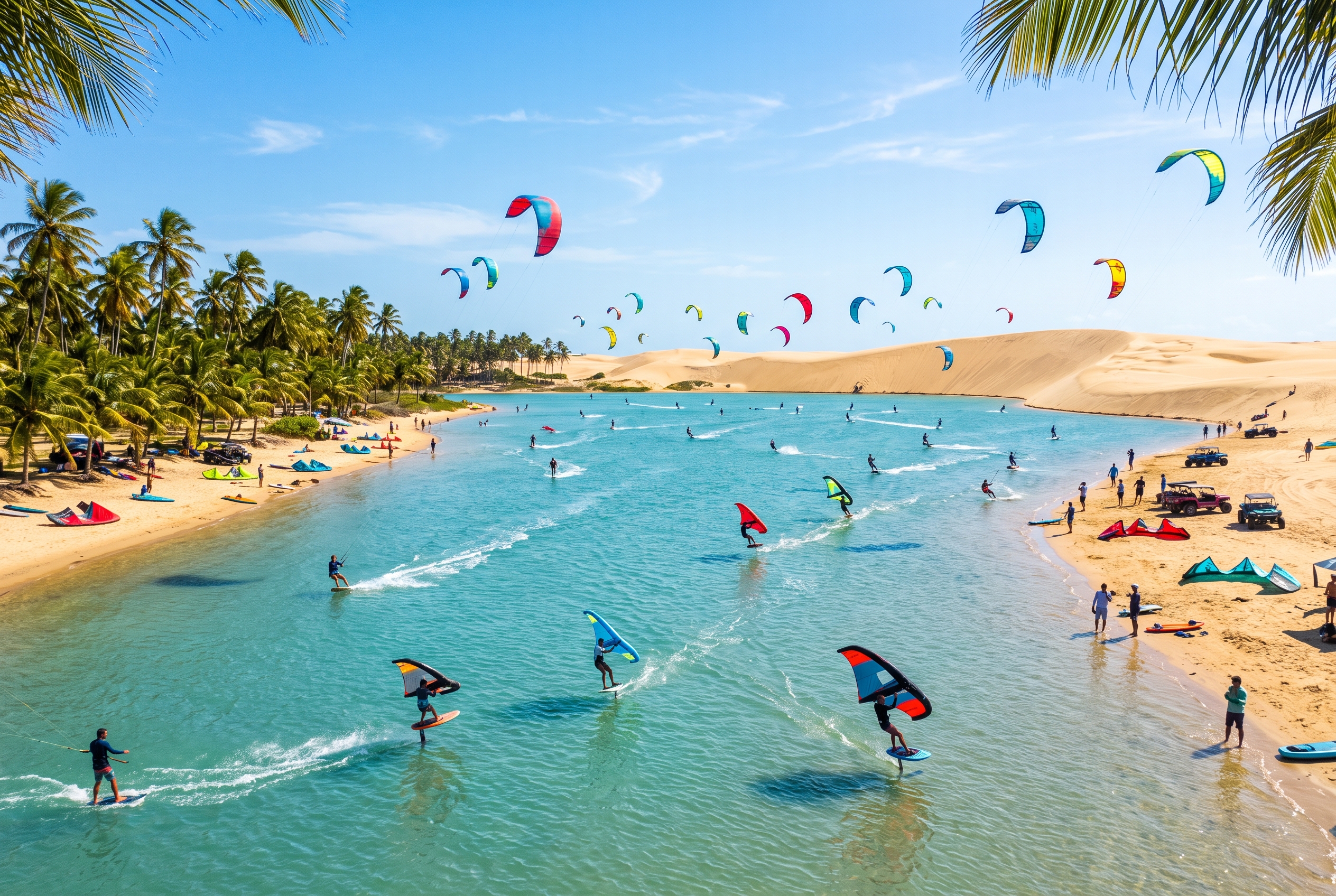
What sets Cumbuco apart from the hundreds of other windy beaches in the world is the lagoon next door. A few kilometres up the coast, the Cauipe lagoon offers butter-flat, waist-deep freshwater framed by towering sand dunes and palms. It is the sort of place where beginners can find their feet without the ocean trying to teach them a lesson, and where advanced riders can carve and link transitions on water so smooth it looks photoshopped. Add a warm Atlantic on your doorstep and you have a destination that quietly ticks every box.
This guide walks through everything you need to know to plan a wing foiling trip to Cumbuco and Cauipe: when the wind shows up, what the water is like, where to ride depending on your skill level, who can teach you or rent you gear, and what to do when your shoulders finally beg for a rest day. Pack the boardshorts and leave the thick wetsuit at home.
Wing Foiling Conditions
Wind Patterns and Seasonality
The engine behind Cumbuco’s reputation is the Alisios trade wind, a steady cross-shore breeze that blows along this part of the northeast Brazilian coast almost daily through the windy season. It is a thermal-assisted trade wind, which is a fancy way of saying it tends to build through the day rather than switching off when the sun gets high, giving you long, dependable afternoon sessions.
The wind season typically picks up in July and runs through to the end of January, with the strongest and most consistent conditions falling between August and December. Local operators and spot guides regularly describe this region as having some of the best wind on the planet during the June-to-December window, with reliable breeze reported on something like 80 percent of days at the peak. Average wind strength sits in the 15 to 25 knot range, with plenty of days pushing toward 30 knots, which is squarely in wing foiling territory for a broad spread of gear and rider weights.
The quieter shoulder, roughly February through May, is a different story. Wind is far less guaranteed in those months, with operators citing something closer to a 65 percent chance on any given day, so if reliability is your priority, aim for the heart of the season. The trade-off is straightforward: peak season means peak wind but also peak crowds, while the shoulder season is calmer in every sense.
Water Conditions
Here is the part that makes Ceara such a treat: the water is warm enough that a wetsuit is genuinely optional. The annual average sea temperature sits around 27 to 28 degrees Celsius, and even in the coolest month it rarely dips below about 26 degrees. This is bikini-and-boardshorts territory year round. The bigger threat is the tropical sun, so a rash vest, a hat for downtime, and a serious commitment to sunscreen will serve you better than neoprene.
On the water itself you get two distinct flavours. The ocean in front of Cumbuco offers cross-shore wind with some chop and the occasional small wave, which is great for building skills in real-world conditions and for anyone who wants to dabble in swell. The Cauipe lagoon, a short hop up the coast, is the opposite: a sheltered, shallow stretch of flat freshwater that has reportedly been enlarged and deepened in recent years, making it more symmetrical and notably more foil-friendly than it once was. Flat, shallow, warm, and forgiving is about as good as learning conditions get.
Best Spots for Different Skill Levels
Beginners should make a beeline for the Cauipe lagoon. The flat, shallow water means a fall is rarely more than an undignified splash, and you can often stand up to reset your gear and your composure. Many schools shuttle students up to the lagoon specifically because it shortens the learning curve so dramatically. The lagoon does have a layout convention worth knowing: the southern end is generally reserved for those still learning, while the northern end is where the more confident riders open it up.
Intermediate riders get the best of both worlds. The lagoon is an ideal playground for nailing your first proper foiling jibes and tacks on glassy water, while the ocean in front of Cumbuco lets you graduate to choppier, more dynamic conditions whenever you want a challenge. The strong, steady wind means you will rarely be underpowered, so this is a fantastic place to build mileage and confidence quickly.
Advanced riders come here for the downwinders, and Cumbuco delivers one of the most talked-about runs in the sport. You can ride downwind from Cumbuco beach to the Cauipe lagoon, a journey that takes anywhere from 15 to 30 minutes at a fast clip, or stretch it into a one-to-two hour adventure if you detour via the wave spot known as Pico das Almas along the way. It is the kind of point-to-point mission that wing foilers travel a long way for, and the reliable cross-shore trade makes it eminently doable. One thing to plan around: the lagoon gets busy, often packed by midday, so early or late sessions are your friend if you want space to actually open up.
Local Wing Foiling Scene
Schools and Lessons
Cumbuco has been a wind-sports hub for decades, originally on the back of kitesurfing, and that infrastructure has happily absorbed the wing foil boom. The village is dotted with schools, several of which now offer dedicated wing foil and foil board instruction alongside their kite programmes. A number of operators run small groups, frequently capping it at two students per instructor, which is exactly what you want when you are learning a sport with as much equipment juggling as winging.
Pricing is reasonable by international standards. Some schools advertise two-hour beginner or refresher sessions starting around R$380 for a first lesson, and at least one operator charges the same rate for foil board and wing foil tuition as it does for kiting. As a rough rule of thumb, riders putting in 10 to 12 hours of structured instruction can often expect to be up and riding, though winging tends to come together faster for many people than kiting did. Booking lessons that include lagoon transfers is well worth it, since the flat water there does a lot of the teaching for you.
Gear Rentals
You do not need to lug a board bag across the Atlantic if you would rather travel light. Several Cumbuco schools rent wings, foil boards, and foils, and some stock quality, current-season equipment from established brands. Renting also lets you trial different wing sizes against the day’s wind, which in a place this consistently breezy is a genuine luxury rather than a gamble. If you are bringing your own kit, the strong wind means most riders find themselves reaching for smaller wings and boards than they would at home, so plan your quiver accordingly.
Clubs and Community
The scene here is international and friendly. Because Cumbuco draws wind addicts from Europe, the Americas, and beyond throughout the season, the beach and the lagoon turn into an informal global meetup of foilers and kiters. Schools and pousadas double as social hubs, downwinders are often run as group outings, and it is rarely hard to find someone to share a shuttle, swap gear notes, or talk you through the local etiquette. The lagoon’s zoning between beginners and advanced riders is part of an unwritten code that keeps a busy spot running smoothly, so a little observation on arrival goes a long way.
Off the Water
Cultural Attractions
Nearby Fortaleza, the regional capital, is where you go for a dose of Brazilian city culture between sessions. The city is known for landmarks like the statue of Iracema, its Metropolitan Cathedral, and the bustling Central Market, a multi-storey warren of stalls selling lacework, hammocks, cachaca, and regional crafts. Ceara has a rich folk tradition, and the coastal villages around Cumbuco still carry the unhurried rhythm of fishing communities that long predate the wind tourism.
Dining
Seafood is the headline act, and rightly so. The beachfront restaurants and barracas in Praia de Cumbuco serve up fresh fish, prawns, and regional specialities with the Atlantic essentially lapping at your feet. After a long downwinder there are few better rewards than a cold drink and a plate of grilled fish with your toes in the sand. The main village street has a solid concentration of restaurants and beach bars, so you are never short of options to refuel.
Nightlife and Entertainment
Cumbuco punches above its weight after dark for a place its size. The main street of the village comes alive with bars, restaurants, and even a few clubs, fuelled by the steady churn of international visitors. It is lively without being overwhelming, which suits a crowd that mostly wants to be back on the water by early afternoon the next day. If you want a bigger night out, Fortaleza’s beachfront nightlife is a short transfer away.
Nature and Sightseeing
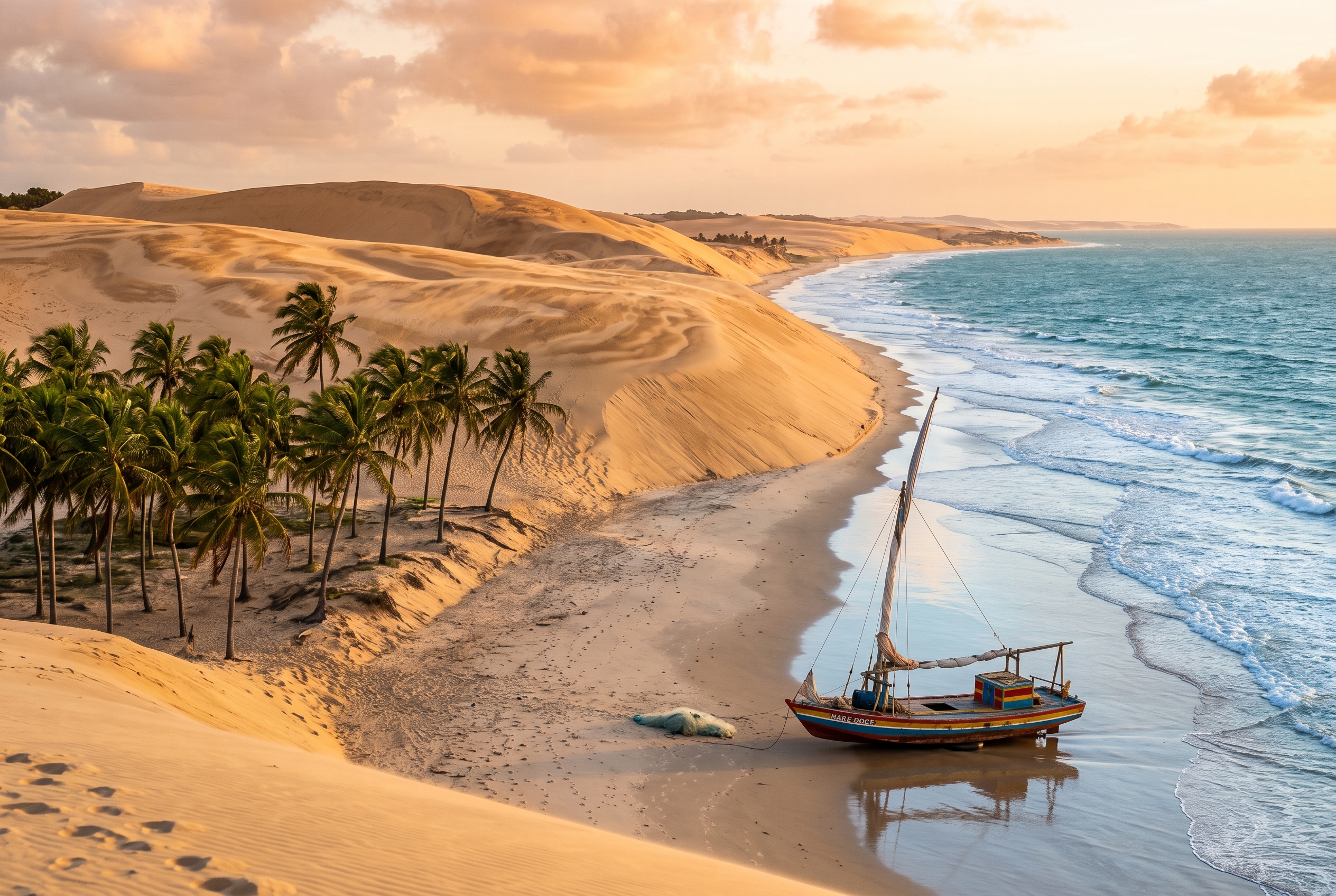
The dunes are the star attraction on land. A classic Cumbuco outing is a buggy ride over the towering white sand dunes, with stops at freshwater lagoons where you can swim, sandboard, or zip-line into the water. The buggies are part adrenaline ride, part scenic tour, and they reveal just how dramatic the dune-and-lagoon landscape behind the beach really is. Horseback rides along the coast and excursions to other beaches and dune systems up and down the Ceara coast round out the menu for rest days.
Practical Travel Information
How to Get There
Your gateway is Pinto Martins International Airport in Fortaleza, code FOR, which receives both domestic Brazilian flights and a number of international connections. From the airport, Cumbuco is roughly 35 kilometres away, a transfer that typically takes around 45 minutes to an hour by car under normal conditions, though traffic can stretch it. Pre-booked private transfers, taxis, and shuttle services all serve the route, and most pousadas and schools can arrange a pickup if you ask ahead. Given the gear and the unfamiliar roads, a booked transfer is usually the path of least resistance on arrival.
Where to Stay
Accommodation in Cumbuco spans budget hostels and pousadas right up to beachfront hotels. A popular strategy is to stay at one of the kite-and-wing-oriented guesthouses or hotels that bundle lessons, gear storage, and lagoon transfers, which keeps the logistics simple. Some beachfront hotels offer direct water access with an on-site school, ideal if you want to roll out of bed and onto the water. Wherever you land, staying in the village itself keeps you close to the action, the restaurants, and the nightlife.
Best Time to Visit
For wind reliability, target the core season of August through December, when the trades are at their strongest and most consistent. July and January bracket that window with solid but slightly less guaranteed conditions. If you would rather trade some wind certainty for fewer crowds and a mellower vibe, the February-to-May shoulder is an option, just go in knowing that windless days are more likely. Whenever you visit, the water stays warm, so seasonal planning is entirely about the breeze rather than the temperature.
Budget Estimates
Brazil remains good value for a destination this good. Wing foil lessons start in the region of R$380 for an introductory two-hour session, with multi-hour packages bringing the per-hour cost down. A dune buggy excursion runs around R$150 per buggy, which you can split among passengers. Accommodation, food, and rentals span a wide range depending on how plush you want things, but a trip here generally costs less than a comparable wind holiday in Europe or the Caribbean. Budget for transfers, daily rentals or your own gear, lessons if you need them, and plenty of post-session seafood, and you will have a clear picture. Our wing foil calculator can help you dial in which wing and board sizes to bring or rent for the conditions you can expect.
Wrapping Up
Cumbuco and the Cauipe lagoon make a compelling case for one of the best value wing foiling trips on earth. You get months of dependable trade wind, water warm enough to ride in boardshorts, a flat-water lagoon practically built for learning and progression, a world-class downwinder for when you want to feel like a pro, and a lively village with great seafood and easy logistics from Fortaleza’s airport. Whether you are taking your very first flights on a foil or chasing the long run down to the lagoon, this corner of Ceara rewards the trip.
If you are still mapping out a winter escape, it is worth weighing Cumbuco against the other flat-water powerhouses. Down the coast, Jericoacoara, Brazil offers its own legendary lagoon and dune scenery. Across the Americas, La Ventana, Mexico and Cabarete, Dominican Republic deliver warm water and reliable thermals of their own. And if you are brand new to all this, start with our beginner’s guide to wing foiling before you book the flights.
Frequently asked questions
When is the best season to wing foil in Cumbuco?
The wind season runs July to January, with the strongest, most consistent trade winds from August through December. The February-to-May shoulder is quieter with less reliable wind.
How much wind does Cumbuco get?
The Alísios trade wind blows almost daily in season, averaging 15-25 knots and often pushing toward 30 knots, with reliable wind reported on around 80 percent of days at peak.
Is Cumbuco good for beginners?
Yes. The nearby Cauipe lagoon offers flat, shallow, warm freshwater that is ideal for learning, and many schools shuttle students there with small-group lessons.
What is the water temperature and do I need a wetsuit?
Sea temperatures average around 27-28C year round and rarely drop below 26C, so it is boardshorts-and-bikini riding. Bring a rash vest and strong sunscreen instead of a wetsuit.
How do I get to Cumbuco and what does it cost?
Fly into Fortaleza airport (FOR), about 35km and roughly 45 minutes to an hour away by car. Lessons start around R$380 for a two-hour session and a dune buggy ride is about R$150.
