
Southeast Asia is one of the few regions on earth where you can wing foil every single month of the year. From November to April, the northeast monsoon drives 12–25 knots across Thailand, Vietnam, Malaysia and the Philippines. From May to October, the wind flips: southeast trade winds light up Bali, Lombok and the Gili Islands in Indonesia. Water temperatures sit between 24°C and 30°C region-wide, so your wetsuit stays at home.
We’ve published full destination guides for 13 wing foiling spots across five Southeast Asian countries, each with wind data, named launch spots, schools, rentals and travel logistics. This roundup pulls them all together so you can pick the right spot for your dates, your skill level and your budget. Every destination below links to its complete guide.
The other big draw is cost. Lessons, rentals, food and accommodation across the region run well below what you’d pay in Europe, Hawaii or Australia. A two-hour private lesson in Vietnam costs $80–120 USD, and a beachfront guesthouse dinner rarely breaks $10.
Southeast Asia’s Two Wind Seasons (When to Go Where)
The region runs on two great wind systems that hand over to each other around April–May and October–November. Get this one table right and you’ll never book a windless trip:
| Months | Wind system | Where to go |
|---|---|---|
| November – April | Northeast monsoon (called the Amihan in the Philippines) | Thailand, Vietnam, Malaysia, the Philippines |
| May – October | Southeast trade winds | Bali, the Gili Islands and Lombok (Indonesia) |
There’s useful overlap at the edges too. Vietnam’s season starts as early as October, Pranburi in Thailand holds its wind into May, and Boracay’s easterlies stretch from November all the way to May. If your holiday lands in the European summer, Indonesia is your answer.
Thailand: The Gulf’s Winter Wind Machine
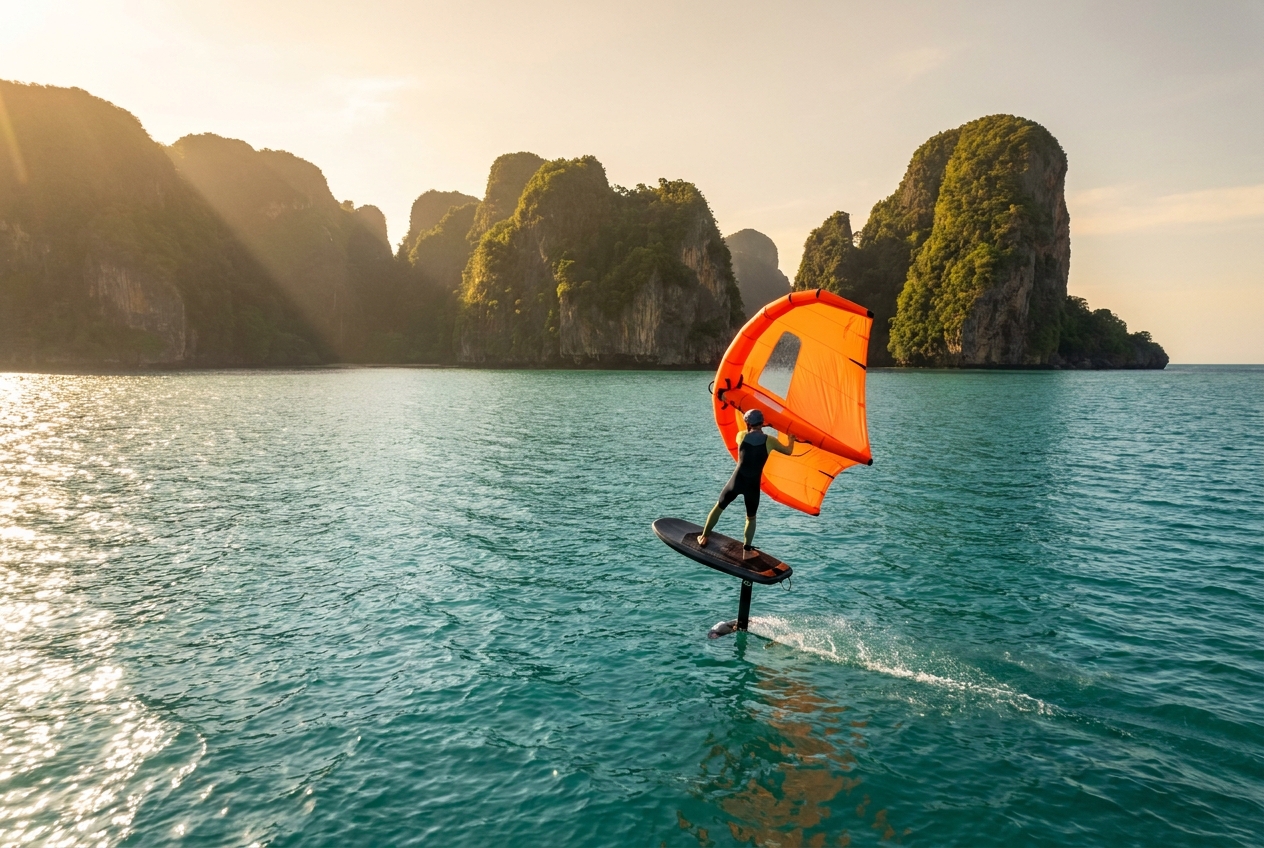
Thailand pairs the northeast monsoon with cheap living, easy flights and a mature water sports infrastructure. All four spots below fire from roughly November onward, with December to February the most reliable window.
1. Pranburi & Hua Hin
Why it’s here: Pranburi, 30 km south of Hua Hin, is the flat-water pick of the entire region. Thermal-boosted monsoon winds blow 12–25 knots from November through May, over water that’s mostly flat with light chop and a toasty 27–30°C. Pak Nam Pran Beach is the wide, uncrowded main launch, with Dolphin Bay a quieter alternative under limestone mountain backdrops. KBA Pranburi rents Duotone and Cabrinha gear and runs lessons, and the Thai Kiteboarding School operates here too. It’s a 3.5-hour drive from Bangkok and the beach is never packed.
Season: November to May · Typical wind: 12–25 knots, most reliable January–February · Water: 27–30°C, flat to light chop · Best for: everyone, especially learners and flat-water lovers
Read the full Pranburi & Hua Hin wing foiling guide →
2. Phuket
Why it’s here: Phuket delivers steady 12–20 knot winds and calm seas through the November-to-April dry season, plus the easiest logistics in Thailand thanks to its international airport. Sheltered Laem Singh Beach suits beginners, while Nai Harn, Kata Beach and Chalong Bay give more experienced riders room to play. Local clubs run lessons and rent gear, and the island’s food, nightlife and island-hopping options fill any windless day.
Season: November to April · Typical wind: 12–20 knots · Water: warm and calm in season · Best for: riders who want conditions plus a full holiday
Read the full Phuket wing foiling guide →
3. Pattaya
Why it’s here: Just 90 minutes from Bangkok’s main airport, Pattaya gets 12–20 knots from the northeast monsoon between November and March, with December to February the sweet spot at a reliable 15–18 knots. The wind builds from late morning and peaks between 1 and 4 PM over 26–30°C water that stays flat to small chop inside the bay. Jomtien Beach is the wing foiling hub (head to the northern end), with Kite Boarding Center Thailand and Real Watersports offering lessons at 2,500–3,500 baht per hour and full-day gear rental for 1,500–2,500 baht.
Season: November to March · Typical wind: 12–20 knots · Water: 26–30°C, flat to small chop · Best for: convenience seekers and winter-escape progression trips
Read the full Pattaya wing foiling guide →
4. Koh Samui
Why it’s here: Samui is the pick if the wing foiling has to share the itinerary with a proper island holiday. From November through April the monsoon gives way to calmer seas and consistent breeze, typically a gentle 10–20 knots with stronger days mixed in. Warm tropical water means boardshorts only, and the island’s beaches offer launches for every level. It’s the mellowest wind profile on this list, which makes it ideal for lighter riders and bigger wings.
Season: November to April · Typical wind: 10–20 knots · Water: warm year-round · Best for: holiday-first trips and relaxed progression
Read the full Koh Samui wing foiling guide →
Vietnam: The Region’s Best Value Wind Coast
Vietnam’s long east-facing coastline catches the northeast monsoon head-on from October to March, and it’s the cheapest place in this roundup to eat, sleep and ride. Four spots stand out, from the established wind town of Mui Ne to weekend-trip Vung Tau.
5. Mui Ne
Why it’s here: Mui Ne is Vietnam’s best-known wind sports town, and the wing scene has grown fast on the back of its kite heritage. The prime season runs November to April, when northeast trades deliver a steady 12–20 knots over water in the mid-20s°C. Dunes Beach and Bai Dai Beach are the standout launches, backed by the town’s famous red and white sand dunes. Clubs like Mui Ne Foil Club and Vietnam Waveriders handle lessons and rentals, and the seafood is some of the best on the coast.
Season: November to April · Typical wind: 12–20 knots · Water: mid-20s°C · Best for: riders who want an established wind town atmosphere
Read the full Mui Ne wing foiling guide →
6. Da Nang
Why it’s here: Da Nang is one of Southeast Asia’s most underrated wing spots and arguably its best value. The season runs October to March with consistent cross-shore wind of 15–25 knots, peaking December to February, over 24–27°C water and a long, sandy city beach. My Khe Beach suits intermediate and advanced riders, while calmer Bac My An is the beginner corner. Add an international airport, world-class food and big-city comforts at small-town prices.
Season: October to March · Typical wind: 15–25 knots, cross-shore · Water: 24–27°C · Best for: budget trips with proper wind
Read the full Da Nang wing foiling guide →
7. Nha Trang
Why it’s here: Nha Trang gets the same 15–25 knot northeast monsoon from November through March, peaking in January and February, with 25–28°C water all year. What sets it apart is how neatly the spots ladder up by skill level: beginners learn at Bai Dai Beach, intermediates ride Jungle Beach, and advanced foilers head to Doc Let. A two-hour private lesson runs $80–120 and a full gear set rents for $60–80 per day, a fraction of European prices.
Season: November to March · Typical wind: 15–25 knots · Water: 25–28°C year-round · Best for: every level, with a clear spot for each
Read the full Nha Trang wing foiling guide →
8. Vung Tau
Why it’s here: Vung Tau sits 125 km southeast of Ho Chi Minh City, close enough that buses make the trip in 2–2.5 hours for $4–5. The northeast monsoon brings 12–20 knots from October through March, with December to February the most consistent, and the water holds 25–29°C all year. Bai Sau (Back Beach) is the main launch. If you’re based in or passing through Saigon, this is your session fix without a flight.
Season: October to March · Typical wind: 12–20 knots · Water: 25–29°C · Best for: city-based riders and weekend missions
Read the full Vung Tau wing foiling guide →
Indonesia: The May-to-October Answer
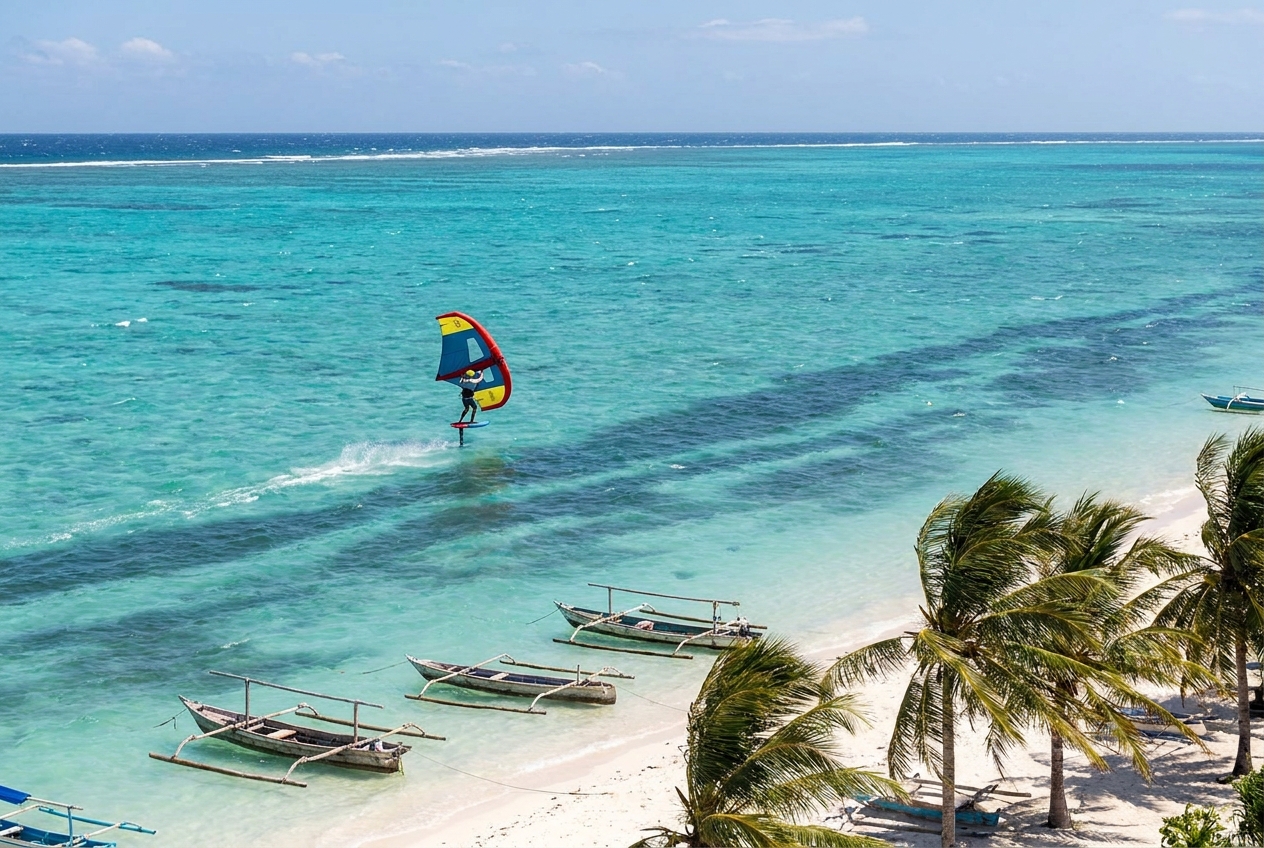
When the northeast monsoon shuts down in April, Indonesia takes over. Southeast trade winds blow through the dry season from May to October, which conveniently lines up with the European and North American summer holidays.
9. Sanur, Bali
Why it’s here: Sanur, on Bali’s southeast coast, is the easiest Indonesian entry point: direct international flights, calm shallow water and a mellow beach-town pace. The season runs May to September, when the dry season delivers the most predictable wind, peaking between 12 and 4 PM. The main beach suits beginners, while Mertasari and Gianyar offer more challenge for intermediate and advanced riders. Off the water, it’s Bali: temples, warungs and world-famous everything else.
Season: May to September · Typical wind: moderate and steady, strongest early afternoon · Water: calm and shallow · Best for: beginners and mixed-ability groups
Read the full Sanur wing foiling guide →
10. The Gili Islands
Why it’s here: Three tiny, motor-vehicle-free islands off Lombok’s northwest coast with reef-protected flat water at 27–29°C and 15–25 knot southeast trades from May to September, peaking in July and August. Gili Trawangan’s northern beach is the main launch. The fast boat from Bali takes 90 minutes to 2.5 hours, and the reward is glassy tropical water that feels built for foiling.
Season: May to September · Typical wind: 15–25 knots, peak July–August · Water: 27–29°C, reef-protected flat · Best for: flat-water addicts chasing mid-year wind
Read the full Gili Islands wing foiling guide →
11. Lombok
Why it’s here: Lombok’s south coast is the emerging pick: warm 27–29°C water and reliable southeast trades of roughly 15–20 knots through the May-to-October dry season, at prices and crowd levels Bali left behind years ago. Kaliantan leads the young wing scene, Kuta suits beginners, and the huge bay at Ekas draws advanced foilers. Go in July or August for the most wind.
Season: May to October · Typical wind: 15–20 knots · Water: 27–29°C · Best for: riders who want it uncrowded and cheap
Read the full Lombok wing foiling guide →
Malaysia and the Philippines
12. Langkawi, Malaysia
Why it’s here: Langkawi is Malaysia’s duty-free island escape, with sea breezes of 12–20 knots through the November-to-March dry season and air temperatures of 24–32°C. Pantai Cenang, Datai Bay and Telaga Harbour are the top spots, and the island’s sheltered bays keep conditions gentle enough for learning while still giving seasoned riders enough to work with. It’s the quiet, family-friendly alternative on this list.
Season: November to March · Typical wind: 12–20 knots · Water: tropical warm · Best for: beginners and relaxed family trips
Read the full Langkawi wing foiling guide →
13. Boracay, Philippines
Why it’s here: Boracay’s Bulabog Beach is one of Asia’s legendary wind sports arenas: shallow, reef-protected water on the island’s east side that catches consistent Amihan easterlies of 10–25 knots from November to May. Diniwid Beach and Puka Shell Beach offer quieter sessions when you want space. Schools and rental outfits are well established, and White Beach sunsets plus the island’s famous nightlife round out the trip. Fly to Kalibo or Caticlan, then it’s a short boat hop across.
Season: November to May · Typical wind: 10–25 knots · Water: warm, shallow at Bulabog · Best for: a big season window and a lively scene
Read the full Boracay wing foiling guide →
Which Spot Should You Choose?
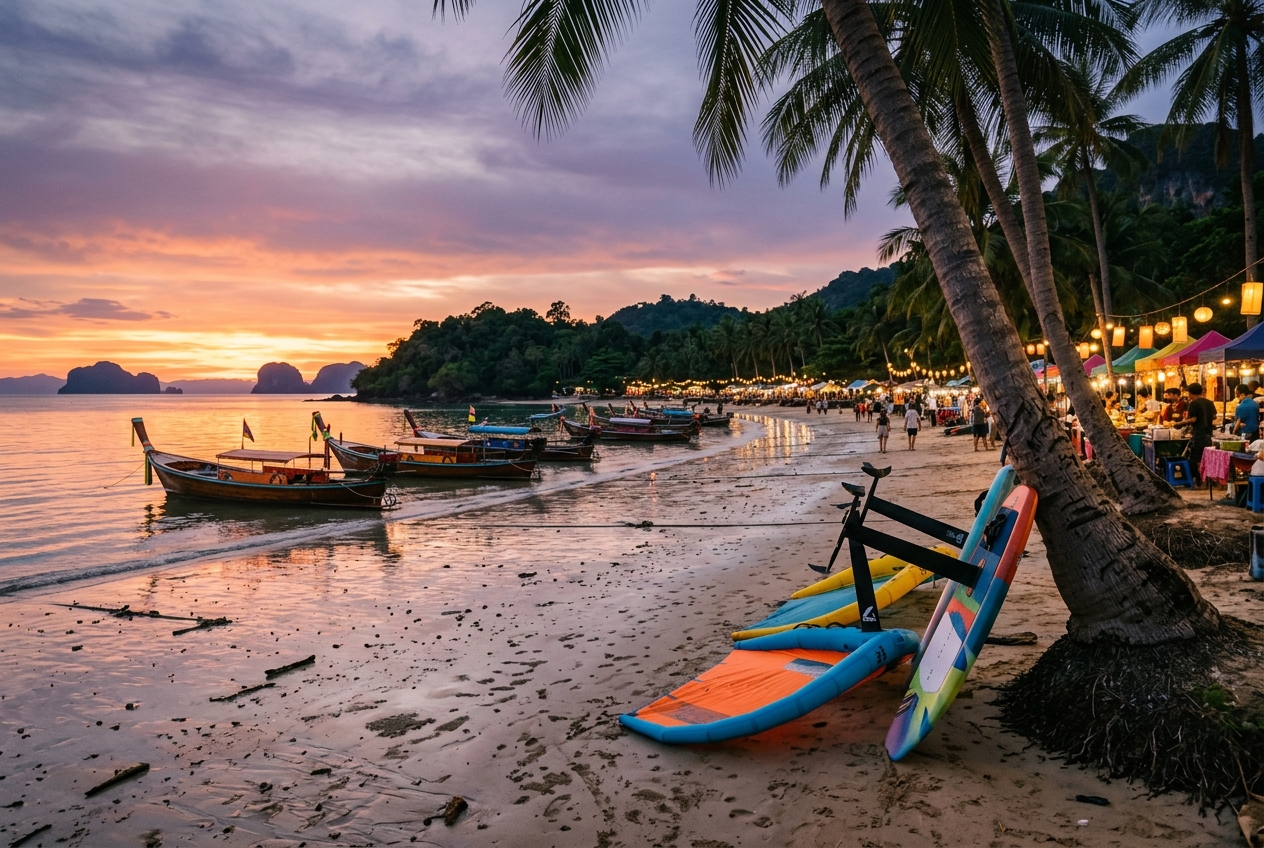
- Best flat water: Pranburi, Thailand. Flat, warm, uncrowded and windy from November to May.
- Best for learning: Sanur in Bali or Langkawi in Malaysia for gentle, sheltered conditions; Bai Dai Beach in Nha Trang if you want cheap lessons with real wind nearby.
- Best on a budget: Da Nang or Vung Tau, Vietnam. Strong wind, warm water and the lowest daily costs in the region.
- Best in July and August: the Gili Islands or Lombok, when everywhere else in the region is off-season.
- Best established wind-town vibe: Mui Ne, Vietnam, or Boracay’s Bulabog Beach in the Philippines.
- Best holiday-plus-foiling mix: Phuket or Koh Samui, Thailand.
Practical Tips for a Southeast Asia Wing Foil Trip
Gear: rent at the hubs, bring your own elsewhere. Rental fleets exist at the established centers (Pranburi, Pattaya and Phuket in Thailand, Mui Ne and Nha Trang in Vietnam, Boracay in the Philippines) but they’re smaller than what you’d find in Tarifa or Maui. Expect roughly $60–80 USD per day in Vietnam and 1,500–2,500 baht in Thailand. Advanced riders with specific foil preferences should travel with their own setup; our guides to wing foil travel bags and flying with wing foiling gear cover how to do it without excess-baggage pain.
Bring your biggest wing. Most of these spots run 12–20 knots rather than the 25-plus of the world’s heavy-wind meccas. Lighter riders will be fine, but heavier riders should pack for the lighter end of the range; our wing foil gear calculator will tell you what sizes make sense for your weight and the wind band of the spot you pick.
Flights and hubs. Bangkok, Ho Chi Minh City, Singapore, Kuala Lumpur and Bali are the region’s big gateways, with short, cheap connections onward. Some spots need no connection at all: Phuket, Da Nang and Langkawi have international airports, and Pattaya is a 90-minute transfer from Bangkok.
No wetsuit required, ever. The coldest water on this list is around 24°C. Pack a long-sleeve rash vest, reef-safe sunscreen and a cap instead; the sun is the real hazard in the tropics, not the cold.
Wrapping Up
Between the northeast monsoon and the Indonesian trades, Southeast Asia offers warm-water wing foiling twelve months a year at prices most wind destinations can’t touch. Pick your month, pick your country and dive into the full guide for your spot above.
Planning further afield? See our roundup of the 20 best wing foiling destinations in the world. New to the sport? Start with our complete beginner’s guide to wing foiling and our guide to the best places to learn.
Frequently asked questions
When is the best time to wing foil in Southeast Asia?
There are two windows. From November to April the northeast monsoon delivers 12-25 knots to Thailand, Vietnam, Malaysia and the Philippines. From May to October, southeast trade winds power Bali, the Gili Islands and Lombok in Indonesia, so somewhere in the region is windy every month of the year.
Where is the best place to learn wing foiling in Southeast Asia?
Pranburi in Thailand and Sanur in Bali are the standout learning spots: both offer flat, shallow water, steady winds and established schools. Bai Dai Beach in Nha Trang and Langkawi's sheltered bays are also excellent for first sessions.
Do I need a wetsuit for wing foiling in Southeast Asia?
No. Water temperatures across the region stay between 24 and 30 degrees Celsius year-round, so boardshorts or a thin rash vest are enough. Sun protection matters far more than warmth: a long-sleeve lycra, reef-safe sunscreen and plenty of drinking water are the real essentials.
How much do wing foiling lessons cost in Southeast Asia?
Vietnam is the cheapest, with two-hour private lessons in Nha Trang running 80-120 USD. In Thailand, Pattaya schools charge roughly 2,500-3,500 baht per hour. Both are well below typical European or North American prices.
Can you rent wing foil gear in Southeast Asia?
Yes, at the established hubs: Pranburi, Pattaya and Phuket in Thailand, Mui Ne and Nha Trang in Vietnam, and Boracay in the Philippines. Expect 60-80 USD per day in Vietnam and 1,500-2,500 baht in Thailand. Rental fleets are smaller than in Europe, so advanced riders should consider bringing their own foil.
