
A hydrofoil works by generating lift the same way an aeroplane wing does: it moves fast enough through water that pressure drops above its curved surface and pushes the board up. The front wing supplies most of the lift, a smaller stabiliser keeps the ride level, and the mast holds both above the water.
Every part of a wing foil setup, the front wing, stabiliser, fuselage and mast, has one job in that lift chain. Below is what each piece does, why aspect ratio and mast length change how the whole thing feels, and where drag comes from.
How does a hydrofoil actually create lift?
A hydrofoil creates lift through the same pressure difference that keeps an aeroplane in the air. Water flowing over the curved top of the front wing speeds up and drops in pressure, while water underneath stays slower and pushes up harder. That imbalance is lift, and once it exceeds the rider’s weight, the board rises clear of the surface.
Two things control how much lift a wing produces at any moment: its angle of attack (the tilt of the wing relative to the oncoming water) and its speed. Push the nose up too far or slow down too much and the flow separates from the top of the wing, lift collapses, and the foil drops back onto the water. That sudden loss is a stall, the same failure mode a stalling aircraft wing experiences.
Because water is far denser than air, a wing foil’s front wing can be tiny compared with an aeroplane wing and still lift a rider and board. That density difference is also why a hydrofoil starts flying at walking-to-jogging speeds rather than the speeds a plane needs.
What’s the difference between the front wing and the stabiliser?
The front wing generates most of the lift and sets your speed range: a bigger front wing gets you flying earlier and cruises efficiently in light wind, a smaller one needs more speed but rewards precision at the top end. The stabiliser, the smaller wing at the tail of the fuselage, does a different job: it shapes pitch stability and how the foil responds through turns and transitions.
Swap only the stabiliser and you can transform how a foil feels without touching the front wing at all. A wider, lower-aspect stabiliser adds stability and forgiveness; a narrower, higher-aspect one cuts drag and sharpens turning for riders chasing efficiency over forgiveness.
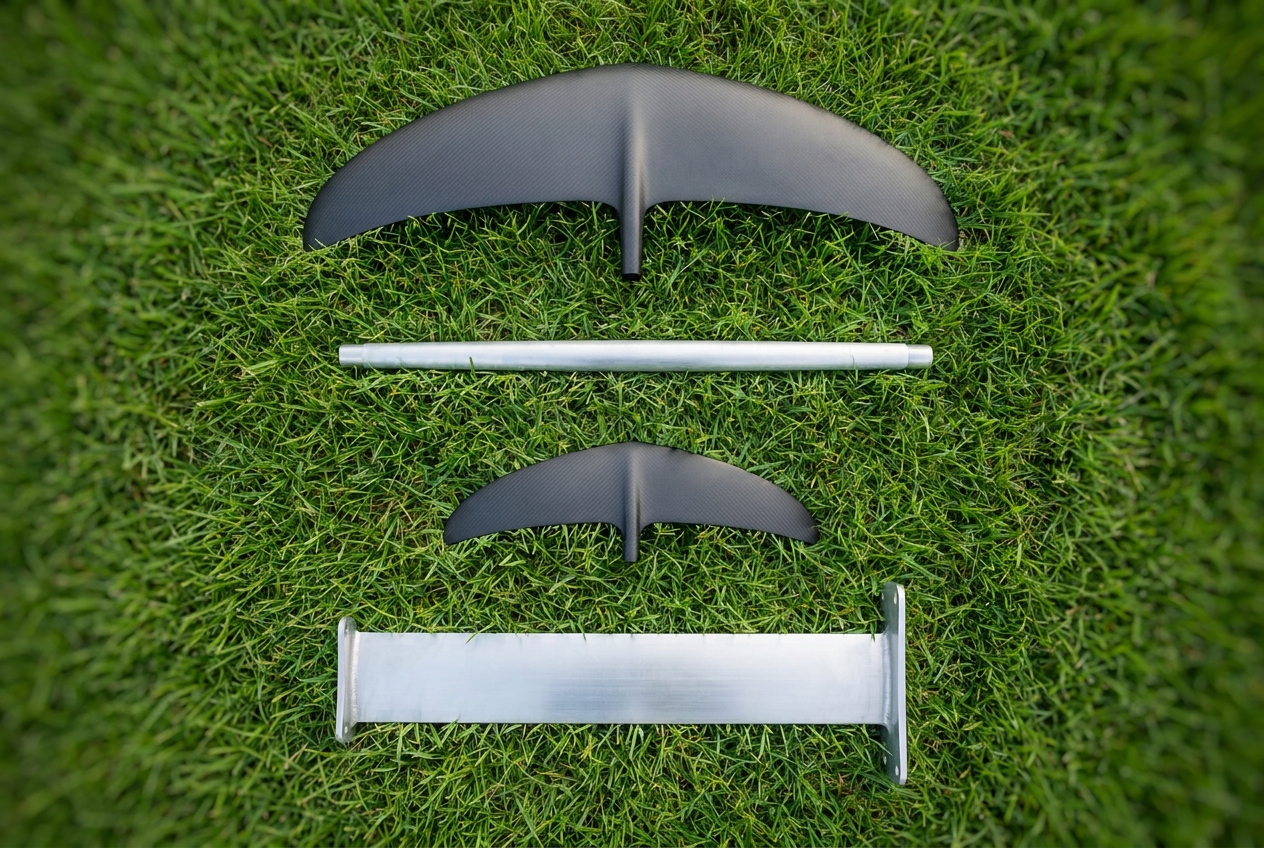
The four parts of the foil, in one table
| Part | Job | Notes |
|---|---|---|
| Front wing | Generates most of the lift; size sets your minimum and maximum speed | Largest wing on the foil, mounted furthest forward |
| Stabiliser (rear wing) | Balances pitch and shapes how the foil turns and transitions | Smaller than the front wing, mounted on the tail of the fuselage |
| Fuselage | Rigid spine fixing the distance and angle between front wing and stabiliser | Aluminium or carbon; length affects stability and turning |
| Mast | Vertical strut connecting the wing assembly to the board | Typically 60 to 100 cm, aluminium or carbon |
What does aspect ratio change about how a foil rides?
Aspect ratio is the front wing’s wingspan multiplied by itself, divided by its projected area, and it is the single number that best predicts how a wing will feel. Low aspect wings lift early and forgive mistakes; high aspect wings glide further and hold a wider speed range but demand cleaner pitch control.
| Category | Aspect ratio | Character |
|---|---|---|
| Low aspect | Up to approx. 6.0 | Early lift, stable, forgiving, but slower and less efficient |
| Mid aspect | Approx. 6.0 to 8.5 | Good lift with decent speed, still manoeuvrable |
| High aspect | Approx. 8.5 to 10 | More efficient, holds speed, faster, needs cleaner starts |
| Super high aspect | From around 10 | Maximum glide and efficiency, most demanding on take-off |
F-ONE’s own foil range spans those bands. Its entry-level Gravity front wing sits at an aspect ratio of 5.0, in the low band. The mid-range Phantom, at 6.0, sits right on the line between low and mid, and the performance-oriented Seven Seas, at 8.0, is at the top of the mid band. The Eagle, built for experienced riders chasing glide and top speed, reaches 9.5 in the high band, and the Eagle X pushes to 12.0, super high aspect territory reserved for racing and long downwind runs.
The trade-off runs both ways. Higher aspect wings produce less induced drag and hold speed more efficiently, but they need more minimum speed to start planing and generate lift in the first place, which is why F-ONE structures its own range as a progression rather than pointing beginners straight at the highest number.
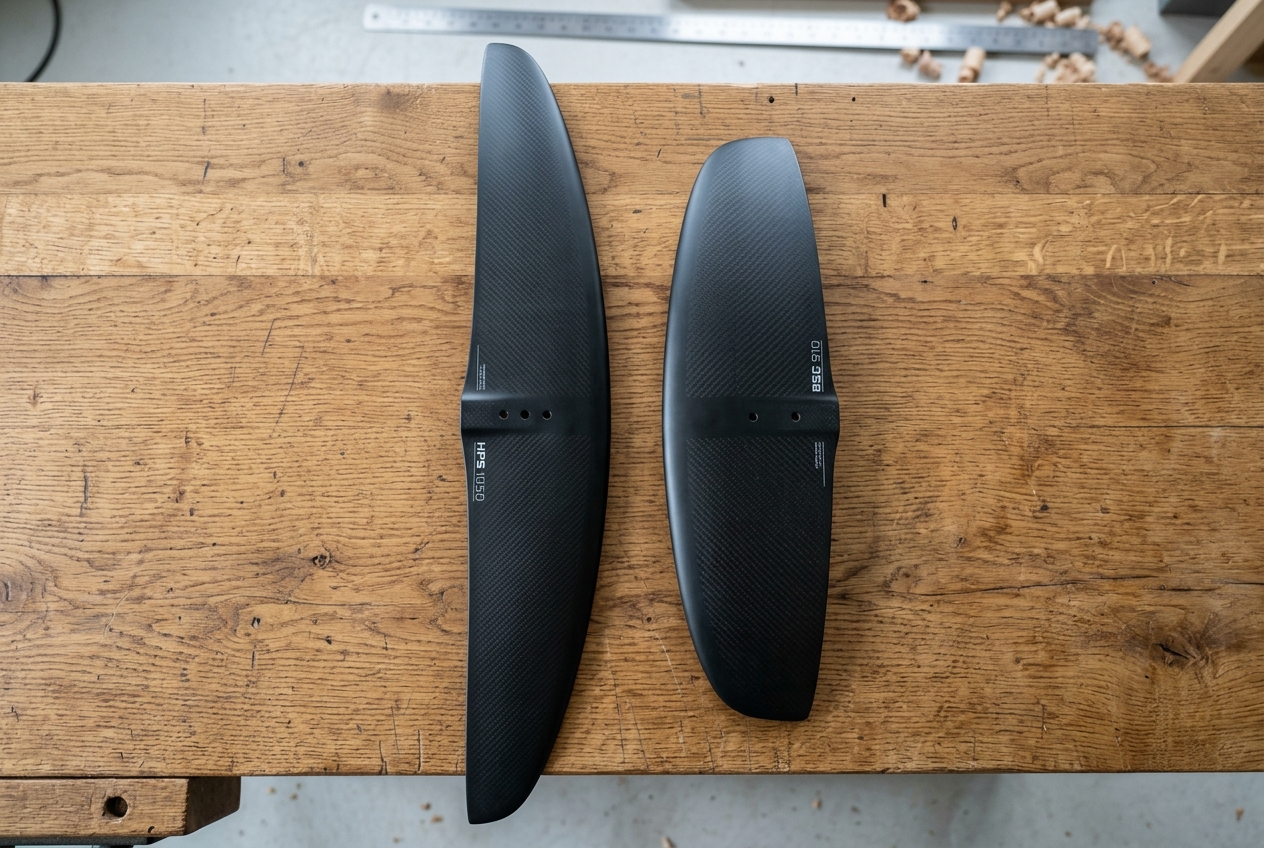
For the full breakdown of what changes on the water and when to upgrade, see our guide to high aspect vs low aspect foils.
How does mast length change the way a foil rides?
A longer mast lifts you higher above the water and lets you pump more efficiently, but it also raises the consequences of a bad fall. A shorter mast keeps you closer to the surface, which is more forgiving while you’re learning to control pitch.
| Level | Mast length | Why |
|---|---|---|
| Beginner | 60 to 70 cm | Shorter falls, keeps you close to the water while you learn pitch control |
| Intermediate | 70 to 85 cm | Balance of stability and manoeuvrability as flights get longer |
| Advanced | 85 to 100 cm | More clearance above chop, more efficient pumping in light wind |
MACkite’s own mast sizing guide puts beginners at around 60 to 70 cm, on the basis that a shorter mast keeps the rider close to the water and feels less intimidating. A taller mast pays off once you’re pumping to stay on foil, since more length under the board means each pump stroke translates into more efficient forward drive, and it clears more chop before the wing touches waves.
Mast material changes how that length behaves under load rather than what the length itself does. For the stiffness, weight and price trade-offs between aluminium and carbon, see carbon vs aluminium foil mast.
What causes drag on a hydrofoil, and how do foils reduce it?
A hydrofoil fights two main types of drag: profile drag from the wing’s shape moving through water, and induced drag, the unavoidable byproduct of generating lift in the first place. Both slow the foil down and both are shaped by wing design choices rather than eliminated outright.
- Profile drag comes from the wing’s thickness and outline. Thicker profiles generate lift more aggressively at low speed but create more drag at higher speed; thinner profiles cut drag and favour higher speed ranges.
- Induced drag is generated as a direct consequence of producing lift, and it drops as aspect ratio rises. This is why high aspect wings hold speed and glide further once they’re up and flying.
- The trade-off is that the low-drag, high-aspect end of the spectrum needs more speed to start generating lift at all, so it is not automatically the faster choice at take-off.
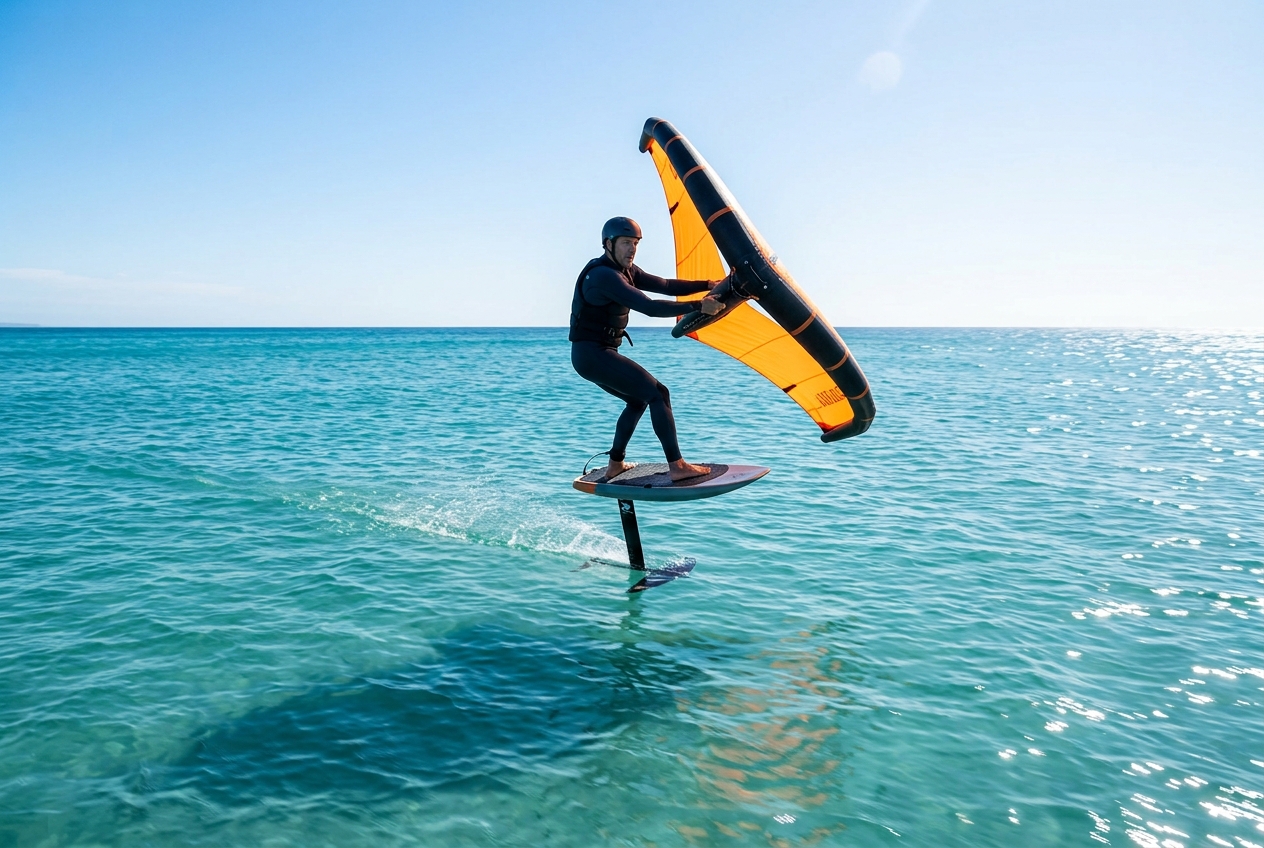
None of these variables act alone. A foil’s total drag and total lift come from the front wing, stabiliser, fuselage length and mast all working together, which is why changing one part, like swapping to a taller mast or a higher aspect front wing, shifts the whole ride rather than just the one figure on the spec sheet.
Frequently asked questions
What makes a hydrofoil lift out of the water?
Speed and angle of attack. Water flowing over the curved top of the front wing speeds up and drops in pressure, while slower flow underneath pushes up harder. Once that pressure difference produces more lift than the rider's weight, the board rises clear of the surface.
What does the stabiliser do on a hydrofoil?
It balances pitch and shapes how the foil turns and transitions, while the front wing does most of the lifting. Swapping only the stabiliser, wider and lower-aspect for stability, narrower and higher-aspect for less drag and sharper turning, can change how a foil feels without touching the front wing at all.
What aspect ratio is easiest to learn on?
Low to mid aspect, up to about 8.5, is the easiest starting point. These wings lift at lower speeds and are more stable, at the cost of top-end speed and glide. High aspect wings, from about 8.5 upward, need more speed to start flying and punish sloppy pitch control.
What mast length should a beginner wing foiler use?
Around 60 to 70 cm. A shorter mast keeps you closer to the water, which means shorter falls and an easier time learning pitch control. Intermediate riders usually move to 70 to 85 cm as flights get longer, then 85 to 100 cm once they're pumping in light wind and riding over chop.
What causes a hydrofoil to stall?
Pitching the nose up too far or slowing down too much makes water flow separate from the top of the front wing, collapsing the pressure difference that creates lift. The foil drops back onto the water, the same failure mode that causes an aircraft wing to stall.
