
Yes, but not from day one. Wing foiling doesn’t require a harness to ride, and most riders learn without one. Once you can foil confidently for 100+ yards, a waist harness (not a seat harness) takes the pull off your arms on longer, powered sessions. Budget picks start around £75; premium waist harnesses run to $189.
Do you need a harness for wing foiling?
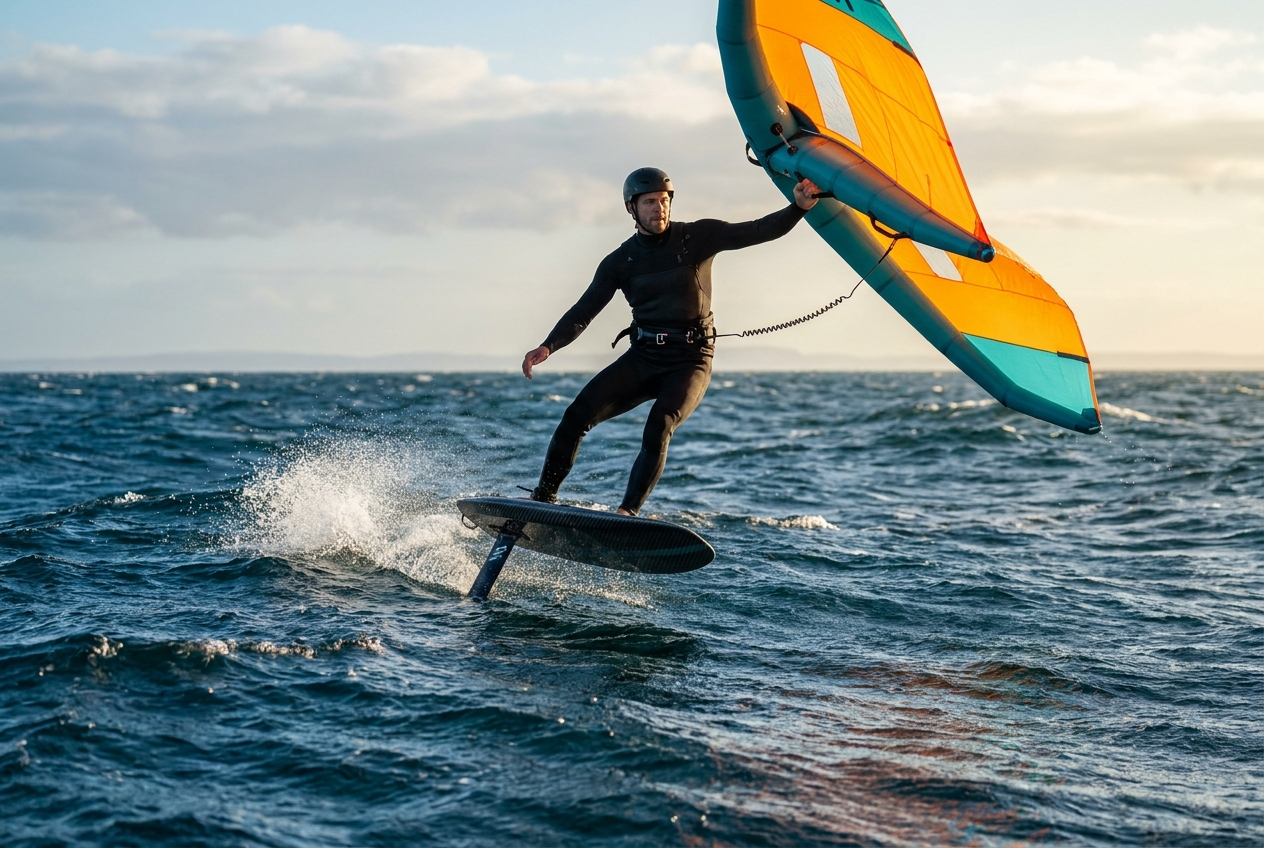
No. Unlike kitesurfing, wingfoiling does not require a harness to ride, and many riders wing foil holding the wing in their hands for the whole session. A harness hooks you into a line attached to the wing’s handles or boom, taking load off your arms so you can ride one-handed or hands-off for stretches.
As a beginner, you’ll learn without one so you can focus on balance and wing control. A harness becomes worth adding once you’re doing longer sessions or powered-up riding in stronger wind, not before.
It’s an optional add-on, not safety gear. A wing leash still does the job of keeping your wing attached to you if you fall or lose grip, and a harness is not a substitute for one.
When should you start using one?
Once you can ride confidently for around 100 yards. One instructor’s rule of thumb: “wait till you get to the point where you can ride pretty confidently and adequate wind and you know, you might not be nailing your transitions yet or doing all the fancy tricks but in the right wind, you can go out there and pump up and ride confidently for 100 yards. At that point, it’s a good time to add a harness line.”
Adding a harness too early works against you. It gives you one more thing to manage while you’re still learning to balance, pump, and read the wing, so the sequence matters: ride first, hook in later.
What a harness actually saves you
- Arm and grip fatigue. The harness line carries the wing’s pull instead of your hands and forearms, so a long tack upwind doesn’t turn your arms to jelly.
- Hands-off riding. Hooked in, you can ride one-handed almost indefinitely and briefly hands-off, giving your lead arm a rest.
- A lower centre of gravity. The harness moves the load from your shoulders down to your waist, letting you lean back and drive upwind with more control in gusty conditions.
Waist harness or seat harness, which is right for wing foiling?
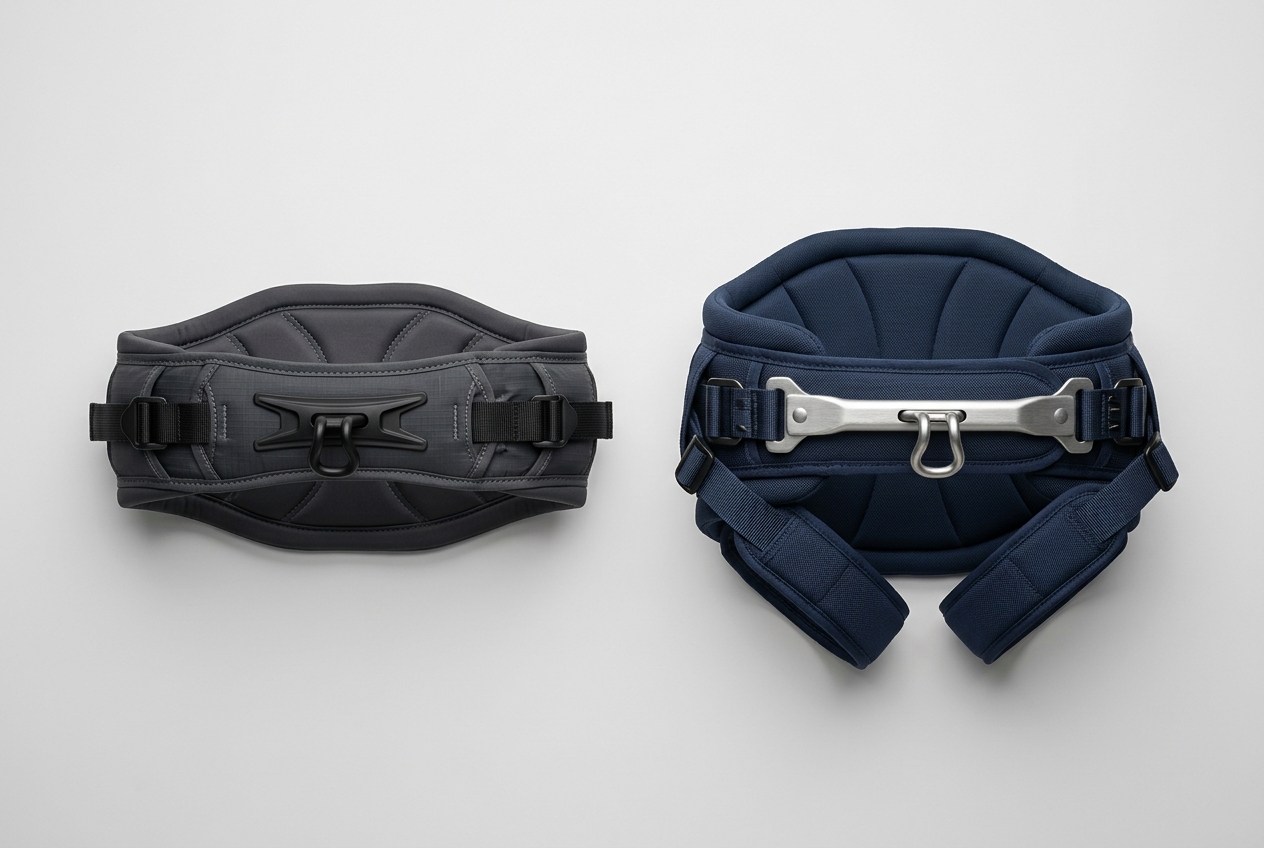
Waist. Wing-specific waist harnesses are low-profile belts worn around the lower torso with a hook in front, built to be flexible enough for the constant stance changes of foiling: kneeling to paddle out, lying prone, standing back up.
Seat harnesses, the leg-strap style common in windsurf racing and powered kiting, are not built for this. Wingfoiling’s upright stance and constant footwork sit closer to windsurfing on a shortboard than to racing, and a seat harness’s low hook point is less effective against a wing whose pull comes from higher up. It can also restrict the quick footwork foiling demands.
If you already own a seat harness from kiting or windsurfing you can try rigging it with a harness line, but you’ll need to watch the hook position, and a metal spreader bar can ding your board deck when you climb back on. Wing-specific waist harnesses avoid that with padded or plastic hooks that also swivel out of the way when you’re not hooked in.
| Harness type | Hook position | Best for wing foiling |
|---|---|---|
| Waist harness (belt style) | Front, lower torso | Standard choice; flexible for kneeling, paddling, standing |
| Seat harness (leg straps) | Low, at the hips | Niche; carried over from windsurf racing or kiting, not designed for foiling’s footwork |
What are the pros and cons of wing foiling with a harness?
The main upside is endurance: less arm fatigue, longer sessions, and better control driving upwind in gusts. The main downside is a real one, not a theoretical one: staying hooked in through a fall puts extra load on your wing.
| Pros | Cons |
|---|---|
| Takes the wing’s pull off your hands and forearms | One more skill to learn: hooking and unhooking cleanly takes practice |
| Lets you ride one-handed, or briefly hands-off, to rest your arms | Extra gear to buy, size, and pack (harness plus harness line) |
| Lowers your centre of gravity for more control in gusty, powered conditions | Falling while still hooked in adds stress to the wing and can damage it |
On the fall risk specifically: “do your best to unhook if you’re falling, if you’re hooked in and you’re falling, try to pull in and down to unhook. If you’re falling with this on there, it’s going to put a little bit more undue stress on your wing.” It’s not a common problem for experienced riders, but it’s the one habit worth drilling before you rely on the harness in stronger wind.
What’s the best wing foil harness to buy?
It depends on budget and how much support you want. A padded belt is enough for occasional use; a hardshell harness spreads the load better on longer, powered sessions.
| Harness | Type | Price | Best for |
|---|---|---|---|
| Forward WIP Wing Belt 2.0 | Padded waist belt, plastic hook | around £75 | First harness, budget |
| Ozone Connect Wing V1 | Waist, quick-release spreader bar, ~600g | £134.95 | All-round, leash attachment ring built in |
| Mystic Majestic 2026 | Waist, hardshell backplate | £170.00 | Longer sessions, more support |
| Ride Engine Bati | Waist, Curv composite hard shell | $189 | Premium, load spread across a rigid shell |
Whichever harness you buy, budget for a harness line separately if your wing doesn’t ship with one. Start the line short enough that you can still comfortably hold the wing while hooked in, and practise the hook-in and unhook motion in light wind or on land before you rely on it out on the water.
Frequently asked questions
Do beginners need a wing foil harness?
No. Wing foiling doesn't require a harness to ride, and most beginners learn without one so they can focus on balance and wing control. It's worth adding once you can ride confidently for about 100 yards and want to extend your sessions or handle stronger wind.
What's the difference between a waist and seat harness for wing foiling?
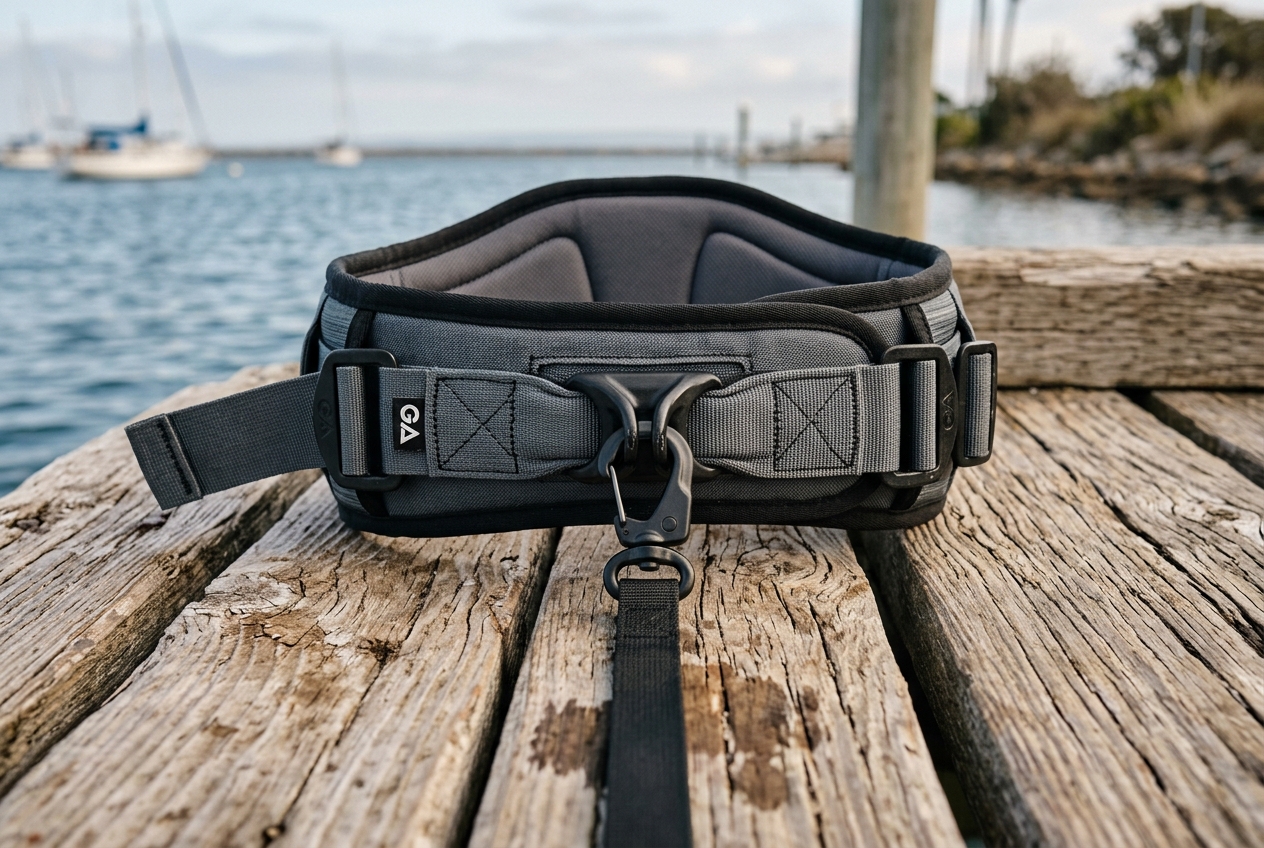
A waist harness is a low-profile belt with a front hook, built to flex through foiling's kneeling and standing changes. A seat harness has leg straps and a low hip hook, designed for windsurf racing and kiting; it's less effective against a wing's higher pull point and can restrict foiling's footwork.
How much does a wing foil harness cost?
Roughly £75 to $189. A padded waist belt like the Forward WIP Wing Belt 2.0 costs around £75, mid-range harnesses with a quick-release spreader bar like the Ozone Connect V1 run about £135, and hardshell harnesses such as the Mystic Majestic or Ride Engine Bati sit at £170 to $189.
Is it dangerous to fall while hooked into a harness?
It's not usually dangerous to you, but it can stress the wing. Staying hooked in through a hard fall puts extra load on the wing and risks damaging it, so the habit to drill is pulling in and down to unhook the moment you feel yourself going down.
Do I need a harness line as well as a harness?
Yes. The harness hook connects to a harness line attached to your wing's handles or boom, not to the harness alone. Start the line short enough that you can still hold the wing comfortably while hooked in, and practise hooking and unhooking in light wind before relying on it.
