
Bali gets the headlines, the traffic jams, and the Instagram queues. Lombok, its quieter neighbour just across the strait, gets the wind. While most foilers are still elbow-fighting for water in Sanur, the south coast of Lombok sits there with its arid hills, its horseshoe bays, and a southeast trade wind that fills in like clockwork through the dry season. It is, by most measures, one of Southeast Asia’s most underrated wind-sports playgrounds.
This is not a polished, lesson-on-every-corner kind of destination yet. The wing foiling scene here is genuinely emerging rather than established, which means you trade a little convenience for a lot of space. The headline spots have been a kitesurfing secret for years, and foilers are quietly discovering that the same flat lagoons and side-onshore breeze that suit a kite suit a wing beautifully. Warm water, empty water, and a wind window you can plan a trip around: that is the pitch, and it largely holds up.
What follows is a practical, slightly opinionated guide to wing foiling Lombok’s south coast: when the wind blows, where to ride by skill level, who can teach you, and how to turn up without the whole thing turning into a logistics puzzle. Pack a rash vest, leave the thick wetsuit at home, and read on.
Wing Foiling Conditions
Wind Patterns and Seasonality
Lombok’s wind story is a dry-season story. The reliable breeze arrives with the southeast trade winds, and the window broadly runs from around May to September or October, with the most consistent action stacked through July and August. During this stretch the south coast turns on side-onshore trades that, in season, tend to average somewhere in the 15 to 20 knot range, with stronger days reportedly pushing up toward the mid-20s on the more exposed eastern bays. That is a flattering bracket for wing foiling: enough to get up and going on a mid-sized wing, rarely so much that you are overpowered and white-knuckling it.
The other half of the equation is rain, or rather the lack of it. Southern Lombok is an arid region, noticeably drier than green, lush Bali, and the dry-season months bring clear skies and minimal rain to go with the breeze. That matters for trip planning. You are not gambling against daily tropical downpours eating your session; you are mostly waiting for the thermal-assisted trades to fill in, which they typically do as the day warms up. If you want to nail down what size wing and board you should be packing for a given forecast, our wing foil calculator is a quick sanity check before you commit luggage space.
Outside the dry season the wind goes quiet and the wet season takes over, so this is firmly a seasonal destination rather than a year-round one. Turn up in January chasing breeze and you will mostly find yourself drinking coconuts and watching surfers instead. Which, to be fair, is not the worst consolation prize on the planet, but it is not why you brought a wing.
Water Conditions
Here is the part that makes Lombok an easy sell: the water is bathwater-warm all year. Sea temperatures around the island hover roughly in the 27 to 29°C band, dipping only slightly in the August cool patch and nudging warmer toward the start of the year. In plain terms, you do not need a wetsuit. A rash vest or a 1 to 2mm top is plenty, and most riders here are perfectly comfortable in boardshorts and a long-sleeve rashie. Bring that long sleeve less for warmth and more for the equatorial sun, which will quietly cook you over a multi-hour session if you let it.
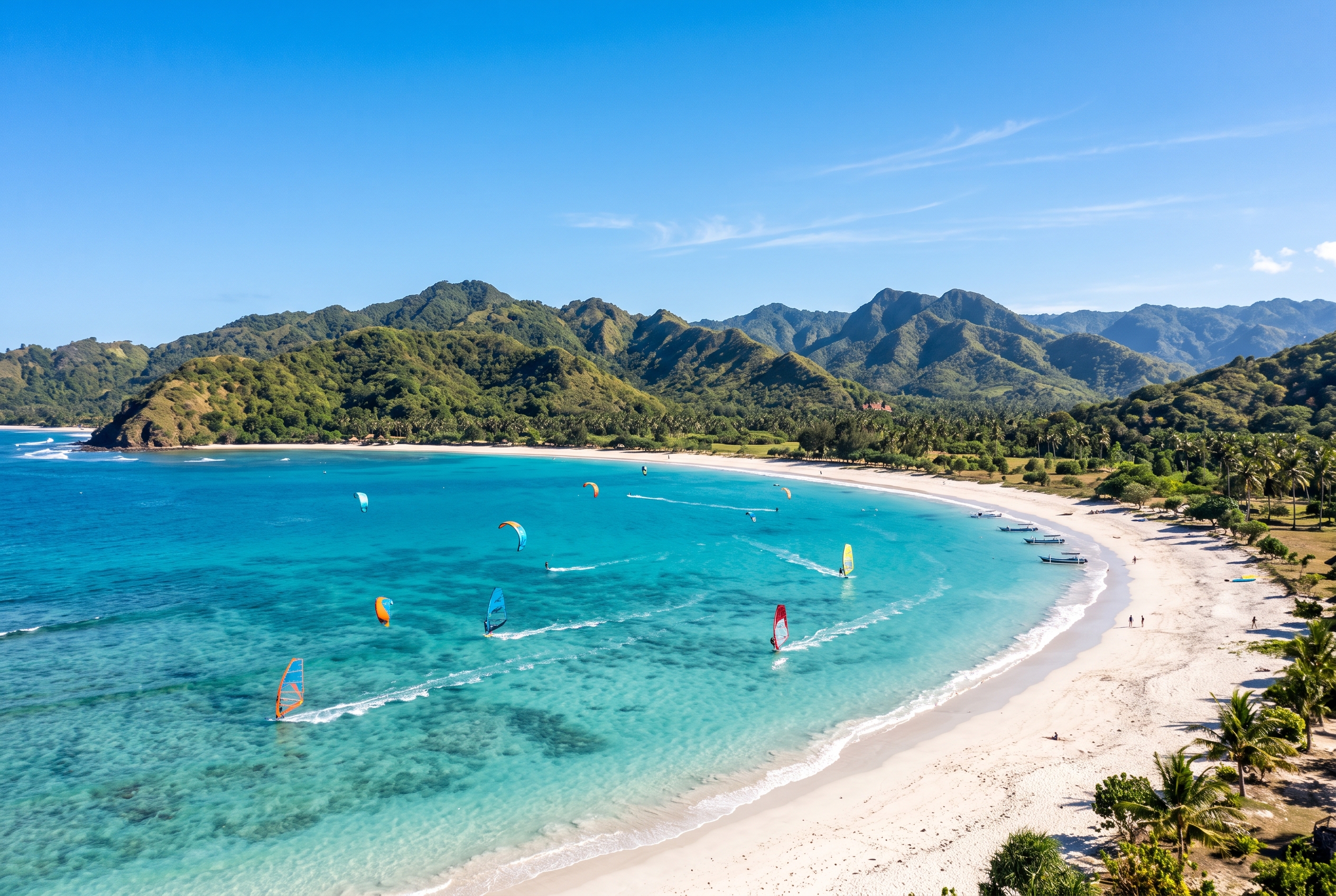
The riding surface varies by spot. The signature south-coast lagoons offer shallow, sheltered water near shore that flattens out nicely, though the wider lagoons can get choppy once the trades are properly cranking. That chop is the main thing that catches out total beginners, even on otherwise friendly flat water. Reef is part of the landscape here, so foilers should pay attention to tide and depth, particularly on lower water where a long mast and a shallow reef flat do not mix. The reward for that attention is the kind of clean, uncrowded riding space that has all but vanished from busier foil destinations.
Best Spots for Different Skill Levels
Kaliantan is the crown jewel and the engine room of the local scene. Out on the southeast, this is the spot that consistently catches the cleanest southeast trades, with a lagoon several kilometres long and wide, open beaches. It has long been the headline kitesurfing location on the island, and its mix of flat lagoon, nearby waves, and downwind potential translates directly to wing foiling. The shallow lagoon is forgiving enough that improvers can find space to work, though the choppier sections reward riders who already have their basics dialled.
Kuta Lombok and its surrounding bays are the most beginner-friendly base. The shallow lagoons and gentler waves near Kuta, with southeast and northerly winds filling in across the season, make it a sensible place to learn or to log easy sessions close to where you are sleeping. It is also the most developed corner of the south coast, which means food, beds, and help are all within reach if your first foiling attempts go sideways, as first attempts tend to.
Ekas Bay is the advanced and adventure option. This remote, dramatic bay on the southeast peninsula is better known to surfers and tow-foilers chasing reef-break waves, and it is where you will find the more committing side of Lombok foiling. Nearby Are Guling rounds out the cluster of spots favoured for their consistent wind. Meanwhile Selong Belanak and Gerupuk, the famous wide, sandy beginner-surf bays west and east of Kuta, are more about mellow waves and scenery than reliable wing wind, but they are gorgeous and worth a day even if you leave the wing on the beach. If you are completely new to all this, start with our beginner’s guide before you go, then build on it with a local lesson.
Local Wing Foiling Scene
Schools and Lessons
The instruction scene here grew out of kitesurfing, and that is still its centre of gravity. The main operator is the Lombok Kitesurfing school based around Kaliantan, which runs lessons and lodging packages and has the local knowledge of tides, wind timing, and which patch of lagoon to use on a given day. As a rough yardstick, most first-timers in this kind of setup progress over something like 10 to 15 hours of instruction spread across several days, rather than expecting to crack it in a single afternoon.
Wing-specific coaching is newer and thinner on the ground than kite coaching, which reflects how fresh the wing scene is here. If you are arriving as a wing foiler, the smart move is to contact schools directly ahead of time, confirm they cover wing foiling specifically rather than just kite, and ask about gear. A kite-school home break with shallow water, steady side-onshore wind, and someone on the beach who knows the spot is exactly the environment you want to learn or progress in, regardless of which sport got there first.
Gear Rentals
Be realistic about rentals: this is a remote, emerging destination, not a Tarifa-style gear superstore. The most reliable approach is to arrange equipment through the established schools rather than assuming there is a walk-up rental shack on every beach. Wing-specific kit, in particular, may be limited, so confirm availability in advance and have a backup plan.
For many travelling foilers, the path of least resistance is bringing your own gear. A wing, an inflatable board or a compact hard board, and a foil pack down into manageable travel luggage, and having your own kit removes the single biggest variable in a place where rentals are thin. If you do travel with gear, factor airline board-bag fees into your budget and double-check the size limits on the smaller hops into Lombok.
Clubs and Community
The community is small, friendly, and clustered around the kite spots, especially Kaliantan during the windy months and the Kuta scene year-round. There is no sprawling clubhouse culture here; instead you get the older, looser version of the sport, where the people on the beach are a genuine source of information and the lineup is rarely crowded. Riders who base out of the Kaliantan and Ekas accommodations tend to share local knowledge freely, which is worth more than any noticeboard.
Because foiling overlaps with a strong, long-established surf community here, you will also find a broader water-sports crowd than the wind numbers alone suggest. That cross-pollination is part of the charm. On a day the trades do not fill in, the same people will happily point you toward a surf break or a snorkelling spot instead.
Off the Water
Cultural Attractions
Lombok is the heartland of the Indigenous Sasak people, and its culture is distinct from Bali’s Hindu rhythms. The island is predominantly Muslim, and traditional Sasak villages in the south, with their thatched rice-barn architecture and weaving traditions, are an easy and rewarding half-day away from the beach. It is a useful reminder that you have left the well-trodden Bali circuit and landed somewhere with its own identity, pace, and customs worth respecting.
Dining
Kuta is the dining hub of the south coast, with everything from warungs serving Lombok’s famously fiery local cooking to traveller-friendly cafes and the odd surprisingly good restaurant attached to a hotel. The name Lombok means chili pepper, and the local cuisine lives up to it, so if you cannot handle heat, learn the phrase for mild before you order. Fresh grilled fish, nasi campur, and strong Indonesian coffee are the post-session staples, and you will not spend much getting them.
Nightlife and Entertainment
Set your expectations accordingly: this is not a party destination, and that is rather the point. Kuta has a relaxed scene of beach bars, sunset spots, and casual venues that suit a tired foiler more than a club-hopper. The vibe is low-key and early, in keeping with a place where most people are up at dawn for wind or waves. If you want neon and DJs until sunrise, that is what Bali is for; here the entertainment is the sunset, a cold Bintang, and comparing notes on the day’s session.
Nature and Sightseeing
This is where Lombok genuinely outshines its neighbour. The south coast is a string of dramatic, mostly empty white-sand bays backed by green headlands, and Selong Belanak in particular is regularly tagged as one of Southeast Asia’s best beaches. Inland, the island is dominated by Mount Rinjani, an active volcano and one of Indonesia’s highest peaks, ringed by rice terraces and waterfalls. Off the northwest coast sit the Gili Islands, the famous trio of car-free sandbars that make an easy add-on for snorkelling and a change of scenery. Between the volcano, the bays, and the islands, the non-windy days more or less plan themselves.

Practical Travel Information
How to Get There
You fly into Lombok International Airport (airport code LOP), near Praya in the centre-south of the island. It is well connected by short domestic hops from Bali and other Indonesian hubs, and the airport is conveniently positioned for the south coast. From LOP, Kuta Lombok is a short, easy transfer of roughly half an hour, with metered taxis and pre-booked private transfers both widely available and inexpensive by international standards.
The more remote spots take longer. Kaliantan and the Ekas peninsula sit a couple of hours’ drive from the airport along the southeast coast, so factor in a longer transfer or, more commonly, an accommodation package that includes the run from the airport. If you are arriving with board bags and a foil, arranging a private transfer is well worth the modest extra cost over wrangling gear into a metered taxi.
Where to Stay
For a flexible base with the most food, transport, and beginner-friendly water, stay in Kuta Lombok. It has the widest range of accommodation on the south coast, from cheap homestays to mid-range hotels with pools, and it puts you within easy reach of multiple bays. This is the obvious choice for a first trip or for anyone who wants options on and off the water.
For a wind-first trip, base yourself out at Kaliantan or on the Ekas peninsula, where on-site bungalows put you steps from the lagoon and the kite-school infrastructure. You sacrifice the variety and dining of Kuta, but you wake up at the spot, which during a good wind window is exactly the trade you want to make. Many riders split the difference: a few days in Kuta to acclimatise, then out to Kaliantan when the forecast lines up.
Best Time to Visit
For wind, aim squarely at the dry season, roughly May through September or October, with July and August the most bankable months for consistent trades. That window also delivers clear, dry, sunny weather, so you are optimising for wind and good conditions at the same time. If you want the surf and scenery without committing to the windiest, busiest weeks, the shoulders of the season in May or September are a sweet spot of decent breeze and slightly fewer people.
Budget Estimates
Lombok is easy on the wallet, which is a large part of its appeal. Budget homestays in Kuta can be found at the low end of around 13 USD a night for a room with air-conditioning and breakfast, with comfortable mid-range hotels landing nearer 30 to 65 USD depending on the pool and the polish. Airport taxis to Kuta run from roughly 100,000 to 190,000 IDR, on the order of 7 to 11 USD, with private transfers from about 17 USD.
Food and drink are cheap by Western standards, especially if you eat local. The bigger line items for a foiling trip are lessons and any gear you rent or fly in, which sit well above the day-to-day living costs, so confirm those prices directly with the schools when you book. All told, a wind-chasing week here can be remarkably affordable once your flights are paid for.
Wrapping Up
Lombok rewards foilers who like their wind reliable, their water warm, and their lineups empty. It is not the place for turn-up-and-rent convenience or all-night nightlife, but if you time your trip to the dry-season trades and base yourself sensibly between Kuta’s comforts and Kaliantan’s lagoon, you get a genuinely special wing foiling experience in a corner of Indonesia that the crowds have not yet found. Bring your own gear, book your lessons ahead, respect the reef and the sun, and you will understand why people who know the island quietly keep coming back.
If Lombok is on your Southeast Asia shortlist, it is worth lining it up against the region’s better-known spots. Compare it with the easy, lesson-rich water of Sanur, Bali just across the strait, the laid-back sandbars of the Gili Islands on Lombok’s own doorstep, or the warm, scenic conditions up at Langkawi, Malaysia. Different flavours of the same tropical promise, and Lombok holds its own among them.
Planning a wider trip through the region? Compare seasons, wind and budgets across all 13 spots in our guide to the best places to wing foil in Southeast Asia.
Frequently asked questions
When is the best season to wing foil in Lombok?
The dry season, roughly May to September or October, delivers the most reliable southeast trade winds, with July and August the most consistent and clear, sunny weather throughout.
How much wind does Lombok's south coast get?
In season the side-onshore southeast trades typically average around 15 to 20 knots, with stronger days on the more exposed eastern bays reportedly pushing toward the mid-20s.
Is Lombok good for beginner wing foilers?
Kuta Lombok's shallow lagoons and gentler waves suit beginners best, while Kaliantan's flat lagoon works for improvers; lagoon chop can challenge total newcomers, so a lesson helps.
What water temperature is it and do I need a wetsuit?
Water sits around 27-29°C year-round, so no wetsuit is needed. A rash vest or 1-2mm top is plenty, mainly for sun protection during long sessions.
How do you get to Lombok and is it expensive?
Fly into Lombok International Airport (LOP); Kuta is about a 30-minute transfer for roughly 7-11 USD. Lombok is budget-friendly, with homestays from around 13 USD a night.
