
Hampton Beach sits on the eastern shore of Port Phillip Bay, about 15 kilometres south of Melbourne’s CBD, and it is one of the most convenient places in Australia to learn to wing foil. The bay is a huge protected body of water, so you get flat conditions rather than shore break, and the spot fires on the southerly and south-westerly sea breezes that dominate the warmer months.
The trade-off is temperature and one specific hazard. This is temperate southern Australia, not the tropics: the water sits near 12°C in winter and only reaches about 20°C at the height of summer, so a wetsuit is required year-round. There is also reef at Hampton, which means tide awareness matters more here than the flat-water reputation suggests.
What you get in return is rare: genuinely good bay riding a half-hour train ride from the centre of one of the world’s most liveable cities. Sessions in the morning, galleries, coffee and live music in the afternoon.
Wing Foiling Conditions
Wind Patterns and Seasonality
Hampton works best in southerly and south-westerly wind. Through spring and summer, Port Phillip Bay runs on a reliable sea-breeze cycle: the thermal builds through the late morning and fills in across the afternoon, which is why the bay’s car parks stay empty at dawn and fill up after lunch.
Winter flips the pattern. June through August brings northerlies that commonly blow 20 to 30 knots, which is the strongest and most consistent wind of the year. It is also the coldest water of the year, so those days belong to riders with proper rubber and some experience.
Because the bay is big and the shoreline curves, wind direction matters more than raw strength when choosing where to launch. A day that is unrideable at Hampton is often excellent twenty minutes up or down the coast, which is covered in the spots section below. If you are unsure what a forecast actually means for your gear, our wing foil wind range guide explains how to read conditions at each stage of progression.
Water Conditions
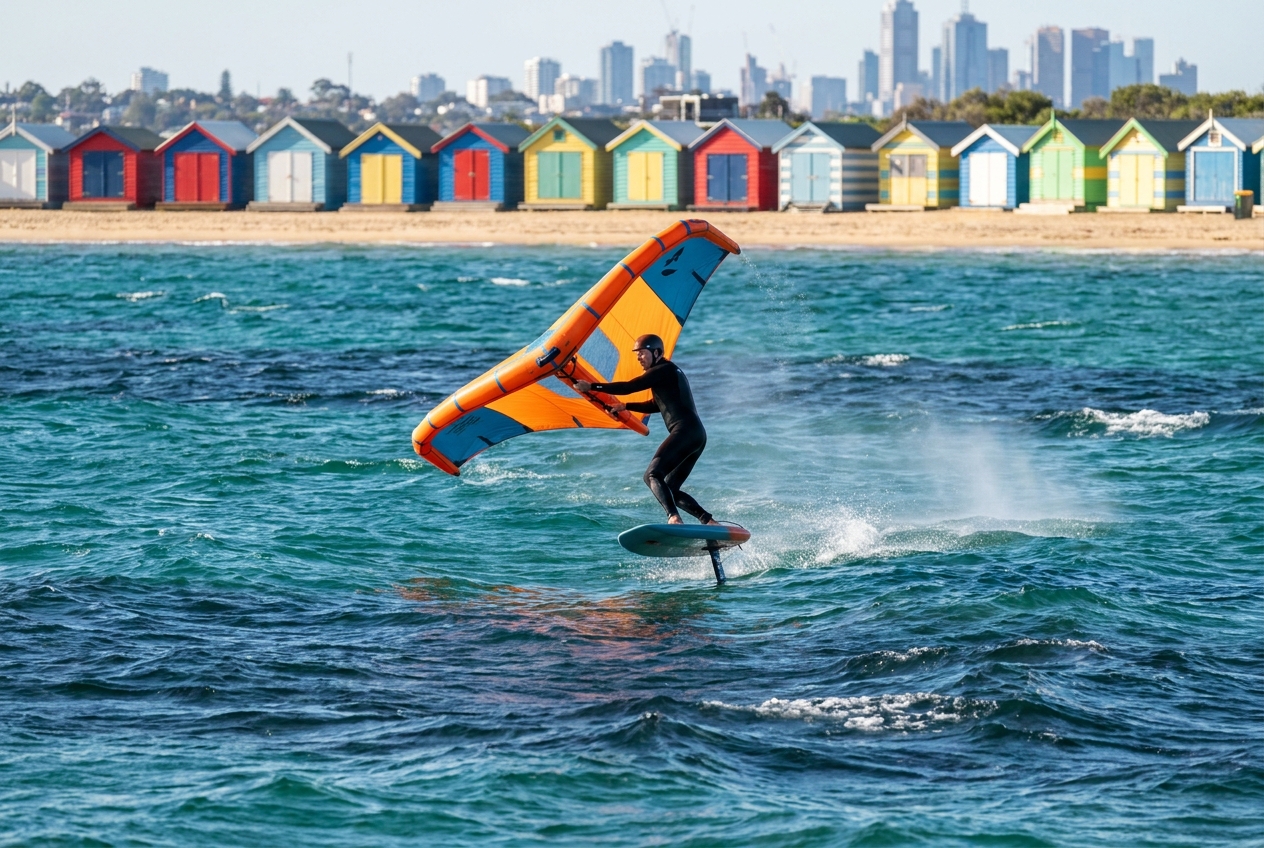
Port Phillip Bay is effectively a giant protected harbour, so the water stays flat to lightly choppy and you rarely deal with the swell you would find on the open coast. That is the single biggest reason the bay suits learners and anyone drilling transitions.
Water temperature is the part visitors underestimate. Winter sits around 11.5 to 12.5°C and summer peaks near 19.5 to 20.5°C. Locals ride winter in a 4/3 or 5/4/3 steamer, usually with boots and often gloves and a hood in the depths of July. In summer a 3/2 is plenty.
Tides are modest, roughly a half metre to a metre of range, but they matter at this particular beach because of the reef. Ride Hampton at mid to high tide to keep clear of it. Hitting reef with a foil is expensive at best and dangerous at worst, so if you are new to the spot, ask locally or go on a rising tide until you know the layout.
Best Spots for Different Skill Levels
The advantage of riding this stretch of coast is that a short drive covers almost every wind direction. Sandringham shop SHQ Boardsports maintains a local spot guide, and the summary below follows it:
| Spot | Best wind | Notes |
|---|---|---|
| Hampton | Southerly to south-westerly | Good for learning. Reef hazard, so favour mid to high tide |
| Green Point, Brighton | Northerly to north-westerly | The pick on winter northerly days |
| Sandringham | Easterly or westerly, plus southerlies and sea breezes | The most versatile option, but it can be gusty |
| Elwood (Dawson and Cole Streets) | South-westerly to westerly | Expect some shore break |
| St Kilda and Middle Park | Southerlies and summer sea breezes | St Kilda West Beach offers shelter from shore break |
Beginners should start at Hampton on a mid to high tide in a steady southerly, or at St Kilda West where the shore break is knocked down. Intermediates get the most out of Sandringham, since it opens up the widest range of forecasts, with the caveat that gusty days punish sloppy technique. Advanced riders chasing the strongest wind of the year want Green Point on a winter northerly.
Local Wing Foiling Scene
Schools and Lessons
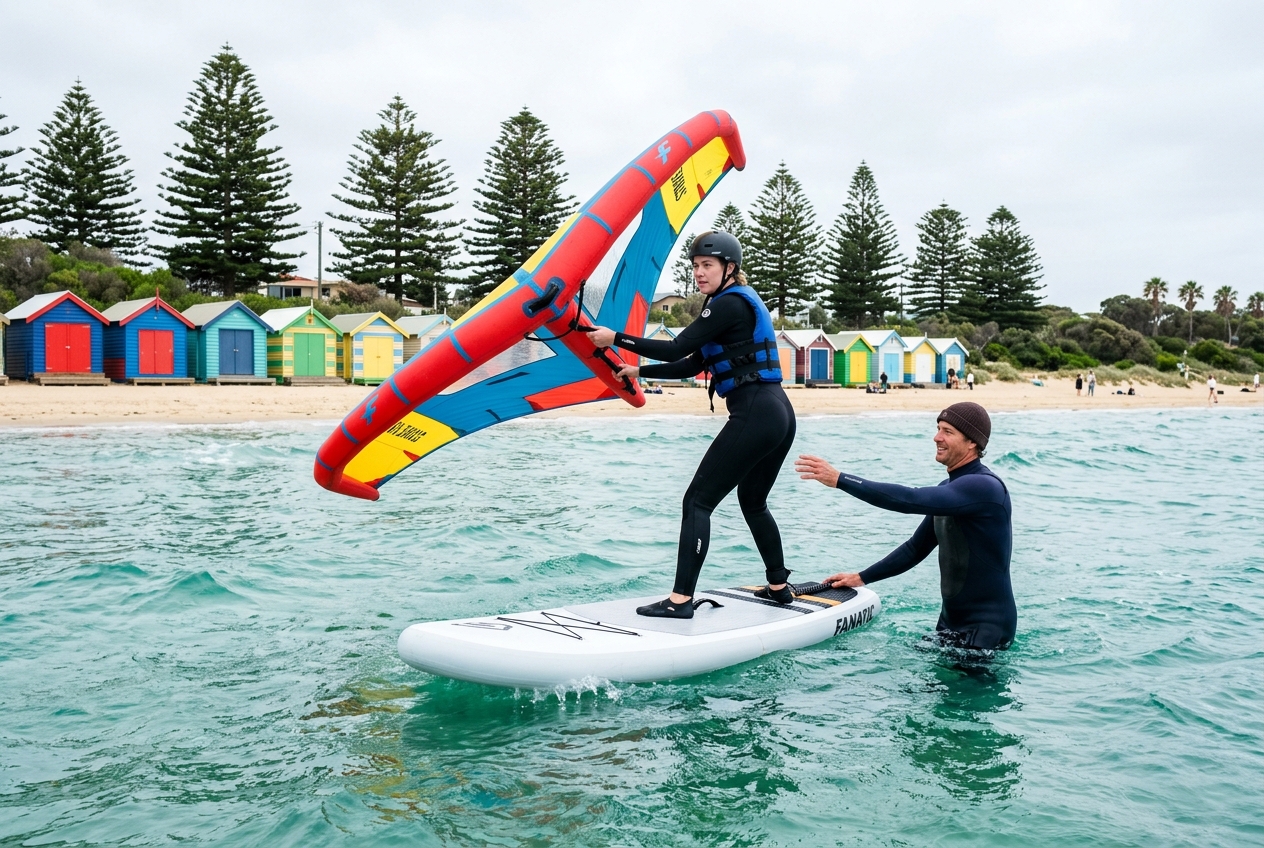
Hampton itself has no beachfront school. The instruction for this whole stretch of bay is concentrated in St Kilda, roughly fifteen minutes north, and every operator below teaches on the same body of water you will be riding.
- Kiterepublic (St Kilda) runs wing foiling lessons at around AUD $299 for one person and $359 for two sharing, and stocks Duotone, Naish and Cabrinha.
- The Zu Kite Club at 330 Beaconsfield Parade, St Kilda, charges about AUD $289 for one person or $349 for two on a two-hour lesson.
- Gokite teaches off the St Kilda foreshore from a beach trailer.
- SHQ Boardsports in Sandringham is the closest shop to Hampton and the source of the spot guide above.
Budget two or three lessons rather than one. Wing handling, board control and actually flying the foil are separate skills, and the bay’s flat water is forgiving enough that most people progress quickly once someone has corrected their stance. If you are starting from scratch, read our complete beginner’s guide to wing foiling before you book.
Gear Rentals
There is no walk-up rental hut on Hampton Beach, which is the spot’s main practical weakness. Rental runs through the shops: SHQ Boardsports in Sandringham is the nearest, and Kiterepublic in St Kilda rents to riders who can demonstrate they are competent. Expect to show some evidence of ability before anyone hands over a foil.
Most visitors from elsewhere in Australia simply bring their own kit, since domestic carriers are reasonable about board bags. If you are travelling in and want to size a setup for bay conditions before you go, our wing foil gear calculator will get you close.
Clubs and Community
There is no formal Hampton wing foiling club, and you do not need one. The scene organises itself through Melbourne wind sports groups on Facebook and through the Seabreeze forums, where Port Phillip Bay riders post conditions and arrange sessions daily. Posting that you are visiting is usually enough to get pointed at the right beach for the forecast.
On a good southerly you will find a cluster of vans and riders rigging along the foreshore. Melbourne wind sports culture is friendly and heavily crossover, so expect kiters, windsurfers and wingers sharing the same launches and the same coffee queue.
Off the Water
Cultural Attractions
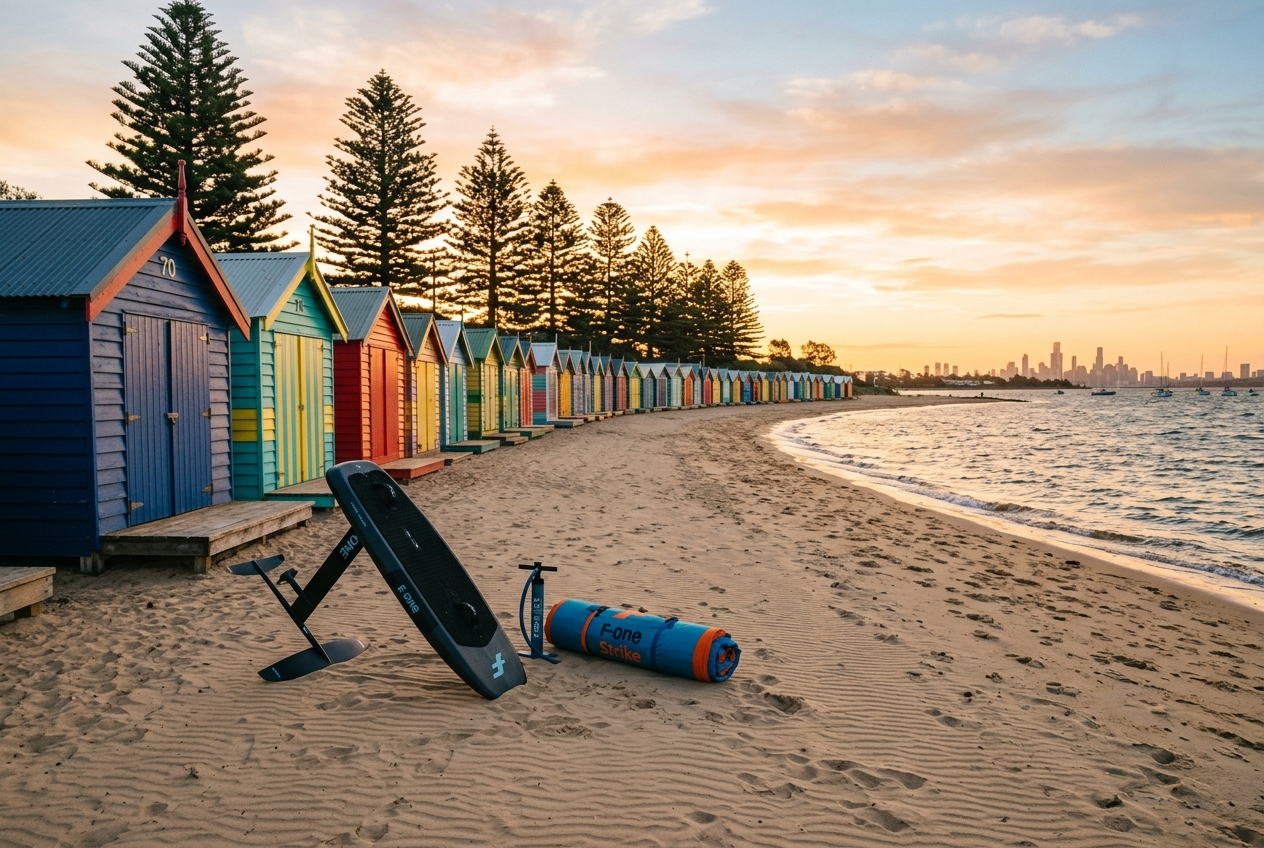
The famous Brighton Bathing Boxes sit just up the coast: a row of brightly painted Victorian-era timber boxes that have become one of Melbourne’s most photographed sights. Early morning or sunset avoids the crowds.
In the city, the National Gallery of Victoria is world class and its permanent collection is free. Melbourne’s theatre, live music and laneway bar scene is genuinely one of the best in the southern hemisphere, and all of it is a half-hour train ride from the beach.
Dining
Hampton’s eating is concentrated on the Hampton Street shopping strip a few minutes back from the water, which runs to cafes, bakeries and casual restaurants. This is Melbourne, so the coffee is reliably good almost regardless of which door you pick, and post-session brunch is close to a civic ritual.
For a meal with a view, Riva on Marine Parade at Elwood sits directly on the beachfront a short drive north. St Kilda has the densest concentration of restaurants and bars near the water, including the cake shops along Acland Street.
Nightlife
Hampton is a quiet residential suburb and does not have a nightlife scene. St Kilda does. The Esplanade Hotel, universally called The Espy, has stood at 11 The Esplanade since 1878 and remains one of Melbourne’s great live music venues, with multiple stages and bars looking over the bay. The Grosvenor Hotel on Brighton Road in St Kilda East is a solid local pub option.
Nature and Sightseeing
The Bay Trail is a shared walking and cycling path running for tens of kilometres along the foreshore, and it passes straight through Hampton. It is the easiest way to scout neighbouring launches on a windless day.
Ricketts Point Marine Sanctuary at Beaumaris, immediately south of Hampton, protects 115 hectares of rocky reef and is Parks Victoria managed. It is the best snorkelling within easy reach of the city. Further afield, the Mornington Peninsula and its hot springs are about an hour away, and the Royal Botanic Gardens are a short trip into town.
Practical Travel Information
How to Get There
Melbourne Airport (Tullamarine) is roughly 35 kilometres away, about a 35 minute drive outside peak hour. Hampton Station sits on the Sandringham line with trains roughly every 20 minutes, and the run to Flinders Street in the city takes around 30 minutes. A Myki card caps full-fare travel at $11.40 a day, or $8.00 on weekends.
A car is worth having anyway. The whole point of this coast is being able to move between Hampton, Brighton, Sandringham and St Kilda as the wind direction dictates, and that is tedious with a board bag on public transport.
Where to Stay
Hampton is residential and has very little hotel stock, so most visitors book short-stay apartments and houses across the Bayside suburbs, which has the advantage of a garage or yard for rinsing gear. St Kilda is the obvious alternative if you want hotels, bars and restaurants within walking distance, and it puts you next to the schools.
Best Time to Visit
Late spring through summer, roughly November to March, is the sweet spot for visitors: dependable afternoon sea breezes, the warmest water of the year at close to 20°C, and long evenings. January is the busiest month on the beaches because of school holidays.
March and April are the local favourite. The sea breeze still runs, the water has not yet cooled off, and the summer crowds have gone. Winter delivers the strongest wind of the year on the northerlies, but only if you are happy in a 4/3 with the water near 12°C.
Budget Estimates
Melbourne is a mid-to-high cost city by Australian standards but cheap compared with a tropical wing foiling trip once flights are counted. The fixed costs worth planning around are lessons at roughly AUD $289 to $359 for a two-hour session, public transport capped at $11.40 a day, and short-stay apartments that vary widely by season and suburb. Food ranges from an inexpensive cafe breakfast to a full restaurant dinner, entirely at your discretion.
Wrapping Up
Hampton is not an exotic destination and does not pretend to be. What it offers is flat, protected water, dependable sea breezes through the warmer months, and a cluster of alternative launches within a short drive that between them cover nearly every wind direction. Bring a wetsuit, respect the reef by riding mid to high tide, and it is one of the easiest good sessions in Australia to organise.
Staying longer in the state? Compare it with wing foiling elsewhere around Melbourne and the surf-coast conditions at Torquay, or scan our roundup of year-round wing foiling spots along Australia’s east coast. Flat bay water is also the ideal place to finally nail your transitions, which our guide to the wing foil jibe walks through step by step.
Frequently asked questions
When is the best time to wing foil at Hampton Beach, Melbourne?
Late spring to summer, roughly November to March, gives the most dependable afternoon sea breezes and the warmest water of the year at close to 20 degrees Celsius. March and April are the local favourite because the sea breeze still runs but the summer crowds have gone. Winter brings the strongest wind of all, on 20 to 30 knot northerlies.
What wind direction works best at Hampton Beach?
Hampton works best in southerly and south-westerly wind, which is exactly what the spring and summer sea breeze delivers. On winter northerlies, riders move up the coast to Green Point at Brighton. Sandringham is the most versatile nearby option because it works on easterly or westerly wind as well as southerlies, though it can be gusty.
Do you need a wetsuit to wing foil in Port Phillip Bay?
Yes, all year. Water temperature sits near 11.5 to 12.5 degrees Celsius in winter and peaks around 19.5 to 20.5 degrees in summer. Locals ride winter in a 4/3 or 5/4/3 steamer, usually with boots and often gloves and a hood in July. A 3/2 is enough through summer.
Is Hampton Beach good for beginners?
Yes. Port Phillip Bay is a large protected harbour, so the water is flat to lightly choppy rather than dumping shore break, which makes learning far easier. The one caution is reef at Hampton, so ride mid to high tide to stay clear of it, and ask locally before your first session if you do not know the layout.
Where can you take wing foiling lessons near Hampton Beach?
There is no school on Hampton Beach itself. Instruction is concentrated in St Kilda about fifteen minutes north, where Kiterepublic charges around AUD $299 for one person and The Zu Kite Club around AUD $289 for a two-hour lesson. Gokite also teaches off the St Kilda foreshore, and SHQ Boardsports in Sandringham is the closest shop to Hampton.
