
Tuck yourself into the bottom-left corner of Turkey’s Aegean coast, about 85 kilometres west of Izmir, and you’ll find a shallow, U-shaped bay that has quietly become one of the planet’s most reliable wind-sports playgrounds. This is Alaçatı, part of the Çeşme peninsula, and for decades it was windsurfing’s worst-kept secret. Now the wing crowd has arrived, lured by the same recipe that hooked the boom-handle brigade: flat, waist-deep turquoise water, a thermal wind that turns up most summer afternoons like a punctual waiter, and an old town so photogenic you’ll burn through your phone battery before you’ve even rigged up.
The headline numbers do a lot of the heavy lifting. The wing-foiling season runs roughly from May through October, peaking in July and August when the Meltemi (the Aegean’s prevailing northerly summer wind, known locally as the meltem) blows most consistently. Wind typically sits in the 15-25 knot band, the bay funnels and accelerates it into something that feels almost engineered for foiling, and the water is warm enough through high summer that a wetsuit becomes optional baggage. Add a 70-90 minute transfer from a major international airport and you have a destination that suits beginners taking their first flights and intermediates chasing carve gybes in equal measure.
What sets Alaçatı apart, though, isn’t just the meteorology. It’s that you can spend a morning learning to fly above glassy flat water, then spend the evening wandering cobbled streets lined with stone houses, blue shutters, and bougainvillea, eating mezze under the windmills. Few wing spots let you alternate so cleanly between adrenaline and indulgence. Let’s get into the detail.
Wing Foiling Conditions
Wind Patterns and Seasonality
The star of the show is the Meltemi. This northerly thermal wind dominates the Aegean from late spring into early autumn, and Alaçatı’s geography squeezes it beautifully. The bay is roughly U-shaped, and that shape creates a jet effect that can add several knots to the prevailing breeze, which is part of why locals talk about the spot in such reverent tones. In summer the meltem tends to behave like clockwork: light or absent in the early morning, filling in around late morning, then building through the afternoon before easing off toward sunset. If you like a relaxed breakfast before you sail, the schedule here is on your side.
Wind strength generally averages in the 15-25 knot range across the season, and can push past 30 knots at the windier shoulders of spring and autumn. The wind blows broadly side-onshore to side-shore from a northerly to north-westerly direction, which is about as friendly an orientation as a wing foiler could ask for: it pushes you back toward the beach rather than out to sea, a genuinely reassuring safety feature when you’re still working on your tacks. The season opens around mid-May and runs through October, with July and August offering the strongest and most statistically dependable wind. Those peak months are also the busiest, so if you prefer your launch area less crowded, the late-May to June and September windows tend to deliver slightly milder but still very rideable conditions. Alaçatı is frequently cited as having on the order of 300-plus windy days a year, which is the kind of statistic that makes a frequent-flyer wing foiler weak at the knees.
Water Conditions
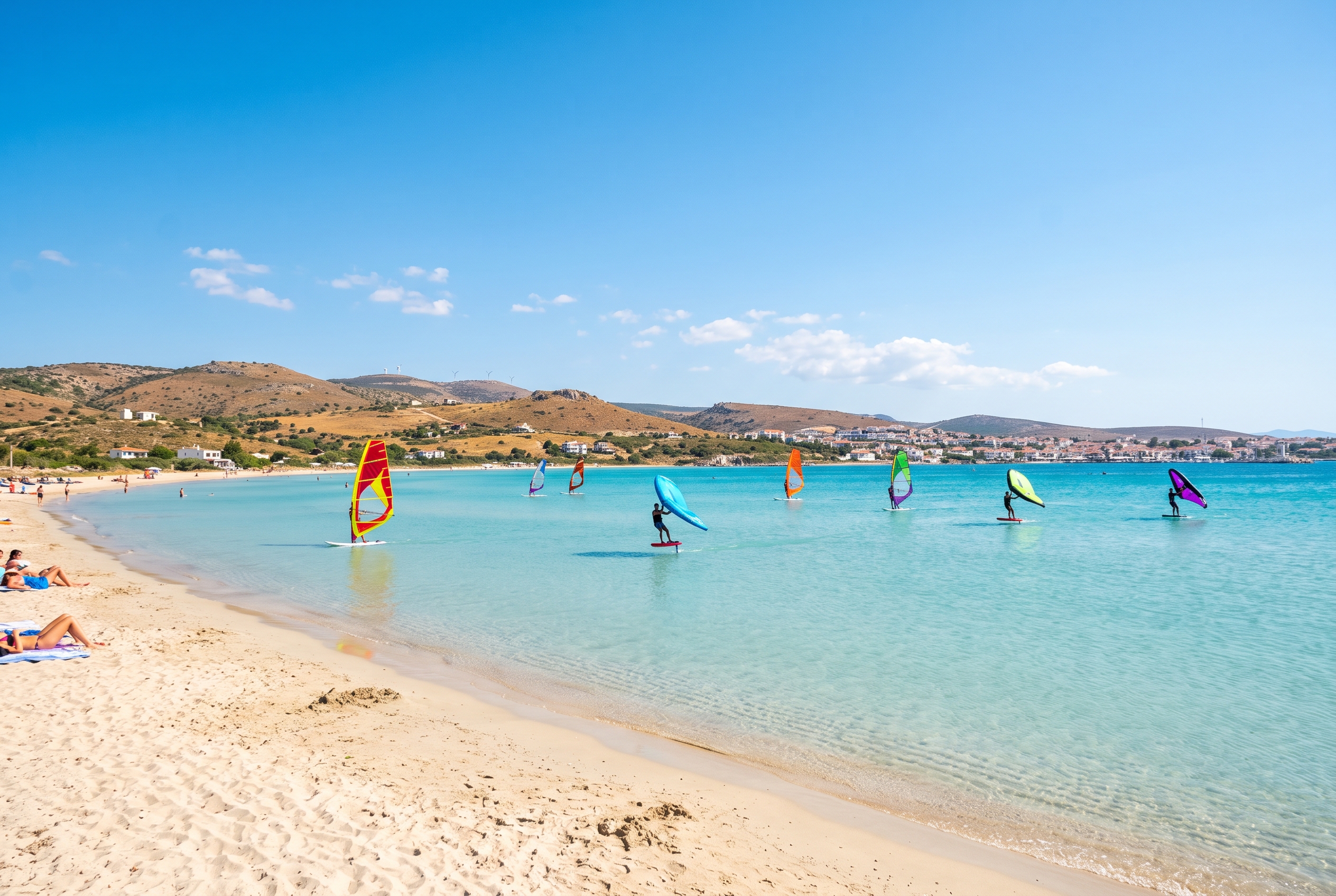
This is where Alaçatı really earns its reputation. The bay is shallow and flat, in large stretches no more than waist-deep, with a sandy bottom and clear, turquoise water. For a foiler that combination is gold. Shallow water means you can stand up, sort out a tangle, water-start at your leisure, and walk back to the beach if it all goes sideways, all without treading water over a black void. Flat water means smooth, predictable foiling with none of the chop-induced touchdowns that punish beginners on more exposed coastlines.
One genuine consideration for foilers: in the shallowest zones you need to be mindful of your foil mast and fuselage clearance, so it pays to ride the slightly deeper channels and ask the local schools where the water is foil-friendly. As for temperature, the Aegean here warms steadily through the season. Spring and early summer water sits cooler, but by July and August it climbs into the mid-20s Celsius, comfortably warm enough that many riders happily session in boardshorts or a swimsuit. In the shoulder months a shorty or a thin full wetsuit keeps you comfortable for longer sessions. Pack accordingly, but don’t over-pack neoprene for a high-summer trip.
Best Spots for Different Skill Levels
The beauty of Alaçatı is that one bay quietly sorts itself into zones. Beginners and early intermediates gravitate to the northern end, where the water is shallowest, the beach is sandy, and the morning wind is gentle enough that even children learn here. This is prime territory for your first wing-foil flights: stand-up-able depth, flat water, and onshore-leaning wind that keeps bringing you home. Most of the schools cluster at this end precisely because it’s so forgiving.
As you progress, you’ll naturally drift further out into the bay where the wind is cleaner and stronger, ideal for locking in your foiling, working on toeside, and grinding out those first carving gybes on water that stays mercifully flat. Windsurfers and wingfoilers generally share the main expanse of the bay, while kitesurfers are concentrated toward the south-eastern end, so be aware of the etiquette and keep to the zones the locals point you to. Advanced riders chasing more power and the occasional bump can find it in the windier peak-summer afternoons and at the more exposed edges of the bay, but make no mistake: Alaçatı’s calling card is flat-water cruising and freeriding, not waves. If you came for swell, you came to the wrong corner of Turkey, and you’ll be far too happy carving on glass to mind.
Local Wing Foiling Scene
Schools and Lessons
Alaçatı has a deep bench of established surf centres, and the good news for wingers is that the bigger operations have added wing foiling to their windsurf-and-kite menus. ASPC (Alaçatı Surf Paradise Club) has been on the bay since 1995 and is regularly ranked among the top centres of its kind in Europe and the world, running lessons for everyone from absolute first-timers to seasoned riders. ION Club, part of the well-known international chain, makes a particular point of its consistent summer winds and large shallow learning area, with mornings light enough for small children. Myga Surf City, on the northern end right next to the beginners’ zone, is another long-running operation and a major dealer for big-name brands, which means well-maintained, current gear.
Because the bay is so beginner-friendly, this is a genuinely good place to take your first wing-foil lessons rather than just to ride what you already know. If you’re weighing where to begin your journey, our broader guide on where to learn wing foiling is worth a read alongside booking a course here.
Gear Rentals
Rental supply here is, frankly, enormous by wind-sport-town standards. Myga alone advertises a fleet in the region of 160-plus boards and 250-plus sails, and the major centres carry current wing, board, and foil packages from the leading brands. That depth matters for two reasons: you can usually find the right wing size for the day’s conditions without queueing, and you can travel light, skipping the airline-baggage roulette of hauling your own foil gear. Rental equipment is generally bookable as part of a package alongside lessons or storage, and the schools will help you dial in the correct foil and wing size for the wind and your level. If you want to figure out your ideal wing size before you arrive, our wing foil calculator takes the guesswork out of it.
Clubs and Community
The surf centres double as the community here, and the scene is famously sociable. Alaçatı has hosted windsurfing competitions and international events for years, so there’s a built-in culture of hospitality, après-sail gatherings, and that easy camaraderie you only get at spots where everyone is there for the same reason. The bay draws a genuinely international crowd, particularly through the European summer holidays, so you’ll meet riders from across the continent swapping notes on wing sizes and the best evening mezze. Roll up at one of the beachfront centres, rent a locker, and you’ll have a built-in tribe within a session or two.
Off the Water
Cultural Attractions
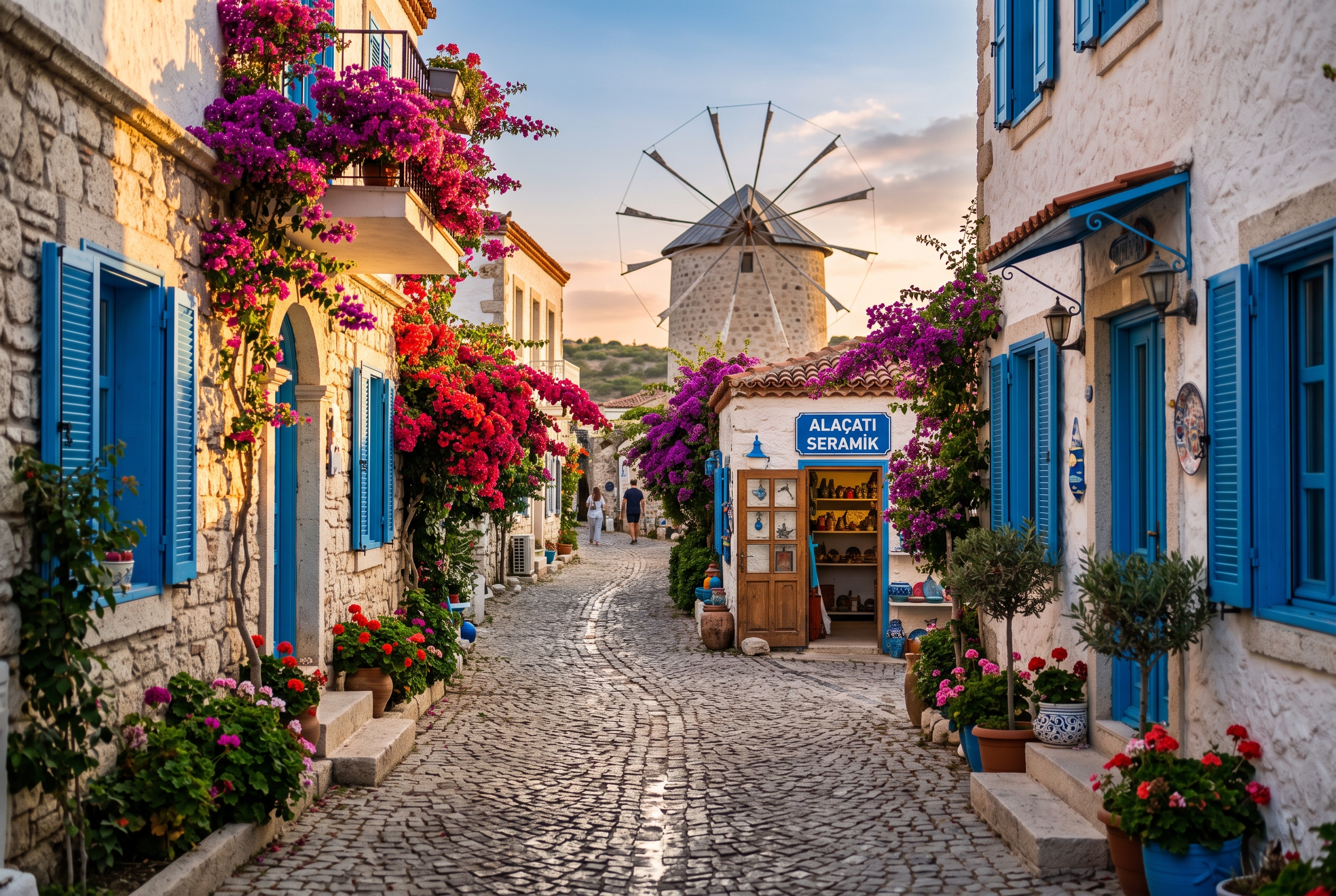
Alaçatı’s old town is the headline attraction, and it’s a stunner: narrow cobblestone streets lined with old Greek-era stone houses, blue and green shutters, and bougainvillea spilling over the walls. The town’s four stone windmills, dating to around 1850 and perched at the high point of the centre, have become its emblem and offer a lovely vantage over the rooftops. Çarşı, the main old-town bazaar street, is the beating heart of the place, packed with boutique shops, galleries, and cafes. If you’re in town on a Saturday, the farmers’ market is a colourful, mastic-scented institution worth setting an alarm for.
Dining
The food is reason enough to visit even if the wind never blew. This is Aegean cuisine at its finest: long tables of cold and hot mezze, fresh seafood, grilled lamb chops, and the region’s signature mastic (a fragrant resin that finds its way into everything from desserts to ice cream). At the casual end you’ve got döner, the local kumru sandwich, and the famous sweets at Imren Tatlıcısı; at the smarter end, mezze plates and grilled mains in the old town’s open-air restaurants. As a rough guide, mezze dishes tend to land somewhere around a few euros each and mid-range mains in the rough vicinity of 12-18 euros, though prices climb at the fashionable hotspots in peak season. Come hungry and pace yourself.
Nightlife and Entertainment
Alaçatı has a deserved reputation as a chic summer hotspot, and the nightlife reflects it. Through the season the streets light up after dark with music spilling from open-air restaurants and bars, and weekends in particular get lively. It’s more sophisticated-Aegean than rave-on-the-beach: think wine bars, cocktail terraces, and long convivial dinners that drift into the small hours, with the broader Çeşme peninsula offering bigger clubs for those who want to push on. After a day on the foil, a glass of something cold under the bougainvillea is the correct choice.
Nature and Sightseeing
Beyond the old town, the wider Çeşme peninsula rewards a rental car and a free afternoon. Çeşme itself, the main town a short drive away, has a handsome Genoese-era castle overlooking the harbour. The coast is dotted with beaches, including the broad sands at Ilıca and the wind-blasted bays popular with surfers further around the peninsula. There are thermal springs in the area, quiet coves for a non-windy day, and the kind of low Aegean hills behind the bay that glow golden at sunset. It’s an easy place to build a rest-day itinerary that doesn’t involve a screen.
Practical Travel Information
How to Get There
Your gateway is Izmir Adnan Menderes Airport (ADB), a well-connected international hub roughly 85-90 kilometres from Alaçatı. A modern expressway runs almost the whole way, so a private transfer or taxi covers the distance in around 60-75 minutes (taxis and transfers generally fall in the rough range of 30-45 US dollars and up, depending on service). Budget travellers can take an intercity bus, such as the Çeşme Seyahat service, which stops at both Alaçatı and Çeşme and takes a bit longer for a fraction of the price. Renting a car at the airport is a smart move if you plan to explore the peninsula, given how easy the expressway makes the drive.
Where to Stay
Alaçatı has accommodation for every budget, with a particular strength in design-led boutique hotels carved out of historic stone buildings. Well-known options include The Stay Warehouse (a converted 1980s warehouse with a garden, private beach, and pier) and Alavya (a beloved boutique stay set among fig and olive trees, central to the old-town action). If you want to be near the riding, look for places between the old town and the windsurf bay; if you want to roll out of bed onto the beach, some of the surf centres and nearby hotels put you right on the water. Booking platforms list plenty of mid-range and budget rooms too, but be warned: peak summer fills up and prices spike, so reserve early for July and August.
Best Time to Visit
For the most dependable wind and the warmest water, July and August are the safe bet, with the trade-off being a busier bay, pricier rooms, and a livelier town. For a sweet-spot blend of reliable breeze, warm-enough water, and slightly more elbow room, target June or September. Spring and October bring strong, sometimes punchier winds for those who want power and don’t mind cooler water and a wetsuit. If you can be flexible, the shoulders of the season often deliver the best overall experience for a wing foiler who values uncrowded water as much as raw wind statistics.
Budget Estimates
Turkey remains relatively good value, though Alaçatı sits at the upscale end of the domestic scale. As a rough planning sketch: a mid-range mezze-and-mains dinner runs in the order of 12-18 euros per main plus a few euros per mezze; airport transfers start around 30-45 US dollars; and accommodation spans budget guesthouses to splurgy boutique hotels depending on season and how close to the water you want to be. Equipment rental and lessons are best priced directly with the schools as packages, which often work out better than booking piecemeal. Build in a buffer for peak-season inflation in July and August, and you’ll have a trip that delivers world-class foiling without world-class prices.
Wrapping Up
Alaçatı is one of those rare wind destinations that genuinely delivers on the hype. You get a thermal wind that turns up most summer afternoons, a shallow flat-water bay that flatters beginners and pleases intermediates, water warm enough to ditch the wetsuit in high summer, and an old town that turns your rest days into the highlight of the trip. It’s accessible, sociable, and deeply rewarding, the kind of place you book once and end up returning to.
If Alaçatı whets your appetite for warm-water Mediterranean foiling, you’re spoiled for nearby options worth lining up. The flat lagoon at Lo Stagnone in Sicily offers a similarly forgiving learn-to-foil environment, while the Greek islands of Paros and Karpathos serve up the same reliable Meltemi from across the Aegean. Whichever you choose, run your kit through our wing foil calculator first, then go chase that clockwork afternoon breeze. The windmills, and the mezze, will be waiting when you come in.
Frequently asked questions
When is the best season for wing foiling in Alaçatı?
The season runs roughly from May through October, riding the summer Meltemi wind. July and August offer the strongest, most reliable wind and the warmest water, but also the biggest crowds. June and September are a great compromise, with dependable breeze, warm-enough water and a less packed bay. Spring and October bring punchier, sometimes cooler conditions.
How much wind does Alaçatı get?
Wind typically averages around 15-25 knots across the season and can exceed 30 knots in the windier spring and autumn periods. The U-shaped bay funnels and accelerates the northerly Meltemi, and it generally blows side-onshore to side-shore. In summer it builds like clockwork through the afternoon, so you can usually plan a relaxed morning before sailing.
Is Alaçatı good for beginners?
Yes, it's one of the best beginner wing-foil spots in the region. Much of the bay is shallow and waist-deep with a sandy bottom and flat water, and the wind leans onshore so it pushes you back toward the beach. The northern end is gentle enough that even children learn there, and several established schools cluster around that zone.
What is the water temperature and do I need a wetsuit?
The Aegean warms through the season, climbing into the mid-20s Celsius in July and August, when many riders happily session in boardshorts or a swimsuit. In spring, early summer and the October shoulder the water is cooler, so a shorty or a thin full wetsuit keeps you comfortable for longer sessions. Pack light on neoprene for a high-summer trip.
How do I get to Alaçatı and what does it cost?
Fly into Izmir Adnan Menderes Airport (ADB), about 85-90 kilometres away. A private transfer or taxi takes roughly 60-75 minutes via the expressway and generally starts around 30-45 US dollars; intercity buses such as Çeşme Seyahat are cheaper but slower. Renting a car is worthwhile if you want to explore the wider Çeşme peninsula.
