
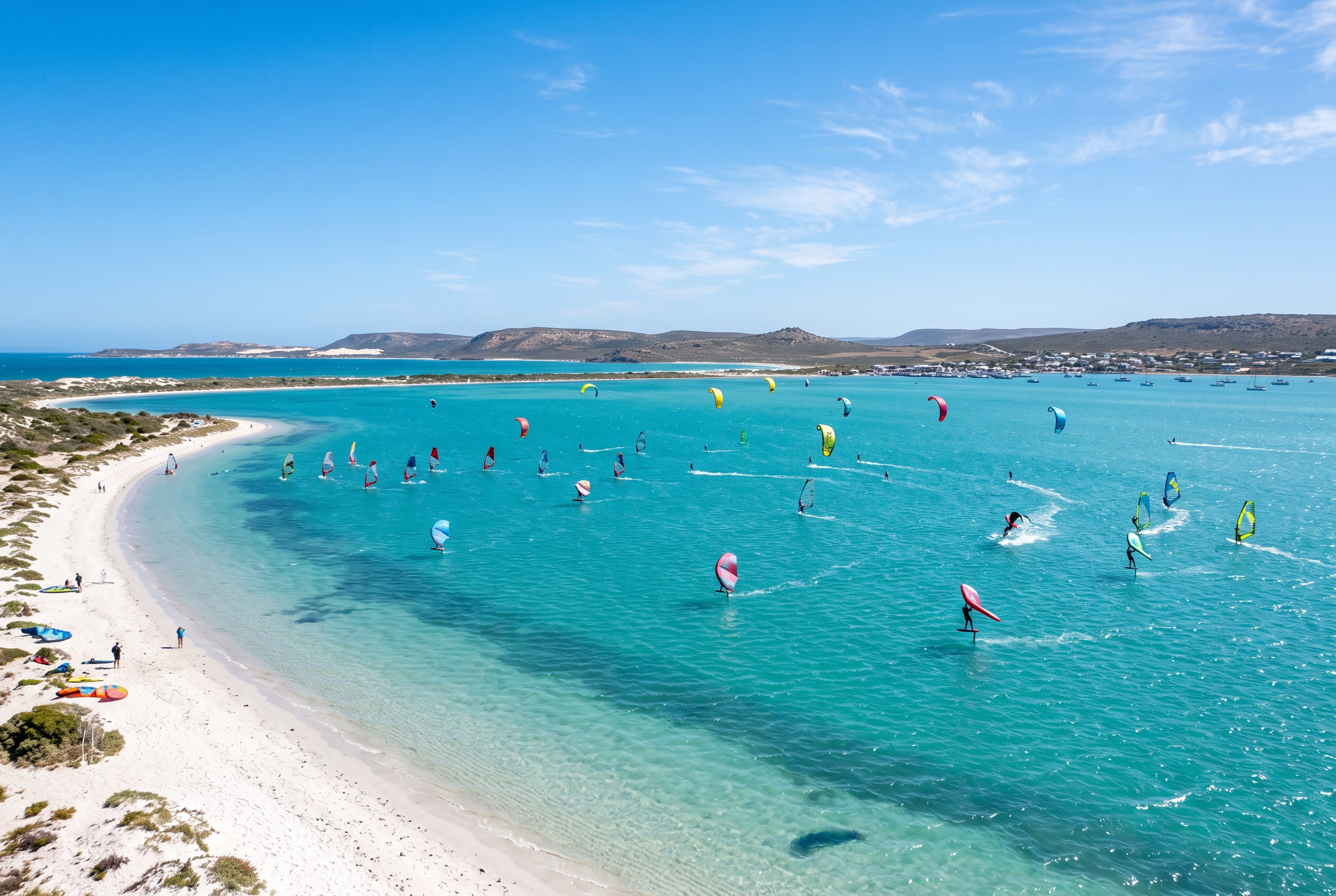
Picture a lagoon so flat it looks poured rather than filled, the colour shifting from steel-blue near the open Atlantic to a startling Caribbean turquoise in the shallows, with a south-easterly breeze that arrives on cue most summer afternoons like a reliable old friend. That is Langebaan, a small town on South Africa’s West Coast roughly 90 minutes north of Cape Town, and it has quietly become one of the planet’s most consistent wing foiling playgrounds.
The headline facts are easy to love. The wing foiling season runs from October to March, peaking through the South African summer of December and January, when the famous south-easterly known as the ‘Cape Doctor’ blows with almost tedious reliability. The lagoon itself is the star: large stretches of butter-flat, waist-deep water with a soft sandy bottom, which is about as forgiving a classroom as the sport offers. Whether you have never touched a wing or you are chasing your first jibe in chest-deep safety, Langebaan tends to say yes.
There is a catch, and it is a cold one. This is the Atlantic, not the balmy Indian Ocean side of the Cape, so the water is properly bracing and a wetsuit is non-negotiable year-round. But trade a bit of chill for genuinely world-class conditions, throw in the West Coast National Park on your doorstep and Cape Town’s wine, mountains and seafood an hour down the road, and you have the makings of a trip that ruins other destinations for you. Let us get into the detail.
Wing Foiling Conditions
Wind Patterns and Seasonality
Langebaan’s reputation is built on wind you can almost set your watch by. The prime window is October to March, with the most consistent action from November through to March and the genuine peak around December and January. This is the South African summer, when the south-easterly ‘Cape Doctor’ dominates the afternoons, typically filling in late morning, often around 11am, and blowing steadily into the late afternoon. On the windless, baking-hot days the lagoon can still deliver thanks to thermal winds, which is part of why locals talk about foiling being ‘almost guaranteed’ in summer.
On strength, expect a wide and useful range. Steady summer days commonly sit somewhere in the 15 to 25 knot band, with lighter 10 to 12 knot mornings and bigger 25 to 40 knot afternoons all part of the menu. On a really heavy day the gusts can touch 40 knots, so the sport spans everything from gentle light-wind foiling to proper big-air territory depending on when you launch. The prevailing direction is south to south-east, which sets up nicely cross to side-onshore at the main launches, the kind of angle that keeps you drifting back toward the beach rather than out to sea.
One practical note that beginners should tattoo on the inside of their eyelids: the afternoons can simply get too strong. If you are still finding your feet, the morning session is your friend, before the Cape Doctor cranks fully into gear. There is no medal for being overpowered on a 5-metre wing while everyone else watches.
Water Conditions
The defining feature of Langebaan is the flat water. The lagoon is largely sheltered, with extensive shallow zones where the surface stays glassy-smooth and the bottom is soft sand, which is exactly what you want when you are learning to ride a foil or grooving in new turns. There is minimal shore break to fight through, and large areas where you can stand if it all goes sideways, an underrated luxury when half the battle in wing foiling is the swim of shame back to your gear.
Now, the temperature reality. Because Langebaan faces the cold Atlantic, the water is cooler than the Cape’s Indian Ocean spots. Broadly, expect something in the region of 15°C in winter rising toward around 20°C in summer, with the sheltered, shallower Shark Bay running noticeably warmer than the more exposed Main Beach. Pack accordingly: a thinner suit in the region of 3/2mm tends to do the job in summer, while winter calls for something thicker, around 5/4mm, plus a sensible attitude toward boots and a hood on the chilliest days. Treat these as guidelines rather than gospel, check a current forecast, and remember that wind chill on a wet wing foiler makes the air feel colder than the thermometer suggests.
Best Spots for Different Skill Levels
The two main launch sites are Main Beach and Shark Bay, only a 5 to 10 minute drive apart, and a quirk worth knowing is that the wind can blow quite differently at each on the same day. If one feels marginal, it is always worth checking the other before you write off the session.
Shark Bay is the beginner’s dream. It offers flat, waist-to-chest-deep water for a good 400 metres or more into the channel, with steady cross-shore wind, warmer water and a generally relaxed feel. This is where lessons happen and where progression is fastest, because you can keep standing up, resetting and trying again without the lagoon swallowing your dignity. It suits beginners and intermediates beautifully, and plenty of advanced riders happily session here too for freestyle and foiling laps.
Main Beach is the busier, more energetic hub, ringed by schools, rental shops and a lively beach scene, and it works well for intermediates building confidence. The deeper water and slightly punchier conditions tend to draw the more advanced, send-it crowd, and there is a spot further downwind where the pros congregate to trade tricks. Beginners should steer clear of that downwind zone, as there is a tricky wind shadow near the sandbags that is easy to get sucked into and awkward to escape. Pick the launch that matches your level, and there is no shame in starting at Shark Bay and graduating across.
Local Wing Foiling Scene
Schools and Lessons
Langebaan punches well above its size for instruction, which makes it an excellent place to learn or level up. KiteLab sits roughly 100 metres from the main beach and runs wing foiling lessons alongside its kitesurfing programme, with lesson pricing advertised around R1,200 per hour at the time of writing, plus gear sales and repairs under one roof. Constantly Kiting, also about 100 metres from the main kitesurfing beach, caters to all levels and offers personalised wingfoiling coaching whether you are a complete beginner or polishing existing skills.
If you are basing yourself nearer Cape Town, some operators run day trips up to the lagoon. Cabrinha, for instance, teaches at Big Bay near the city but also heads up the coast to Langebaan, with free transport included on its lagoon day trips, a handy option if you want city living and lagoon foiling without renting a car for the whole stay.
Gear Rentals
Travelling light is realistic here. KiteLab offers a modern wing foiling rental fleet, advertising recent gear including wings spanning roughly 3.5m to 5.4m and foil boards in the 78-litre and 88-litre range, which covers a sensible spread of rider weights and wind strengths. That breadth of sizing matters in Langebaan, where the wind range from sub-15-knot mornings to 30-plus-knot afternoons means you genuinely want to swap wing size through the day. Renting also spares you the airline-baggage roulette of flying boards and foils halfway around the world.
Clubs and Community
Langebaan and the broader Cape Town corridor have a deep, friendly watersports culture, and the lagoon is a regular fixture on the wing foil racing calendar, drawing riders for organised events as well as everyday free-riding. The vibe at Main Beach in particular is sociable and buzzy, with schools, shops and riders all clustered together, so it is easy to find people, swap conditions intel and feel part of the scene within a day or two. Wing foilers, kiters and the occasional windsurfer share the water, and the etiquette is the usual: give beginners room, respect right of way, and do not park yourself in the pros’ downwind playground unless you can hold your own.
Off the Water
Cultural Attractions
The West Coast trades on a laid-back, slightly weathered charm rather than glossy attractions, and that is the appeal. The nearby West Coast Fossil Park is a genuine highlight, offering guided tours of working fossil digs along with biking, hiking and horse riding, a reminder that this stretch of coast has been telling stories for a very long time. Langebaan town itself is small and walkable, the kind of place where the day revolves around the wind, the water and where you are eating dinner.
Dining
This is seafood country, and you should lean into it. The Driftwood Seafood restaurant and sushi bar is known for generous portions of fresh seafood, ideal for replacing the calories a windy afternoon on the foil quietly burns. Inside the West Coast National Park, the restaurant at Geelbek is a popular stop serving light meals built on traditional local recipes, a lovely spot to combine a feed with a wander around the park’s information centre. Between the two you have casual post-session fuel and a more scenic sit-down option covered.
Nightlife and Entertainment
Set expectations correctly: Langebaan is a relaxed lagoon town, not a late-night party capital, and most evenings wind down gently over dinner and a drink with the day’s wind stories. The family-friendly Club Mykonos resort, with its Mediterranean styling and lagoon views, is one of the bigger hubs of activity and the obvious place to look for a livelier evening. If you are craving full-throttle nightlife, that is what the hour-long run to Cape Town is for, but most wing foilers find that an early dinner and an earlier alarm beats a hangover when there is wind on the forecast.
Nature and Sightseeing
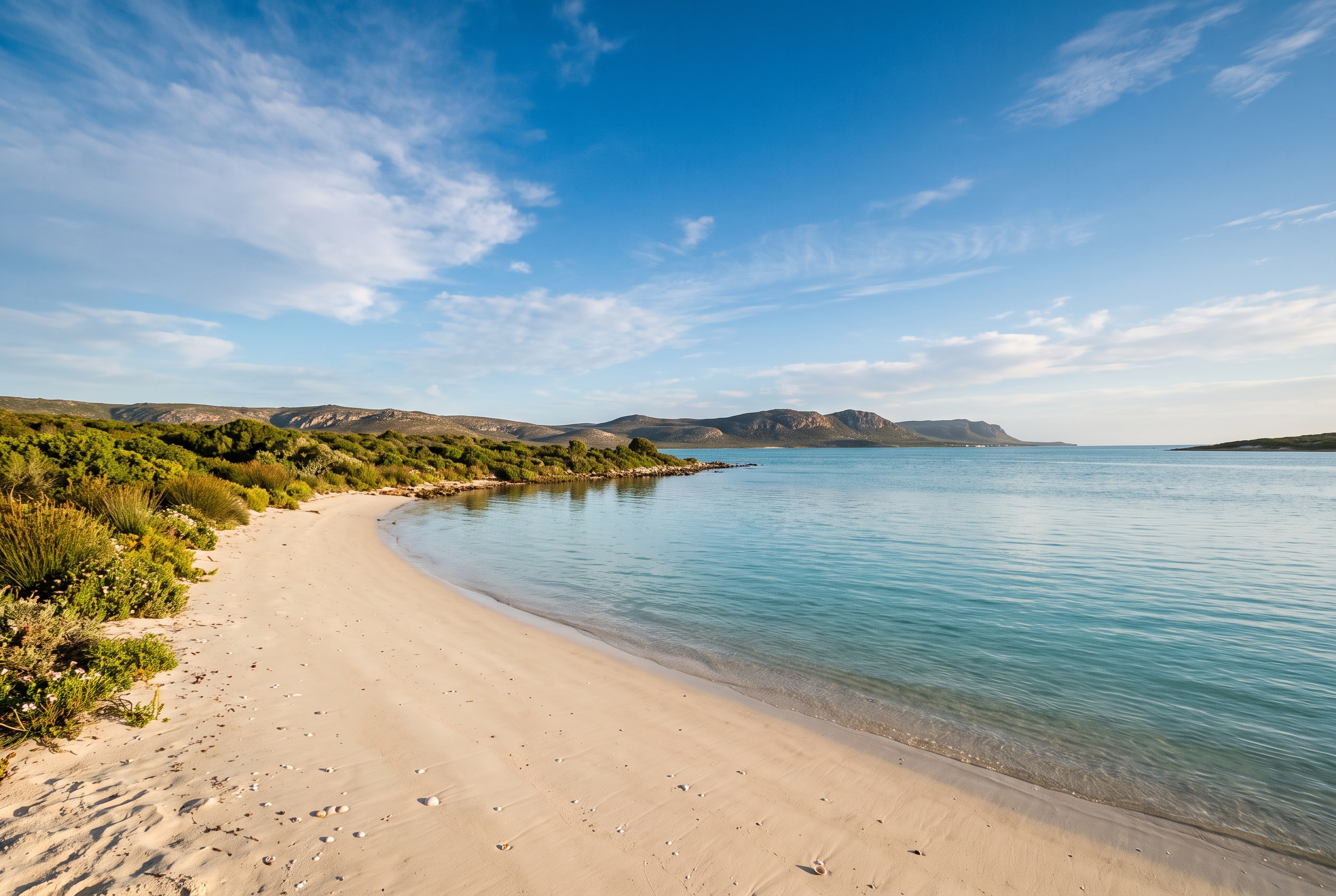
The West Coast National Park is the off-water jewel, wrapping much of the lagoon and offering game viewing, cycling, hiking and a string of bird hides at Seeberg, Abrahamskraal and Geelbek for the birders among you. There are circular walking trails of roughly 7 and 9 kilometres, and from August to November you might catch whales along the coast, with that same spring window famous for the park’s wildflower displays. It is the rare destination where a no-wind day is not a write-off but an invitation to swap the wing for a bike, a trail or a pair of binoculars.
Practical Travel Information
How to Get There
Getting to Langebaan is refreshingly simple. The nearest airport is Cape Town International, a well-connected gateway with plenty of long-haul and regional options. From there it is roughly a 1.5-hour drive of about 116 kilometres north, largely along the R27 on well-tarred roads. A hire car is the most flexible choice, since it lets you bounce between Main Beach and Shark Bay, run into the national park and nip down to Cape Town for a day. If you would rather not drive, some Cape Town-based schools fold the transfer into their lagoon day trips, and private transfers are available too.
Where to Stay
Langebaan offers a full spread of accommodation, from lodges and bed-and-breakfasts to self-catering apartments, hotels and campsites. For something central and lively, the family-friendly Club Mykonos resort packs hundreds of Mediterranean-style apartments with lagoon views. For a slower pace, Thali Thali Game Lodge provides self-catering chalets and luxury tents on a farm setting. And for the bucket-list option, the Kraalbaai houseboats are moored right out in the middle of the lagoon, sleeping anywhere from 4 to 24 guests, which is about as close as you can sleep to your launch. Staying within easy reach of the beaches keeps your morning admin short when the wind comes in.
Best Time to Visit
For wind, target the South African summer. The window runs October to March, with the most consistent conditions from November onward and the peak around December and January, when the Cape Doctor is at its most dependable. That is also when the water is at its warmest, which softens the cold-Atlantic blow. If you want to fold in whale watching or the spring wildflowers, the August-to-November shoulder is worth considering, though wind reliability builds as you move deeper into summer. Book the festive-season peak well ahead, since it is the busiest stretch for both riders and holidaymakers.
Budget Estimates
Costs vary with the season and the strength of the rand, so treat figures as a starting point and confirm current rates directly. As a published reference, wing and kite lessons in Langebaan have been advertised around R1,200 per hour, with multi-hour packages usually working out better value than one-offs. Beyond tuition, budget for gear rental if you are travelling light, accommodation across the full range from campsites to resort apartments, a hire car for flexibility, and the usual food and wetsuit-hire extras. Compared with marquee international wing destinations, the West Coast often represents strong value once you are on the ground, particularly for visitors arriving with stronger currencies.
Wrapping Up
Langebaan earns its growing reputation honestly. You get genuinely flat, shallow water that flatters beginners and lets advanced riders chase progression, a south-easterly wind that turns up with near-clockwork reliability through summer, a proper cluster of schools and rentals, and a national park wrapping the whole thing for the days the wind sleeps in. The cold Atlantic and the right wetsuit are the price of admission, and it is a price most riders happily pay once they have felt the lagoon under their foil.
The smartest move is rarely Langebaan in isolation. Pair it with a few days in Cape Town an hour to the south for the wine, the mountains and a couple of bonus sessions, and if the African wing foiling bug really bites you, the continent has more on offer, from the relentless wind of Dakhla, Morocco to the Atlantic playgrounds of São Vicente, Cape Verde. Before you book, it is worth a few minutes with our wing foil calculator to sort out the wing and board sizes you will want for that 15-to-30-knot range, then pack the wetsuit, charge the camera and go meet the Cape Doctor.
Frequently asked questions
When is the best season to wing foil in Langebaan?
The prime window is October to March, the South African summer, peaking around December and January. Conditions are most consistent from November onward, when the south-easterly 'Cape Doctor' blows reliably through the afternoons. This is also when the water is at its warmest, which takes some of the bite out of the cold Atlantic.
How much wind does Langebaan get?
Plenty, and dependably. Steady summer days commonly sit in the 15 to 25 knot range, with lighter 10 to 12 knot mornings and bigger afternoons that can reach 30 to 40 knots on heavier days. The wind is south to south-east, the 'Cape Doctor', and usually fills in late morning around 11am, blowing into the late afternoon.
Is Langebaan good for beginners?
Very much so. The lagoon offers large stretches of flat, waist-to-chest-deep water over a soft sandy bottom, which is ideal for learning. Shark Bay in particular is the beginner zone, with shallow water for 400 metres or more and a relaxed feel. Beginners should ride mornings before the wind peaks and avoid the deeper, busier pro area downwind of Main Beach.
What water temperature and wetsuit should I expect?
This is the cold Atlantic, so a wetsuit is essential year-round. Water sits broadly around 15°C in winter and near 20°C in summer, with sheltered Shark Bay running warmer than exposed Main Beach. A 3/2mm suit generally suits summer; winter calls for something thicker, around 5/4mm, plus boots and a hood on the coldest days. Always check a current forecast.
How do I get to Langebaan and what does it cost?
Fly into Cape Town International, then it is roughly a 1.5-hour, 116-kilometre drive north along the R27 on good roads. A hire car gives the most flexibility, though some Cape Town schools include transfers on lagoon day trips. Lessons have been advertised around R1,200 per hour; confirm current rates, as costs shift with season and exchange rates.
