
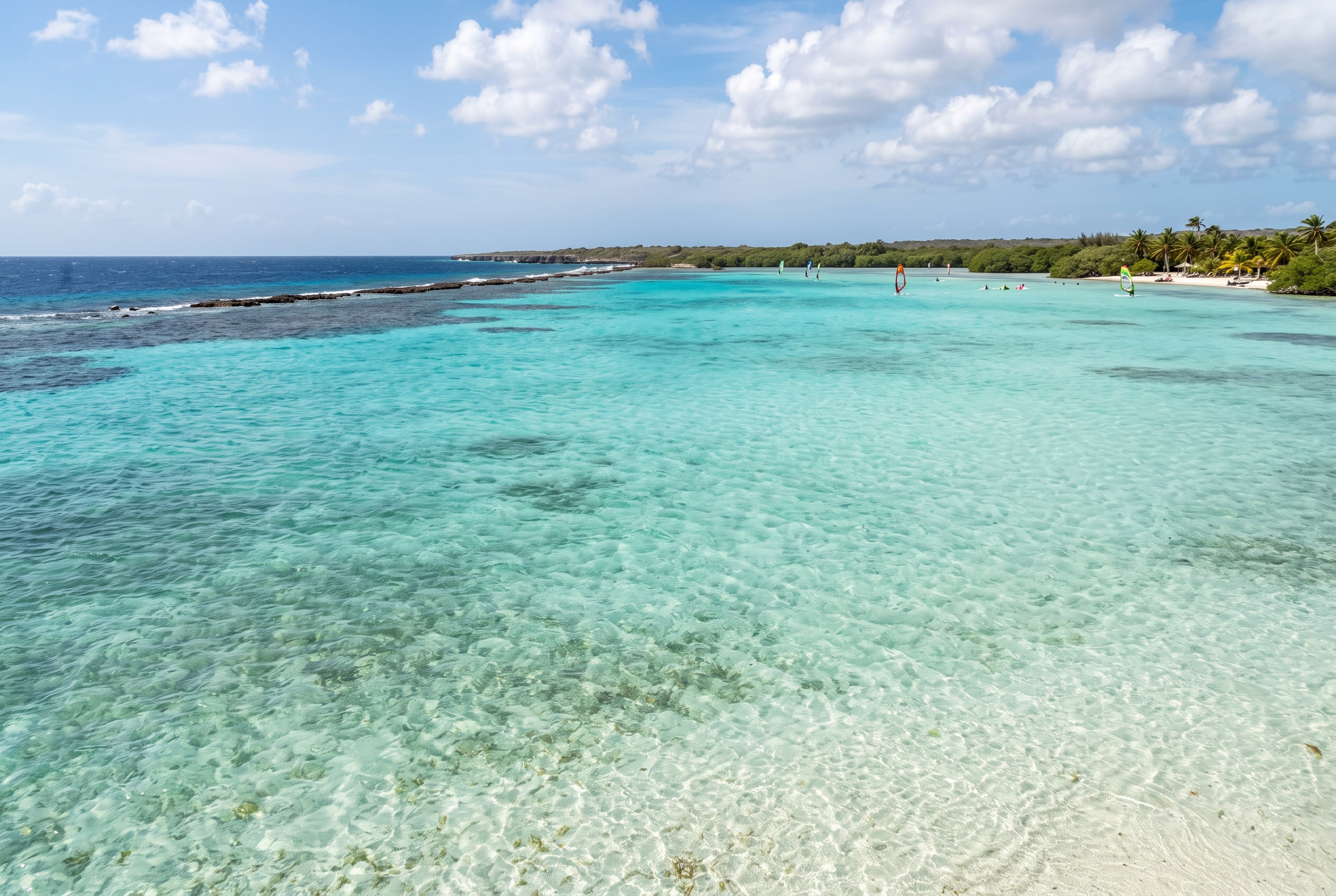
Tucked into the southern Caribbean just off the coast of Venezuela, Bonaire is the quiet middle child of the Dutch ABC islands (Aruba, Bonaire, Curacao), and frankly that suits the wingers just fine. The headline act is Lac Bay, a wide, shallow, almost cartoonishly turquoise lagoon on the island’s windward southeast corner. It’s protected by a coral reef, flat as a tabletop across much of its inner basin, and brushed by trade winds that show up with the kind of reliability most destinations can only dream about. If you’ve spent a season learning to fly on gusty, fickle home water, the consistency here feels like cheating.
The season runs broadly from December through August, with the wind machine cranking hardest from roughly February into August. Northeast trade winds typically blow in the 15-25 knot range during the prime months, with peaks pushing toward 30 on the strongest days, and the island enjoys somewhere around 300 windy days a year. The water sits at a balmy 26-28 degrees Celsius year-round, which means board shorts, a rash vest and a hat are usually all the kit you need to think about.
Who is Bonaire for? Honestly, almost everyone. The shallow, sheltered inner bay is one of the gentlest places on the planet to learn to wing, while the stronger-wind months and the chop beyond the reef give experienced foilers something to chew on. It’s a place where a nervous first-timer and a carving veteran can share the same bay and both come in grinning. Add a low-key island culture, world-class diving on the side, and flamingos doing their thing in the salt pans, and you’ve got a windward Caribbean trip that earns its airfare several times over.
Wing Foiling Conditions
Wind Patterns and Seasonality
Bonaire’s wind comes courtesy of the northeast trade winds, and they are gloriously dependable. The strongest, most consistent breeze lands from February through August, when averages sit around the mid-teens and gust into the 20s, with peaks toward 30 knots on the punchiest days. Across the broader December-to-August window you can generally count on 15-25 knots in the prime stretch. The quieter months, roughly September through January (and into early winter), still see regular 10-15 knot days, which is plenty for relaxed cruising and dialling in new moves rather than getting overpowered.
For wingers specifically, the lighter end is your friend. A foil setup can get you flying in as little as 8-10 knots, which makes those calmer early-morning and late-evening windows genuinely usable on a big wing and a large board, even in the off-season. The trades tend to be most stable through the morning and early afternoon, with the wind generally at its most reliable between late morning and around 5 PM. During the peak months there are typically only a handful of days each month where the wind dips below 10 knots, so the “will it blow today?” anxiety that haunts other destinations largely evaporates here.
Water Conditions
This is where Lac Bay quietly flexes. The inner bay is shallow and protected by a coral reef, so the water across much of it stays flat and forgiving. Crash a transition and you’re often standing in waist-deep, bath-warm water rather than swimming back to a board lost in the swell. That shallow-and-sheltered combination is exactly why the bay has built its reputation as a learner’s paradise, while still offering choppier, more powered-up water out toward the reef for those who want it.
The water temperature is the other gift. It holds between roughly 26 and 28 degrees Celsius all year, so thermal protection is essentially a non-issue. Most people ride in a rash vest or lycra top purely for sun protection, with a shorty being about as much neoprene as anyone bothers with. Combine warm flat water with the constant trades, and you’ve got conditions that flatter every level. One genuine word of caution: the reef and seagrass beds are protected, the shallows can hide coral and urchins in places, and reef booties plus a healthy respect for the marine park are smart. Bonaire takes its environment seriously, and so should you.
Best Spots for Different Skill Levels
Beginners belong in the inner reaches of Lac Bay, off the Sorobon side. The water is shallow, flat and warm, the wind is steady and side-onshore in feel, and you can wade out and reset endlessly without drama. This is about as benign an environment as wing foiling offers anywhere, which is why the schools cluster here. If you’re learning to balance on the board and tame the wing, you’ll progress faster than you would on gustier, deeper home water.
Intermediates get the best of both worlds: the same flat inner bay for nailing tacks, jibes and toeside, plus the option to range further out across the lagoon as confidence grows. The consistent breeze means you can put in long, uninterrupted sessions and actually drill a skill until it sticks, rather than waiting around for the wind to cooperate.
Advanced riders push out toward the reef edge, where the water gets choppier and the wind more powered-up in the peak months, with peaks toward 30 knots giving you something to lean against. Lac Bay’s outer reaches and the energy near the reef line reward fast, dynamic riding, and the bigger-wind season from late winter through summer is when the bay shows its sporty side. Kite-foilers, for what it’s worth, tend to head to the dedicated Atlantis Beach area on the southwest coast, keeping the disciplines pleasantly separated.
Local Wing Foiling Scene
Schools and Lessons
The grandparent of the Lac Bay scene is Jibe City, the island’s most famous windsurfing and wing centre, parked right on the bay with the kind of easygoing beach-shack vibe that makes you want to extend your trip. They run windsurf and wingfoil lessons for every level, with beginner sessions of around 1.5 hours from roughly $50, and private one-on-one coaching around $80 per hour. Group lessons are capped at about five people per instructor, so you actually get watched and corrected rather than lost in a crowd, and you can book online without paying upfront.
Nearby, Bonaire Windsurf Place offers comparable rates and leans a little more toward the advanced crowd, with group lessons from around $45 and private sessions near $75 per hour. Between the two, you’ve got the whole spectrum covered, from your first wobbly uphaul to refining your foiling jibe. Because everything sits on the same flat, sheltered bay, the learning environment is consistent no matter whose logo is on the rash vest.
Gear Rentals
Rental is refreshingly simple. Jibe City rents complete kit for around $80 per day, and the windsurf packages include board, sail, mast foot and harness, with wingfoil gear available too. The walk-in policy is a joy: no reservation needed, just turn up and rig. For travelling wingers this is a big deal, because hauling a board bag, foil and multiple wings across the Caribbean is nobody’s idea of a holiday. Renting on the ground also lets you sample different wing and board sizes to match the day’s breeze, which on Bonaire can swing from a mellow 10-knot cruise to a fully lit 25-knot blast.
Clubs and Community
Lac Bay’s scene is small, friendly and deeply rooted in windsurfing heritage, with a growing wingfoil contingent riding the same water. The centres double as the social hub: expect a beach bar, shade, cold drinks and a steady rotation of regulars happy to swap tips on which wing to grab. Because the bay is compact and the season-long crew tends to overlap, you’ll have a nodding-acquaintance crowd within a couple of days. It’s the kind of place where the line between “students,” “instructors” and “people who just live to ride” blurs pleasantly, and where evenings often end with everyone watching the last riders come in as the trades soften.
Off the Water
Cultural Attractions
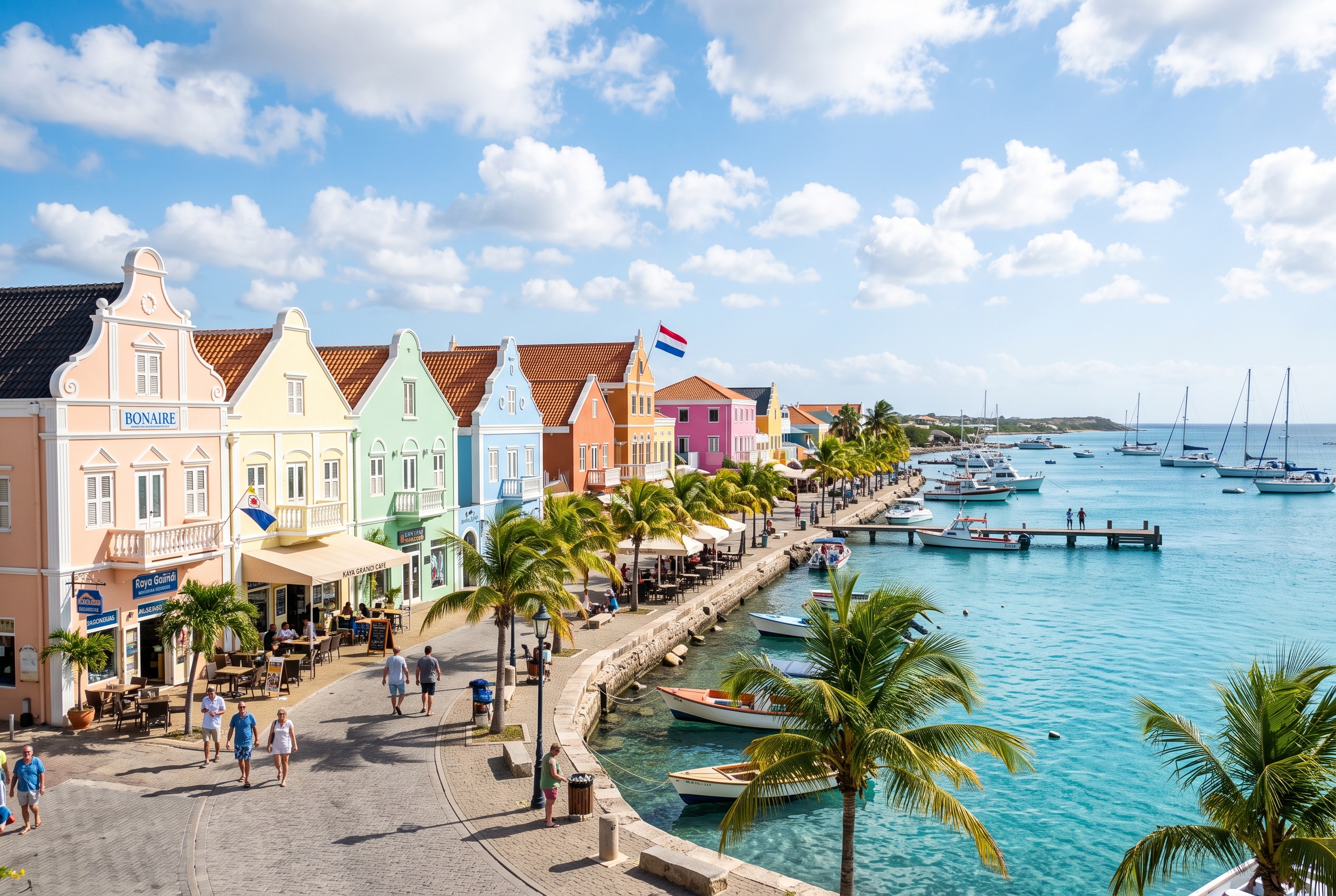
Kralendijk, the island’s capital, is a small, colourful seafront town and the natural anchor for a non-windy afternoon. It’s the centre for shopping, with pastel Dutch-Caribbean facades, local boutiques and a relaxed pace that never threatens to overwhelm. Bonaire’s history is written into its landscape too, particularly in the salt industry of the south, where the old salt pans and their stark white pyramids tell a story that stretches back centuries. It’s an island that rewards curiosity but never demands a frantic itinerary.
Dining
For a small island, Bonaire punches above its weight at the table. The restaurant scene spans Continental, French and Asian cooking, but the real treats are the local specialties: keshi yena, a cheese shell stuffed with spiced meat, and kabritu stoba, a slow-cooked goat stew that’s pure island comfort food. Casual favourites like Kon Tiki and Rum Runners are easy crowd-pleasers, while La Balandra, built to evoke a Spanish schooner, is the spot for fresh seafood with a view. After a long session on the foil, few things beat a plate of just-caught fish and a sunset over the water.
Nightlife and Entertainment
Let’s set expectations honestly: Bonaire is a sleepy island, and that’s its charm, not its failing. Kralendijk holds most of the after-dark action, with a handful of seafront bars and the island’s best nightlife such as it is. This isn’t a party-until-dawn destination; it’s a sundowner-and-good-conversation kind of place, which dovetails perfectly with the early-to-rise rhythm of chasing morning trades. If you want neon and nightclubs, look elsewhere. If you want a cold drink, a sea breeze and an early night before tomorrow’s session, you’re home.
Nature and Sightseeing
This is where Bonaire goes from “nice” to “extraordinary.” The island is ringed by the Bonaire National Marine Park, and a nature fee grants access to the marine park and the Washington Slagbaai National Park alike. That northwest park covers more than 4,000 hectares of woodland, dunes, coastal cliffs, salinas and coral coast, threaded by two driving routes. Its stars are the Caribbean flamingo and the endemic “Lora” parrot. Down south, the Pekelmeer salt flats are one of the best places anywhere to watch flocks of American flamingos feed and nest. And the diving and snorkelling, with vibrant reef accessible straight off the shore, are reason enough to pack a mask alongside your foil.
Practical Travel Information
How to Get There
You’ll fly into Flamingo International Airport (BON), a compact airport just about 3 km northeast of Kralendijk. From North America, there are direct routes from hubs including Miami, Atlanta, Houston, plus connections via the New York area and Toronto. From Europe, KLM flies daily from Amsterdam Schiphol, with TUI running several times a week. The airport-to-town transfer is quick at roughly 10-15 minutes, and taxis run on fixed government-set rates rather than meters: budget around $15-20 into Kralendijk. Sorobon and Lac Bay sit about 12 km from the airport, so most wingers rent a car or pickup to come and go on their own schedule, which is the way to do it.
Where to Stay
The closest-to-the-action choice is around Sorobon, right on Lac Bay, where you can roll out of bed and onto the flat water. It’s the obvious base if riding is your priority and you don’t mind being a short drive from town. Alternatively, base yourself in or near Kralendijk for easy access to restaurants, shops and the island’s dive resorts, then drive the short hop to the bay each morning. The island has everything from oceanfront boutique hotels to dive-focused resorts and vacation rentals, so you can dial in the budget and vibe. With a rental car, the “Sorobon versus town” question matters less than you’d think, since nothing on Bonaire is genuinely far away.
Best Time to Visit
For maximum wind, target February through August, the heart of the strong, consistent trade-wind season, with peak power often from May into August. If you’re learning or prefer mellower days, the September-to-January stretch still delivers regular 10-15 knot breezes, which on a foil is plenty for relaxed flying. The water stays warm year-round, so there’s no “cold season” to dodge. Bonaire sits on the southern edge of the hurricane belt and is rarely directly affected, which adds peace of mind to late-summer trips, though it’s always worth keeping an eye on forecasts. In short: come in the first half of the year for power, the latter months for gentler learning.
Budget Estimates
On the water, plan for roughly $80 per day for full gear rental, around $45-50 for a 1.5-hour group lesson, and $75-80 per hour for private coaching. Don’t forget the mandatory nature fee, which you’ll need if you’re entering the water and which also covers the national park, so it does double duty. Off the water, a taxi into town runs $15-20, and a rental vehicle is the smart move for a riding trip. Dining ranges from casual beach-bar plates to sit-down seafood, and accommodation spans budget rentals to oceanfront hotels. Bonaire isn’t the cheapest Caribbean island, but for the sheer reliability of the conditions and the quality of the flat water, the value is genuinely strong.
Wrapping Up
Bonaire, and Lac Bay in particular, is one of those rare destinations that delivers exactly what it promises: warm, flat, sheltered water; trade winds you can almost set your watch by; and a low-key island culture that lets the riding take centre stage. Beginners get the gentlest possible classroom, intermediates get endless session time to actually improve, and advanced foilers get powered-up days out toward the reef when the trades crank. Wrap it in world-class diving, flamingo-dotted salt flats and unfussy local food, and you’ve got a trip that’s hard to fault.
If you’re mapping out a wider winging adventure, Bonaire pairs naturally with the rest of the Caribbean and Latin America’s heavy hitters: the wave-and-flat-water mix of Cabarete in the Dominican Republic, the thermal-wind reliability of La Ventana in Mexico, and the dune-backed magic of Jericoacoara in Brazil. New to the sport and not sure where to start? Our complete beginner’s guide to wing foiling will get you grounded, and before you book, run the numbers through our wing foil calculator to dial in the right wing and board sizes for Lac Bay’s wind range. Then all that’s left is to book the flight and chase the trades.
Frequently asked questions
When is the best season to wing foil in Bonaire?
The wing foiling season runs broadly from December through August, when the northeast trade winds are most consistent. The strongest, most reliable wind typically lands from February into August, with peak power often from May onward. The quieter months of September to January still see regular 10-15 knot days, which is ideal for learners and relaxed sessions.
How much wind does Bonaire get?
Bonaire enjoys around 300 windy days a year thanks to dependable northeast trade winds. During the prime season you can generally expect 15-25 knots, with peaks pushing toward 30 knots on the strongest days. Wingers can also get flying in as little as 8-10 knots on a big wing, making the calmer early-morning and evening windows usable too.
Is Bonaire good for beginner wing foilers?
Yes, Lac Bay is one of the best learning spots anywhere. The inner bay is shallow, flat and protected by a reef, so you can wade out, reset endlessly in waist-deep water, and progress quickly. Schools like Jibe City and Bonaire Windsurf Place run beginner-friendly lessons right on the bay, with group sessions from around $45-50.
What water temperature and wetsuit do I need in Bonaire?
The water stays warm year-round, between roughly 26 and 28 degrees Celsius, so thermal protection is essentially a non-issue. Most riders wear just a rash vest or lycra top for sun protection, with a shorty being about as much neoprene as anyone bothers with. Reef booties are smart given the shallow coral and seagrass.
How do I get to Bonaire and what does it cost?
Fly into Flamingo International Airport (BON), with direct routes from US hubs like Miami, Atlanta and Houston, plus daily KLM flights from Amsterdam. The airport is about 3 km from Kralendijk, a 10-15 minute taxi at a fixed $15-20. On the water, budget roughly $80 a day for gear rental, lessons from $45-50, plus the mandatory nature fee.
