
Some wind foiling destinations make you work for it. Fuerteventura is not one of them. Park yourself on the long, dune-backed coast of Sotavento in July and the trade winds will do most of the heavy lifting, filling your wing every afternoon with the kind of reliable, building-into-the-evening breeze that turns a holiday into a foiling marathon. This is the windward edge of the Sahara made into a watersports island, and it has been a pilgrimage site for windsurfers, kiters and now wing foilers for the better part of four decades.
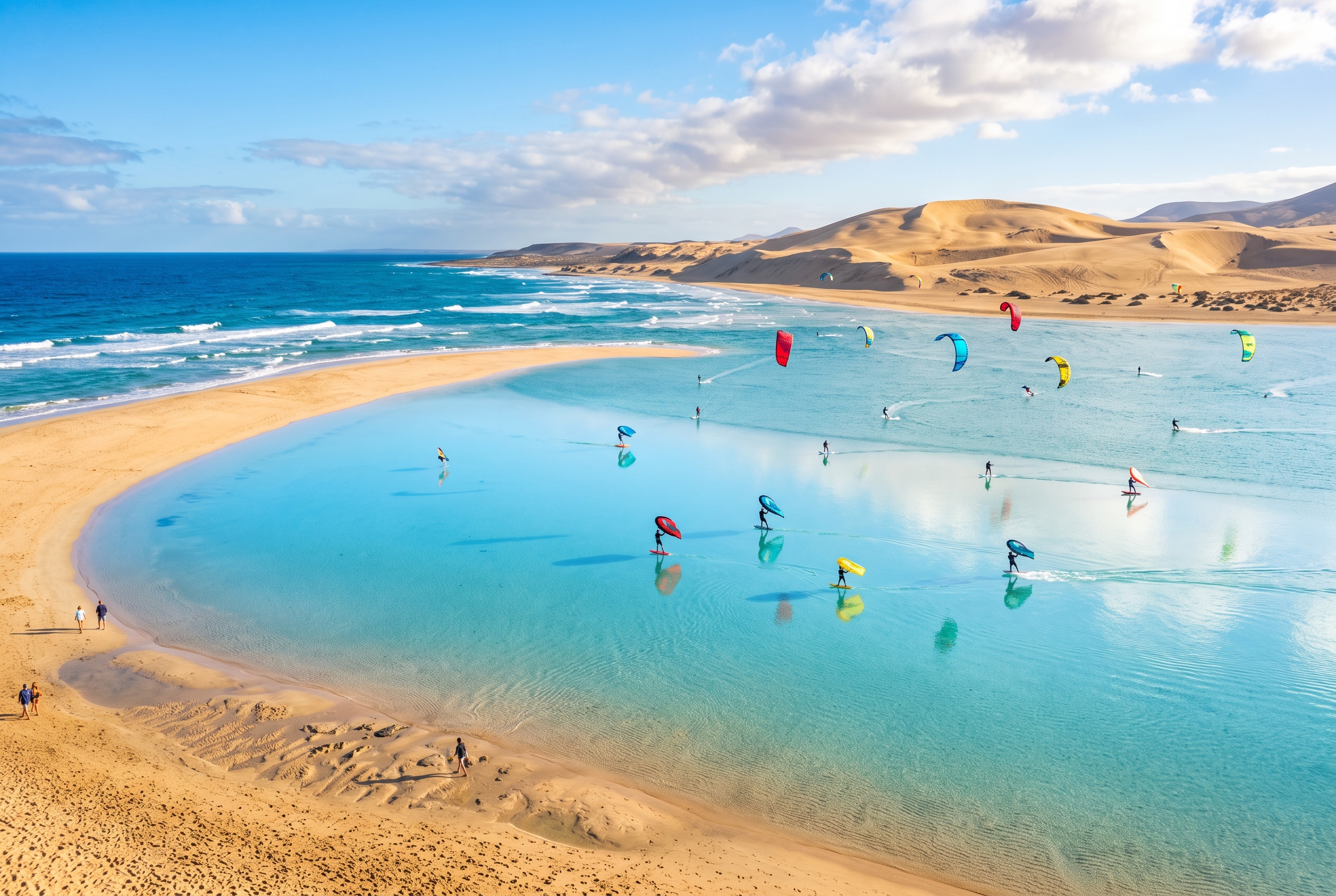
The headline act is the famous Sotavento lagoon near Costa Calma, a vast turquoise pool of flat, waist-deep water that fills and drains with the moon. Add the open-ocean swell on its seaward side, the consistent flat-water bay at Matas, and the all-levels conditions up north at Corralejo’s Flag Beach, and you have a single island that covers nearly every wing foiling mood, from first nervous taxiing runs to full-throttle bump-and-jump sessions.
Throw in water that rarely drops below 18°C, a four-hour flight from most of Europe, and a desert landscape of golden dunes and volcanic cones that looks faintly like someone relocated the Sahara to the Atlantic, and it is easy to see why Fuerteventura keeps topping wing foiling wish lists. The island has spent forty years building exactly the infrastructure a watersports traveller dreams about: schools that speak every European language, rental centres stocked with current gear, and a coastline shaped to catch the wind. Here is everything you need to know before you pack the board bag.
Wing Foiling Conditions
Wind Patterns and Seasonality
Fuerteventura’s wind is a gift of geography. The prevailing north-east trade winds funnel down the Atlantic and accelerate as they squeeze between the island’s ridges, and the desert interior sweetens the deal: the sun heats the land, that hot air rises, and the cooler trade wind compresses beneath it and speeds up. The result is some of the most dependable cross-offshore breeze in Europe.
The windiest season runs from roughly April to September, when a big Atlantic high pressure sits offshore and a thermal low broods over the Sahara. Between May and September you can count on consistent winds averaging 20 to 30 knots most afternoons, with a 75 to 95 percent chance of usable wind in the peak summer months. July and August are the strongest, when the breeze in the south regularly builds toward 40 knots in the afternoons and turns gusty, so size your wing conservatively when it really honks. The classic daily rhythm is a gentle morning that fills in steadily after lunch and peaks late in the day, which is a kind way for the wind to schedule your sessions around a leisurely breakfast.
Spring and autumn shoulder months are lighter and a touch more variable but still very rideable, and they trade a few knots for thinner crowds and softer prices. Winter (December to March) is the quietest wind-wise, though Fuerteventura still serves up plenty of breezy days; it just stops being the guaranteed everyday foiling factory it is in summer.
Water Conditions
The water here is famously friendly. Temperatures sit between roughly 18 and 23°C across the year, with summer highs around 21 to 22°C and winter lows near 17 to 18°C. In spring and summer many riders skip the rubber entirely or wear a shorty for comfort; from late autumn through winter a 3/2 full suit is the sensible call, and the coldest, windiest winter days reward a 4/3.
The star water feature is the Sotavento lagoon, a wide, shallow, mirror-flat turquoise pool that forms behind a sandbank. Crucially, it is tidal: the lagoon fills and empties on a cycle tied to the new and full moon, so the same spot can be glassy, waist-deep flatwater one day and barely covered sand the next. On big low tides the lagoon can drain so far that you walk over the sandbank to the open ocean to ride. Check a tide table before you commit to a session here; it is the single most important piece of local knowledge on the island. The seaward side of the lagoon, by contrast, offers proper Atlantic chop and swell for those who want bumps to play with rather than glass.
Best Spots for Different Skill Levels
Sotavento (Costa Calma / Risco del Paso) is the marquee spot and the home of the GWA Wingfoil World Cup. When the lagoon is full it is arguably one of the safest learning environments in Europe: side-onshore wind from the north-east, a sandy bottom, and flat water shallow enough to stand in while you sort out the wing. As the tide drops and you move to the ocean side, the same beach becomes a powered-up, choppier playground for intermediates and experts. The catch is the crowd and the tide dependence, so time it with the moon.
Matas Bay, just north of Costa Calma, is the connoisseur’s flat-water pick for foiling. Unlike the lagoon, the tide does not dictate conditions here; the bay’s orientation keeps the water flat and it deepens gradually, which makes it close to ideal for hydrofoil work and for nervous early sessions that do not want a tidal surprise.
Costa Calma itself, a few kilometres up the road, is the quietest of the three main southern zones, with fewer schools and fewer riders but the same good wind, a consistent depth and fine sand underfoot. It is a relaxed, beginner-friendly alternative when Sotavento is packed.
Flag Beach (Corralejo), far up on the north shore, is the island’s other hub and works best on north to north-west winds, typically from April to August. It suits all levels and has a lively scene, but note the water gets deep quickly with no shallow standing area, so absolute first-timers are generally better served by the southern flatwater. For confident riders it is a fun, wave-flavoured option next to the spectacular Corralejo dunes.
Local Wing Foiling Scene
Schools and Lessons
Fuerteventura’s watersports infrastructure is mature and multilingual, which is exactly what you want when you are learning a sport that punishes impatience. On the Sotavento beachfront, the long-running René Egli Center sits in front of the Melía Gorriones hotel and bundles windsurf, kitesurf, wing-foil, e-foil and SUP services together under the palm trees, beach bar included. In the south you will also find dedicated wing and kite schools around Costa Calma and the flat-water Matas Bay, several of which offer free transfers from the surrounding resorts.
As a rough guide to pricing, multi-day beginner courses tend to run in the region of €250 to €350, while private one-to-one lessons sit around €80 to €125 per hour or session depending on the school and the season. Up north, Corralejo has its own cluster of kite and wing-foil schools serving the Flag Beach scene. If you have never flown a wing before, the southern flatwater plus a structured course is the gentlest possible on-ramp.
Gear Rentals
Every major centre rents current gear, so flying with empty hands is entirely viable. Expect equipment rental to land somewhere around €60 to €90 per day, with meaningful discounts on weekly packages (loosely €280 to €400 a week). Most schools carry a spread of wing and foil sizes, which matters a lot here: in the same week you might want a big wing for a mellow shoulder-season morning and something distinctly smaller for a 30-knot July afternoon. Renting locally also spares you the airline board-bag lottery, and lets you demo kit before committing to a quiver back home.
Clubs and Community
Sotavento is not just a pretty beach; it is a genuine competition venue, having hosted the GWA Wingfoil World Cup as part of the back-to-back Canary Islands world tour stops, alongside its decades of windsurfing championship history. That pedigree means the scene is welcoming, international and dense with experienced riders happy to talk wind, tides and foil setups. The schools double as informal community hubs, and in peak season the southern beaches buzz with a cosmopolitan mix of foilers, kiters and windsurfers all chasing the same afternoon thermal.
Off the Water
Cultural Attractions
Fuerteventura wears its culture quietly. The island’s appeal is less grand monuments and more the slow texture of Canarian village life: whitewashed houses, old windmills, goat-cheese (the local majorero is a protected-origin star), and a pace that encourages you to do nothing with conviction. Costa Calma itself is a purpose-built resort strip rather than a historic town, so for a deeper sense of place it is worth driving inland or up to the older settlements to see how the island lived before tourism arrived.
Dining
Costa Calma trades on relaxed, food-forward evenings rather than party excess. You will find traditional Canarian cooking, fresh fish and a broad sweep of international options along the resort, with well-regarded local spots serving hearty plates and beach views. Look out for Canarian staples like papas arrugadas (salty wrinkled potatoes) with mojo sauce, fresh-caught fish, and that famous majorero cheese. It is the kind of place where dinner is a long, unhurried affair after a hard afternoon on the water, which is precisely how it should be.
Nightlife and Entertainment
If you came to Fuerteventura for thumping clubs and 3am queues, you came to the wrong island, and your foiling will thank you for it. Costa Calma’s nightlife is built on beachfront bars, music bars and relaxed evenings rather than mega-clubs, with a handful of long-standing local favourites topping the rankings. It is sociable without being destructive, which suits a destination where the real entertainment starts when the wind fills in the next afternoon. Corralejo up north has a livelier bar scene if you want a bigger night out, but in the south the rhythm is gentle by design: a sundowner on the sand, dinner, an early night, and another full day of foiling tomorrow.
This is, in the end, what gives Fuerteventura its particular character as a wing foiling base. The island is geared around the water rather than around the bar, so your trip naturally organises itself around tide tables and afternoon thermals instead of hangovers. It is the kind of place that quietly makes you a better foiler simply because there is so little reason not to be on the water every single day.
Nature and Sightseeing
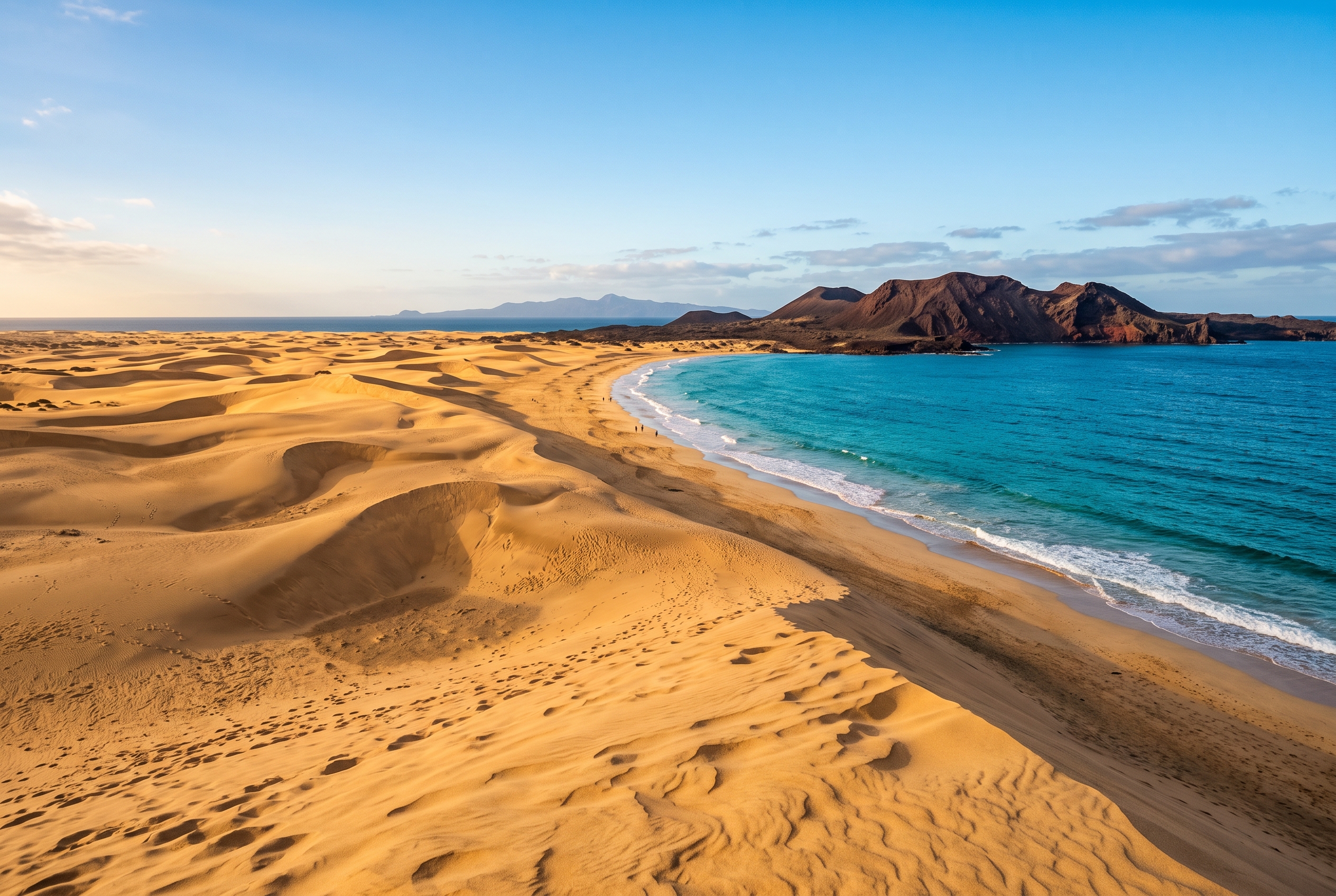
This is where Fuerteventura over-delivers. The Corralejo Natural Park in the north protects 26 square kilometres of rolling golden dunes, the largest in the Canaries, spilling down to a turquoise sea on one side with volcanoes on the other; protected since 1982, it is the postcard image of the island. Down south, the endless Sotavento and Jandia beaches stretch for kilometres of pale sand. Add the volcanic interior, the Oasis Park nature park near Costa Calma, and boat trips to the tiny islet of Lobos, and your no-wind days will never be a problem.
Practical Travel Information
How to Get There
You will fly into Fuerteventura Airport (FUE) on the island’s east coast near Puerto del Rosario, which is well connected to mainland Spain and much of northern Europe with direct flights, many of them seasonal charters. From the airport, Costa Calma and the Sotavento beaches lie roughly 65 km to the south-west, about a 55-minute drive. A taxi runs in the region of €80; private transfers sit around €65 to €90; and the public bus is the cheapest option at a few euros, taking a little over an hour. Most foilers hire a car, though, because the island’s spots are spread out and the freedom to chase the wind between the south and the north is well worth the rental.
Where to Stay
For wing foiling, base yourself in the south. Costa Calma puts you within easy reach of the lagoon, Matas Bay and the schools, with everything from budget apartments to upscale resorts; the Sotavento beachfront hotels (the Melía Gorriones among them) put you literally on top of the action. As a rough budget guide, three-star hotels average around €170 a night, four-stars near €230, and five-stars considerably more, with cheaper apartments and self-catering options widely available. If your priority is the northern Flag Beach scene and a bigger town, Corralejo is the alternative base, but it is a long drive from Sotavento.
Best Time to Visit
For the most reliable wind, target June, July and August, the windiest and busiest stretch, when the trades blow hardest and most consistently. May and September are the sweet spot for many: still very windy, warmer-than-you-expect water, and slightly calmer crowds and prices. Spring and autumn shoulders are gentler and ideal if you prefer learning conditions over survival sessions. Whenever you go in summer, plan around the lagoon’s tide and moon cycle so you are at Sotavento when it is full of glassy water rather than glassy sand.
Budget Estimates
Fuerteventura is mid-range for Europe and very doable on a sensible budget. A rough weekly sketch for one foiler: accommodation from around €45 a night for an apartment up to €230-plus for a four-star; gear rental around €280 to €400 for the week; a beginner course €250 to €350 if you are learning; plus a car hire (often cheap on the island), fuel, food and the odd long dinner. Bringing your own kit cuts the biggest variable cost, while a learn-to-fly trip with lessons and rental will be the pricier end. Either way, it is hard to find this much guaranteed wind, warm water and easy access anywhere closer to Europe.
Wrapping Up
Fuerteventura earns its reputation honestly. It combines the safest of beginner flatwater in a full Sotavento lagoon with genuinely world-class wind, warm Atlantic water and a desert-island backdrop that few destinations can match, all within a short hop of home for most Europeans. Learn the tides, pack for strong July afternoons, and you have one of the most consistent and forgiving wing foiling islands on the planet.
If you are weighing up your options, it sits naturally alongside Europe’s other wind magnets. The mainland’s wind capital, Tarifa, Spain, offers a stronger, more relentless alternative, while the Atlantic flatwater of Dakhla, Morocco is the spiritual cousin of the Sotavento lagoon a little further south.
Not sure which wing to bring for those 30-knot afternoons? Run your weight and the forecast through our wing foil calculator before you fly, and if you are still finding your feet on the foil, our beginner’s guide will get you ready for that first full lagoon session. See you on the water.
Frequently asked questions
When is the best season for wing foiling in Fuerteventura?
The windiest, most reliable season runs April to September, with June, July and August the peak. May and September are the sweet spot, with strong wind but slightly fewer crowds and lower prices.
How much wind does Fuerteventura get?
Summer trade winds average 20-30 knots most afternoons, with a 75-95 percent chance of usable wind in peak months. July and August regularly build toward 40 knots in the south and can get gusty.
Is Fuerteventura good for beginners?
Yes. When the Sotavento lagoon is full it is one of Europe's safest learning spots: flat, waist-deep water with side-onshore wind. Matas Bay and Costa Calma also offer beginner-friendly flatwater.
What water temperature and wetsuit should I expect?
Water sits between roughly 18 and 23 degrees Celsius year-round. In spring and summer a shorty or no wetsuit is fine; from late autumn through winter a 3/2 full suit is sensible, and the coldest days reward a 4/3.
How do I get there and what does it cost?
Fly into Fuerteventura Airport (FUE), then Costa Calma and Sotavento are about 65 km and a 55-minute drive south-west. A taxi is around 80 euros, private transfers 65-90 euros, and the bus a few euros. Most foilers hire a car.
