
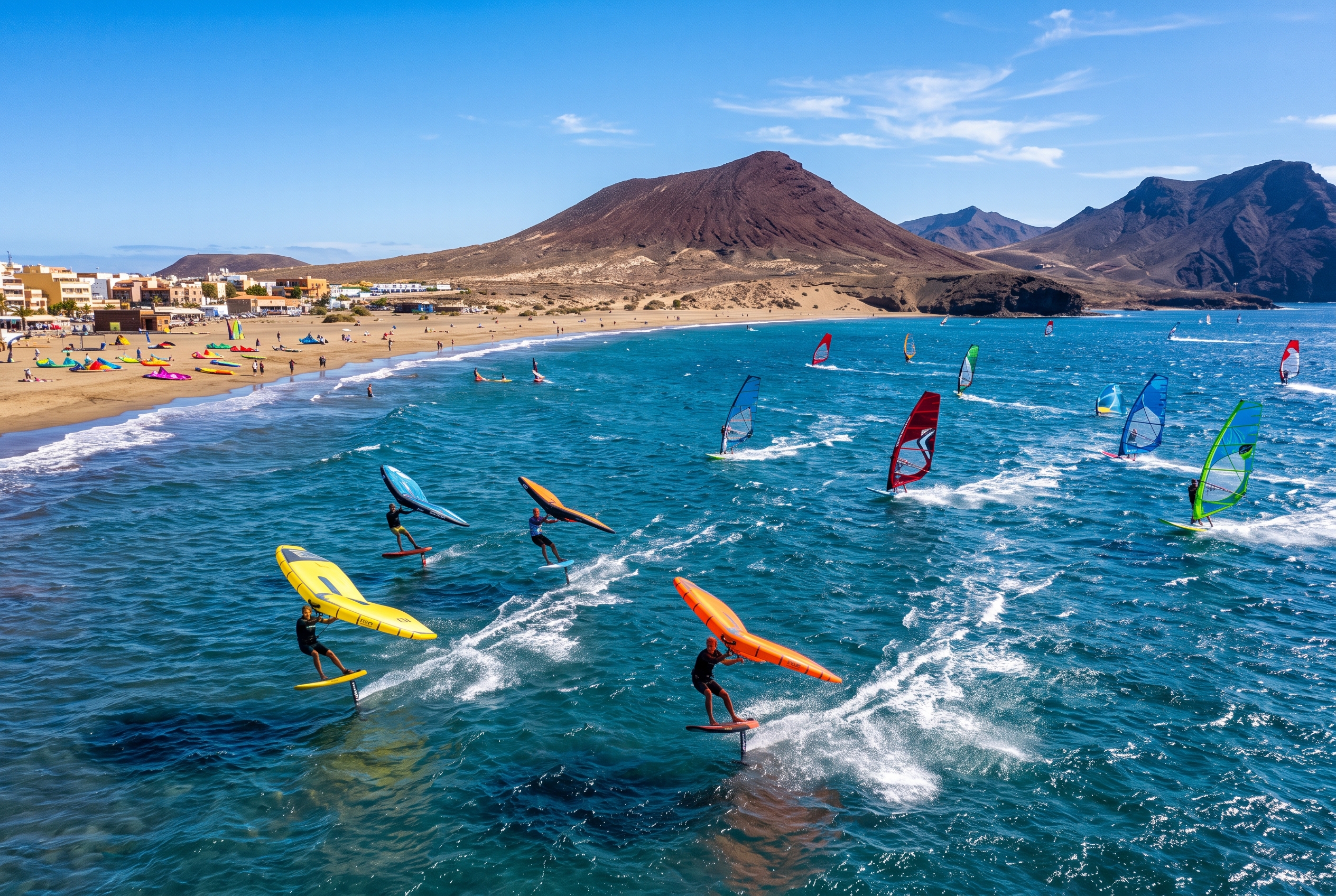
If wing foiling has a permanent address in Europe, it is probably a sandy little town on the southern tip of Tenerife called El Médano. While the rest of the continent spends winter staring at flat, grey water and pricing flights to the tropics, this corner of the Canary Islands just keeps doing what it does best: blowing a clean northeast trade wind across a wide Atlantic bay, roughly 250 days a year, with a volcanic cinder cone standing guard over the whole spectacle. It is not a place you discover so much as a place you eventually accept you were always going to end up.
El Médano has been a windsurfing pilgrimage site for decades, which means the infrastructure for anything wind-powered is already mature, dense, and refreshingly unpretentious. The same beaches that made this a World Cup windsurfing venue now hum with wing tips and hydrofoil wakes, and the crossover has been seamless: same wind, same launch zones, same schools, just a smaller bag to carry. Beginners learn in the protected bay, intermediates carve the flats off Playa Sur, and the experienced crowd points downwind toward Cabezo where the swell stacks up and the trade wind turns the dial past 30 knots.
The pitch is simple. You can land at Tenerife South airport, be standing on the beach with a wing in your hands in under twenty minutes, and sail in board shorts for half the year. This guide covers the wind, the water, the spots by skill level, the local scene, and everything you need to actually book the trip rather than just bookmark it.
Wing Foiling Conditions
Wind Patterns and Seasonality
The engine behind El Médano is the northeast trade wind, known locally as the Alisio. It is the most reliable wind in European watersports, blowing from a northeasterly direction roughly 90% of the time and delivering a genuine year-round season. Schools here count on something like 250 windy days a year, which is the kind of statistic that makes northern Europeans book one-way flights.
Navigable wind strength sits between 15 and 35 knots depending on the time of year. The summer months are the headline act: from roughly May through September the trade wind locks in at a constant 20 to 30 knots, perfectly oriented and almost machine-like in its consistency. This is peak foiling season, small kit, long sessions, and a near-certainty that the wind will arrive when the forecast says it will. Winter, broadly October through April, eases back to a more variable 10 to 25 knots and trades some reliability for bigger Atlantic swell, which the wave-riders prefer.
One crucial local quirk: the wind accelerates as it funnels around the bulk of Mount Teide and the island’s terrain before it reaches the bay. The practical takeaway, repeated by every school in town, is to add 5 to 10 knots to whatever Windguru predicts whenever the forecast shows a northeasterly. A “marginal” 15-knot prediction frequently lands as a comfortable 22 on the water. Treat the forecast as a floor, not a ceiling, and choose your wing size accordingly, most visitors find themselves on smaller gear than they expected. If you are unsure how that translates to your weight and ability, our wing foil calculator will get you in the right ballpark before you pack.
Water Conditions
This is the Atlantic, but the Canaries sit far enough south to keep things civilised. Water temperature ranges from about 18°C in the coolest winter months up to 24°C in late summer, hovering around a pleasant 20 to 25°C from May through October. For most of the year a 2/2 or 2/3mm wetsuit or even a shorty is plenty, and in the warmth of summer plenty of locals foil in board shorts and a rash vest. Pack a 3/2 if you run cold and plan to be in the water for hours at a stretch in winter; you will not need anything heavier.
The wind blows cross-onshore (side-onshore) from the northeast, which is about as friendly an orientation as a foiler could ask for, if you go down, the breeze nudges you back toward the beach rather than out to sea. The bay offers genuinely flat, protected water near the town, while conditions get progressively choppier and more swell-driven as you move toward the eastern end at Cabezo. There is plenty of space at low tide; high tide shrinks the usable beach, particularly at Cabezo, so it pays to check the tide table alongside the wind forecast. Reassuringly, the main beaches operate a free rescue service with boat and jet ski cover, which takes a lot of the anxiety out of those early self-launches.
Best Spots for Different Skill Levels
One of El Médano’s quiet superpowers is that several distinct spots sit within a short drive, or a short downwinder, of each other, which means you can match the water to your ability rather than the other way round.
El Médano South Bay (Playa Sur) is the heart of the operation and the natural home for beginners and improvers. The coast here is mostly sandy and the bay shelters the water, so it stays noticeably flatter and calmer than Cabezo, with less wave to trip over while you are still learning to tack and stay upwind. It is the most popular spot on the island for a reason, and it works for everyone from first-timers to experts wanting a flat-water blast.
Granadilla Harbour, a ten-minute drive from the main town, is where several schools run their mobile beginner setups. You get calm conditions, side-shore wind, flat water, and crucially a lot of empty space, ideal for those very first wobbly foiling attempts without a crowd to dodge.
La Aquita is the natural next step for confident intermediates: a manageable shorebreak combined with rolling swell rolling in from outside, so you can dip a toe into wave riding without committing to the full Cabezo experience.
El Cabezo is the marquee spot and strictly for the experienced. Sitting in the heart of El Médano, it is one of Tenerife’s most iconic wind and wing locations, with strong winds, moderate-to-serious wave, and a small beach that all but disappears at high tide. The wind here can build to 45 knots in a strong northeasterly, which is thrilling for experts and genuinely hazardous for everyone else. Earn your stripes in the bay first, then graduate to Cabezo when your gybes are bombproof.
Local Wing Foiling Scene
Schools and Lessons
Because El Médano has been teaching people to ride the wind for decades, the standard of instruction is high and the choice is generous. Established centres including TWS (The Windsurfing School), the Duotone Pro Center, Club Canary and several smaller schools all run wing foiling programmes for every level, from total beginners to riders chasing their first jumps.
Pricing is consistent across town. Group lessons run around €90 per person, while private one-on-one tuition starts at about €130. The typical session is a two-hour block combining theory and on-water practice, with departures available throughout the day from roughly 10:00 to 18:00. Schools provide all the necessary gear, board, foil, wing, plus wetsuit and neoprene shoes, so you can turn up with nothing but a swimsuit and sun cream. Most offer a 48-hour free cancellation policy, which is handy in the rare event of a no-wind day. If this is your first time even considering the sport, it is worth reading our beginner’s guide to wing foiling before you arrive so the lesson lands faster.
Gear Rentals
For riders who already know what they are doing, rental is straightforward and well stocked, with schools and surf shops around town carrying current-generation wings, boards and foils. A typical rental package includes board, wing, harness, wetsuit, pump and accident insurance. Note one near-universal safety rule: most centres only rent to riders who can already sail upwind reliably and self-rescue, so expect a quick competency check before they hand over the kit. If you are not quite there, a lesson or two bridges the gap and unlocks the rental fleet.
Travelling with your own gear is also entirely viable, the launch zones are wide, the rigging areas spacious, and you are never far from a shop if you snap a line or need a spare. Many visitors bring their boards and foils and simply rent a wing locally to save on baggage.
Clubs and Community
El Médano runs on a friendly, international, sun-bleached watersports culture. The beachfront is a constant parade of windsurfers, kiters and wing foilers from across Europe, and the town has long been a winter base for travelling pros and coaches, you will spot familiar faces from the contest circuit testing gear in the bay. Wing foil camps and coaching weeks run through the season, particularly in the prime summer months, and they are an easy way to plug into the community, find ride buddies, and get your technique sharpened by people who do this for a living. Strike up a conversation in any of the beachfront cafés and you will have a session crew by lunchtime.
Off the Water
Cultural Attractions
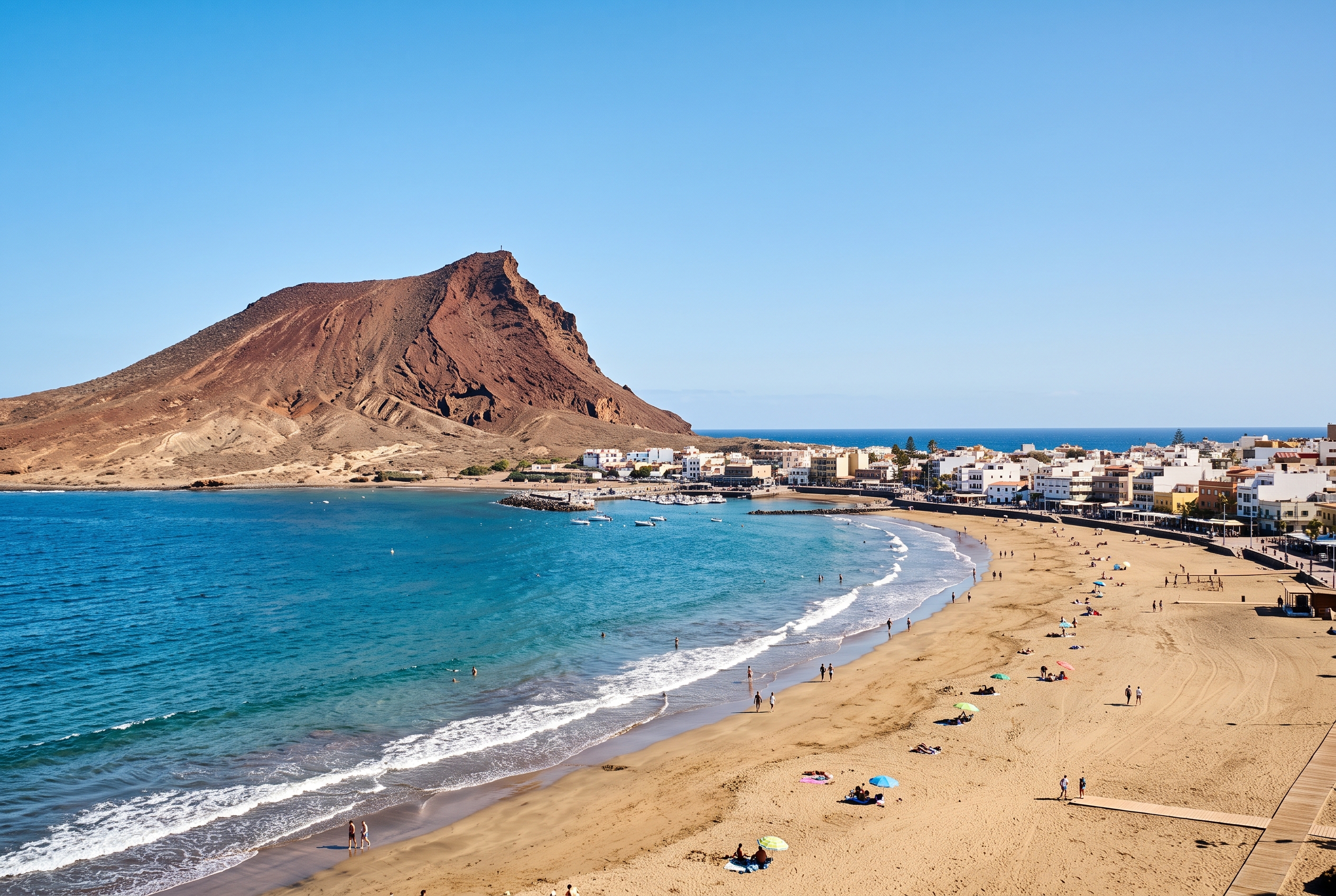
El Médano itself is a laid-back, bohemian little town, pedestrianised at its core, built around a central square, and far more relaxed than the high-rise resort strips elsewhere on Tenerife’s south coast. It has kept the feel of a Canarian fishing village that happened to fall in with the wind crowd, all whitewashed low-rise buildings, surf shops, and a wooden boardwalk threading along the seafront. The town wears its watersports identity lightly and charmingly, and a slow wander through the centre is half the holiday.
Dining
The food scene punches above the town’s size. The seafront and the central square are lined with cafés, tapas bars and seafood restaurants where you can refuel on fresh fish, Canarian papas arrugadas with mojo sauce, and a post-session beer with sand still on your feet. Breakfast culture is strong, important, because you will want carbs before a long windy day, and the international crowd means you will find everything from proper espresso to vegan brunch alongside the traditional spots. Eating out here is relaxed and reasonably priced compared with the tourist-trap resorts further along the coast.
Nightlife and Entertainment
Do not come to El Médano expecting Playa de las Américas-style clubbing, that is rather the point. Evenings here are about beachfront bars, sundowners watching the last riders come in, live music spilling out of small venues, and the gentle social churn of a town full of people who got up early to chase wind. It is sociable without being raucous, the kind of place where the bar conversation is more likely to be about foil sizes than bottle service. If you want a big night out, the bright lights of the larger resorts are a short drive away, but most visitors find the low-key buzz suits the rhythm of a foiling trip perfectly.
Nature and Sightseeing
The town’s natural landmark is Montaña Roja, the dramatic red volcanic cone that bookends the beach and gives the bay its postcard backdrop. It is a protected nature reserve and an easy, rewarding hike, with panoramic views over the wind-streaked Atlantic and the foilers below from the summit. Beyond El Médano, Tenerife is a geological showpiece: Mount Teide, Spain’s highest peak at 3,718 metres, sits at the centre of a UNESCO-listed national park of lunar lava fields and is an unmissable day trip when the wind takes a rest day. Add the laurel forests of the north, the cliffs of Los Gigantes, and a coastline of black-sand and golden beaches, and you have a serious adventure island wrapped around your wing-foiling base.
Practical Travel Information
How to Get There
This is one of the most convenient watersports destinations on the planet to reach. Tenerife South airport (TFS) sits just about 9 kilometres from El Médano, a taxi or private transfer covers it in roughly 9 to 13 minutes. If you are travelling light, the public bus (lines 111 and 408) does the same trip in around 25 to 27 minutes for a few euros. TFS receives direct flights from across the UK and mainland Europe year-round, so for most riders the door-to-beach time is genuinely under an hour from landing. Renting a car is worth considering if you plan to explore Teide or chase the best spots on a given day, but it is by no means essential, El Médano is walkable and the schools are central.
Where to Stay
Stay in El Médano itself, the town is compact, pedestrian-friendly, and almost entirely borders the sea, so you can be from your front door to the launch in a couple of minutes. The accommodation is dominated by holiday apartments and small aparthotels rather than mega-resorts, which suits the independent, gear-toting traveller. Aim for a place within a five-minute walk of the centre and the beach; plenty of seafront apartments sit just metres from the boardwalk, and these are gold when you are hauling kit. Book through the usual platforms, Airbnb, Vrbo, Idealista and local agencies all list extensively here. In peak summer and over the winter holidays, book well ahead, as the wind crowd fills the good central spots quickly.
Best Time to Visit
For the most reliable foiling wind, target May through September, when the trade wind locks in at a steady 20 to 30 knots and the water is at its warmest. This is the window for consistent, long, board-shorts sessions. If you prefer waves and slightly fewer crowds, and do not mind more variable 10-to-25-knot winds and a thicker wetsuit, the October-to-April winter season delivers bigger Atlantic swell and is still a vastly better bet than anywhere on the European mainland. The honest answer is that there is no bad time; it is simply a question of whether you are chasing flat-water flow or wave-riding punch.
Budget Estimates
El Médano is kind to the wallet by European watersports standards. Group wing foiling lessons run around €90 per person and private tuition from about €130, with a typical session lasting two hours and including all gear. Rentals are widely available for riders who can already sail upwind. Self-catering apartments are reasonably priced outside the very peak weeks, dining out is affordable, and the short, cheap airport transfer means you are not bleeding money on logistics before you even get wet. Budget for lessons or rental, an apartment near the beach, a few good meals, and perhaps a car for a Teide day, and you have a complete trip that costs a fraction of a long-haul tropical equivalent, with arguably better wind.
Wrapping Up
El Médano earns its reputation the hard way: with wind that actually shows up, water you can ride in board shorts for half the year, and a spread of spots that genuinely suits every level from first-day beginner to wave-hunting expert. Add a sub-fifteen-minute airport transfer, a walkable bohemian town, mature schools, and a volcanic backdrop that makes every session look like a film, and it is hard to think of a more complete European wing foiling destination. It is the rare place that works equally well for a quick four-day fix and a full winter migration.
If El Médano has whetted your appetite for windy European bases, it is in excellent company. The flat-water lagoon of Lo Stagnone in Sicily is the gentler, learner-friendly counterpoint, while the wind machine of Tarifa on mainland Spain offers a similar relentless reliability with a buzzier scene. And when you are ready to push further south into proper wave-and-flat-water nirvana, Dakhla in Morocco is the natural next stamp in the passport. Pack light, check the tide, add ten knots to the forecast, and go.
Frequently asked questions
When is the best season to wing foil in El Médano?
It is year-round, but May to September is best, when the trade wind locks in at a steady 20-30 knots and the water is warmest. October to April is more variable (10-25 knots) but brings bigger Atlantic swell for wave riding.
How much wind does El Médano get?
Navigable winds run 15-35 knots depending on season, from the northeast roughly 90% of the time, on around 250 windy days a year. Add 5-10 knots to forecasts, as the wind accelerates around the island's terrain.
Is El Médano good for beginners?
Yes. The sheltered, sandy South Bay (Playa Sur) and nearby Granadilla Harbour offer flat, calm water and space to learn, while cross-onshore wind nudges you back to the beach. Expert-only Cabezo is separate, so beginners avoid it easily.
What is the water temperature and do I need a wetsuit?
Water ranges from about 18°C in winter to 24°C in late summer. A 2/2 or 2/3mm wetsuit or shorty suits most of the year; in summer many ride in board shorts and a rash vest.
How do I get there and is it expensive?
Tenerife South airport (TFS) is about 9km away, a 9-13 minute taxi or 25-27 minute bus. Group lessons cost around 90 euros, private from 130 euros (gear included), and central apartments are affordable, making it cheaper than long-haul tropical trips.
