
Some places earn nicknames. Essaouira earned “the Windy City” the honest way, by relentlessly delivering wind to anyone who shows up with a wing, a kite, or a sail. This walled fishing town on Morocco’s Atlantic coast has been a windsurfing pilgrimage site since long before foiling existed, and the new generation of riders has slotted straight into its half-moon bay as if the place were designed for hydrofoils all along.
The pitch is hard to argue with. You get steady summer trade winds that fill in like clockwork, a protected bay with manageable chop for early foiling, a serious wave spot up the coast for when you want to be humbled, and a UNESCO-listed medina full of grilled sardines and Gnaoua music waiting for you the moment you de-rig. Few destinations let you go from foiling a glassy bay to wandering 18th-century ramparts inside the same afternoon.
There is a catch, and it is the wind itself. When Essaouira switches on in midsummer, it does not do “gentle.” This is a destination that rewards riders who can already get up on foil and want consistent, building breeze, more than it coddles total first-timers. Stick around and we will sort out exactly who should book flights, when, and with how much neoprene in the bag.
Wing Foiling Conditions
Wind Patterns and Seasonality
The engine here is the alize, the north to north-easterly Atlantic trade wind that sweeps down the Moroccan coast through the warmer months. It gets funneled and accelerated by the coastline and the distant Atlas mountains, then topped up by a strong thermal effect: as the land bakes through the day, the temperature gap between hot interior and cool ocean pulls the wind harder along the bay. The practical upshot is a reliable side-onshore breeze that tends to build through the afternoon rather than fade.
The wind season runs roughly April to October, with the alize sweeping the bay most consistently across those months. July and August are the heavyweight period, when Essaouira earns its reputation as a genuinely high-wind destination, frequently delivering 25 to 30 knots. That is small-wing, fast-foil territory, brilliant if you like to be lit up and a little spicy if you are still sizing your kit conservatively. April, May, September and October are the more forgiving shoulder months, with the trades still showing up dependably but without the relentless midsummer punch.
From November to March the picture flips. Wind becomes patchy and unpredictable, with some rideable days scattered through but no guarantees. Winter is when Essaouira leans into surfing and sightseeing instead, so if your trip lives or dies on wind, the cooler half of the year is a gamble rather than a plan.
Water Conditions
This is the Atlantic, not the Med, and the water keeps you honest. Sea temperatures sit around 18 to 22 degrees Celsius through the riding season, which sounds mild on paper and feels cooler the moment you are sitting in it waiting between runs. The blazing sun and hot air are a trap: plenty of visitors underestimate the chill, head out thin, and cut sessions short shivering. Pack a proper wetsuit. A full or long-sleeve steamer is the sensible default, and you will be grateful for it on the longer, windier days.
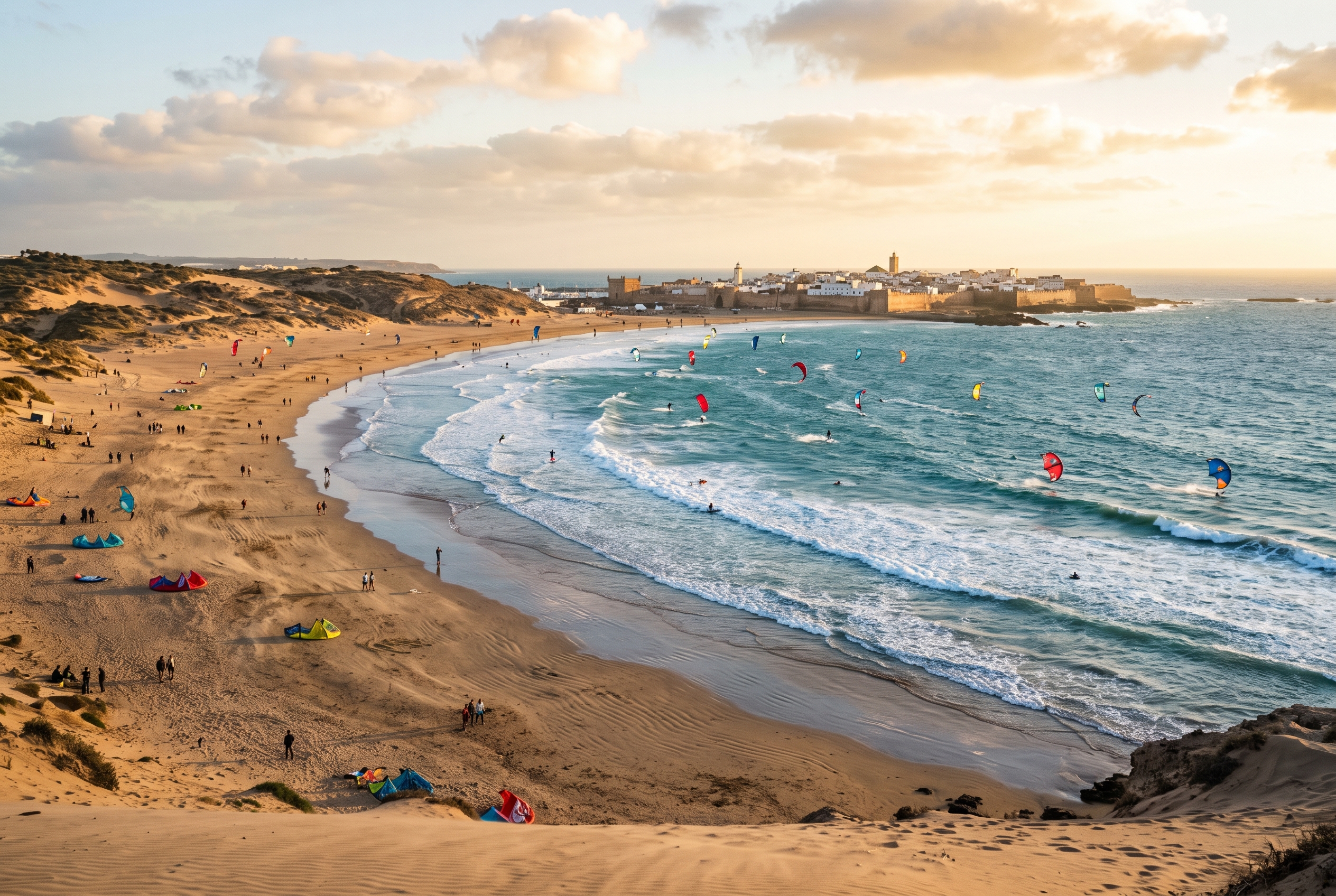
The bay itself is the saving grace for water state. Sheltered by the Purpuraires Islands offshore, Essaouira’s half-moon bay carries smaller, easier waves than the exposed coast nearby. Through the windiest stretch of June to August the swell inside the bay is modest, roughly 0.5 to 1 metre, knocked down by all that breeze. In spring and autumn the bay sees cleaner, larger waves in the 1 to 2 metre range, which is when wave-oriented wingers tend to grin the widest. Out at the more exposed spots the story is very different, as we are about to see.
Best Spots for Different Skill Levels
Essaouira Bay is the heart of the action and the most accessible water in the area. The half-moon bay is where most of the schools are based, and it is the obvious choice for anyone building confidence. You get steady side-shore wind, shallow water close to the beach, and small bumps farther out for first wave rides. It is the right launchpad for improving riders, those nailing their first reliable foiling, and anyone who wants a long sandy beach to walk back up rather than a rocky scramble. A fair warning, though: because the wind can crank so hard in peak summer, even this friendly bay is better suited to riders who can already get onto foil reasonably easily than to genuine never-evers.
Moulay Bouzerktoun is the legend up the coast, about 25 minutes north of town, and one of Morocco’s most famous wave-sailing spots. This is not a beginner venue and no amount of optimism changes that. It is a small sandy beach fringed with rocky slab, where waves run from around 1.5 up to 3 metres from roughly March to June, breaking both at the foot of the cliffs and farther south at the beach itself. The waves are powerful, often genuinely intimidating, and the spot is reserved for experienced riders who are comfortable in serious surf and around rock. For advanced wingers chasing real down-the-line wave riding it is the prize. For everyone else it is a spectacular place to watch from the sand with a mint tea.
If you are weighing up whether your foiling is bay-ready or just bay-curious, our beginner’s guide to wing foiling is a good honesty check before you commit to a high-wind trip.
Local Wing Foiling Scene
Schools and Lessons
Essaouira has decades of watersports teaching baked into it, so you are not short of expert hands. Numerous professional schools sit directly on the bay beach, many of them internationally certified, which keeps safety standards reassuringly consistent. The bay’s shallow, steady conditions make it a productive place to take structured lessons, and most established centres now run wing foiling alongside their long-standing windsurf and kite programmes. Established names on the bay include ION Club Essaouira, which has a dedicated wingsurf lesson programme, alongside other watersports schools clustered along the same stretch of sand. Because the place can be windy and challenging, booking a proper coached progression rather than winging it solo pays off fast, especially if you are crossing over from another sport.
Gear Rentals
The same beachfront centres that teach also rent, so you can travel light and pick up wings, boards and foils on arrival. This is a real advantage given the wind range here: rather than gambling on one wing size, you can swap down as the afternoon trade fills in and the bay goes from comfortable to electric. Rental and lesson pricing shifts with season and operator, so confirm current rates directly with the schools when you book, particularly across the busy July and August window when demand peaks. One non-negotiable to budget for either way is wetsuit hire or your own, because the Atlantic will not let you forget it.
Clubs and Community
Essaouira’s watersports community is one of the most established on the African Atlantic, with a strong, visible surf and ride culture that spills off the water into the medina cafes. In peak season the bay fills with a rainbow of kites and a growing fleet of wings, and the schools double as social hubs where you will swap conditions intel, find someone to share a transfer up to Moulay Bouzerktoun, or just compare wetsuit-related suffering. It is an easy scene to plug into solo, and the international, English-friendly instructor crews make the town feel welcoming rather than cliquey.
Off the Water
Cultural Attractions
Essaouira’s medina is a UNESCO World Heritage site and one of the genuinely great walled towns of Morocco, blending 18th-century Portuguese-influenced fortifications with a buzzing tangle of Berber souks. The grid-like layout means you can wander the blue-shuttered lanes and artisan workshops without the panic of getting hopelessly lost, which is not something you can say about every Moroccan medina. The Skala de la Ville, the fortified 18th-century sea wall lined with old bronze cannons, is the iconic vantage point and an excellent place to watch the Atlantic hammer the ramparts after a session.
Dining
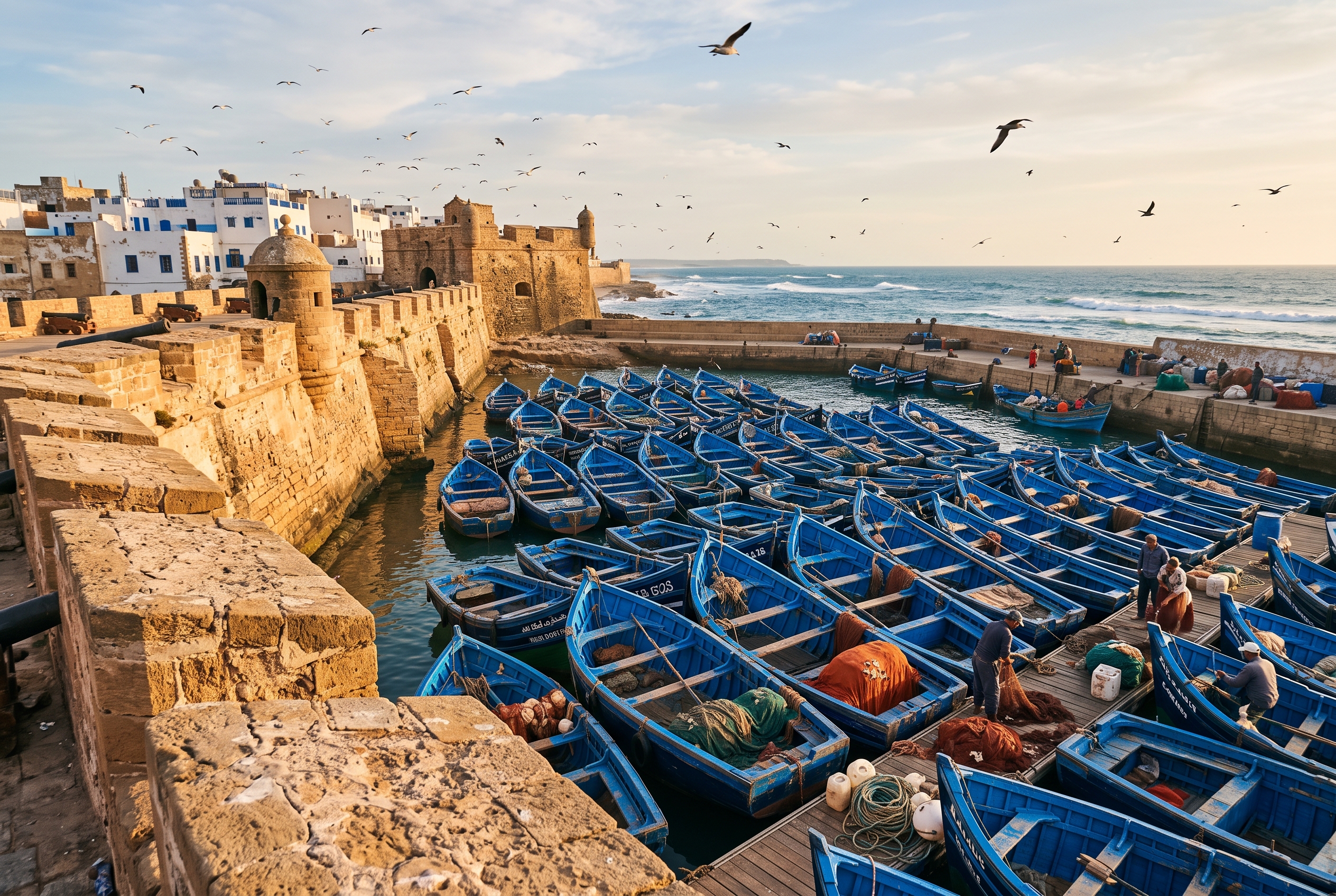
Post-session refuelling here is a highlight in its own right. The undisputed move is the grill stalls at the fishing port below the ramparts: you turn up around midday, pick your fish straight off the ice trays, sardines, sea bream, calamari, maybe lobster, and they grill it on the spot. It is about as fresh as seafood gets, often landed by the blue boats that same morning. Beyond the port, the medina is stacked with restaurants and rooftop cafes serving tagines, fresh fish and the obligatory mint tea, and the local argan oil, pressed by women-run cooperatives in the surrounding countryside, finds its way into plenty of dishes.
Nightlife and Entertainment
Essaouira’s after-dark personality is more soulful than rowdy, and that suits a town where most people have been on the water all day. The signature sound is Gnaoua, the hypnotic music that originated right here in the medina and is recognised as intangible cultural heritage, blending sub-Saharan rhythms with Sufi mysticism. You will catch it live in cafes and venues around town year-round, and if you visit in June the Gnaoua World Music Festival turns the whole place into a stage, drawing international artists and big crowds. Pair that with rooftop bars, relaxed restaurants and the medina at night, and you have an evening scene built on atmosphere rather than thumping clubs.
Nature and Sightseeing
The coastline around Essaouira rewards exploration well beyond the bay. The long sweep of Essaouira Beach is made for blustery walks, and the countryside inland is dotted with argan groves, complete with the famous tree-climbing goats. A short hop south brings you to mellow Sidi Kaouki, a wide, wild beach and surf spot, while the drive north to Moulay Bouzerktoun threads dramatic cliffs and slab. Add the harbour with its blue fishing fleet and wheeling seagulls, and you have a place that photographs as well off the water as on it.
Practical Travel Information
How to Get There
You have two sensible routes in. Essaouira has its own airport, Essaouira-Mogador (ESU), just 16 km from the old town, with a taxi into the centre costing around 25 euros and the bus under 3 euros per person. ESU has limited routes, so many riders instead fly into Marrakech Menara (RAK), which is far better connected internationally, then transfer overland. The drive from Marrakech to Essaouira is roughly 195 km and takes about 2.5 hours, with private transfers typically running 70 to 100 euros each way and cheaper shared shuttles and coaches also available. Either way, plan how you will move your gear, and weigh the convenience of ESU against the broader flight choice through RAK.
Where to Stay
Accommodation runs the full range, from backpacker hostels to character-soaked riads to comfortable hotels. The classic Essaouira experience is a riad inside the medina, a traditional courtyard house that drops you into the old town’s rhythm, walking distance from the port, the souks and the evening Gnaoua. If you would rather roll out of bed and onto the water, look for places nearer the bay and the school strip, which trims your daily shuttle to the beach. Up at Moulay Bouzerktoun there is dedicated surf accommodation and campervan space for advanced riders who want to live next to the wave rather than commute to it.
Best Time to Visit
For wind, target April to October. If you want maximum power and the busiest, most electric scene, come in July or August and accept that 25 to 30 knots will define your kit choices. If you would prefer reliable trades without the full midsummer hammering, plus cleaner waves in the 1 to 2 metre range, the shoulder months of April, May, September and October are the sweet spot, and arguably the smartest window for most wingers. June carries a bonus for culture lovers, coinciding with the Gnaoua World Music Festival. Winter, November to March, is for surfers and sightseers rather than wind chasers.
Budget Estimates
Essaouira is friendly on the wallet by European standards. Your fixed costs are the flight, the airport transfer (around 25 euros by taxi from ESU, or 70 to 100 euros each way for a private Marrakech transfer), and gear, where renting on the beach saves you hauling kit across continents. Lessons, rentals and wetsuit hire vary by school and season, so request current quotes when booking, especially for peak July and August. Accommodation spans cheap hostel beds to mid-range riads, eating out is inexpensive if you stick to port grills and medina tagines, and a wetsuit is the one piece of gear you should not skip. A wind-focused week here generally lands well below the cost of comparable European foiling trips.
Wrapping Up
Essaouira is the kind of destination that gives back exactly what you bring. Show up able to foil, with a wetsuit and a willingness to be lit up in the summer trades, and you will score a protected, school-lined bay, a world-class wave spot up the road, and a medina that makes the down-days as good as the windy ones. Come as a total beginner expecting calm and warmth, and the Atlantic chill and high-wind days will set you straight. For improving and advanced wingers, though, it is one of the most rewarding and affordable trips on the African Atlantic.
If Morocco has its hooks in you, the lagoon paradise of Dakhla, Morocco offers flat-water foiling that is far kinder to beginners, while across the water Sao Vicente, Cape Verde serves up warmer water and Atlantic swell. And before you book anything wind-dependent, run your numbers through our wing foil calculator so you pack the right wing for those Essaouira afternoons.
Frequently asked questions
When is the best season to wing foil in Essaouira?
April to October, when the alize trade winds are reliable. July and August are the windiest and busiest; the shoulder months of April, May, September and October offer steadier breeze and cleaner waves.
How much wind does Essaouira get?
The north to north-easterly alize trades build through the afternoon and regularly reach 25 to 30 knots in peak July and August, making it a genuine high-wind destination.
Is Essaouira good for beginners?
It is best for riders who can already get up on foil. The sheltered bay with shallow, side-shore conditions is the learning zone, but the strong summer wind means total never-evers may struggle.
How cold is the water and do I need a wetsuit?
Yes, bring a wetsuit. Atlantic sea temperatures run about 18 to 22C through the season, and the hot sun is deceptive, so a full or long-sleeve steamer is the sensible default.
How do you get to Essaouira and what does it cost?
Fly into Essaouira-Mogador (ESU), 16 km away with a taxi around 25 euros, or into Marrakech (RAK) and transfer roughly 195 km in about 2.5 hours for 70-100 euros each way.
