
Wing foiling beats windsurfing on wind range, portability and learning speed for anyone with board skills: it gets going in 10-12 knots and the whole kit fits in a car boot. Windsurfing still wins on entry price and gust handling. Most crossover windsurfers are foiling within three to five sessions.
Is wing foiling easier to learn than windsurfing?
For a windsurfer, yes. Your wind awareness, stance, upwind theory and sheet-in reflexes transfer almost directly, and structured progressions get experienced windsurfers up and foiling within three to five sessions.
For a complete beginner the picture is different, because wing foiling is really two skills learned back to back: handling a hand-held wing, then balancing over a hydrofoil. Windsurfing on a wide board in light wind feels easier on day one, but its later milestones (planing, harness, footstraps, carve gybes) stretch over years rather than months.
A typical crossover progression for a windsurfer looks like this:
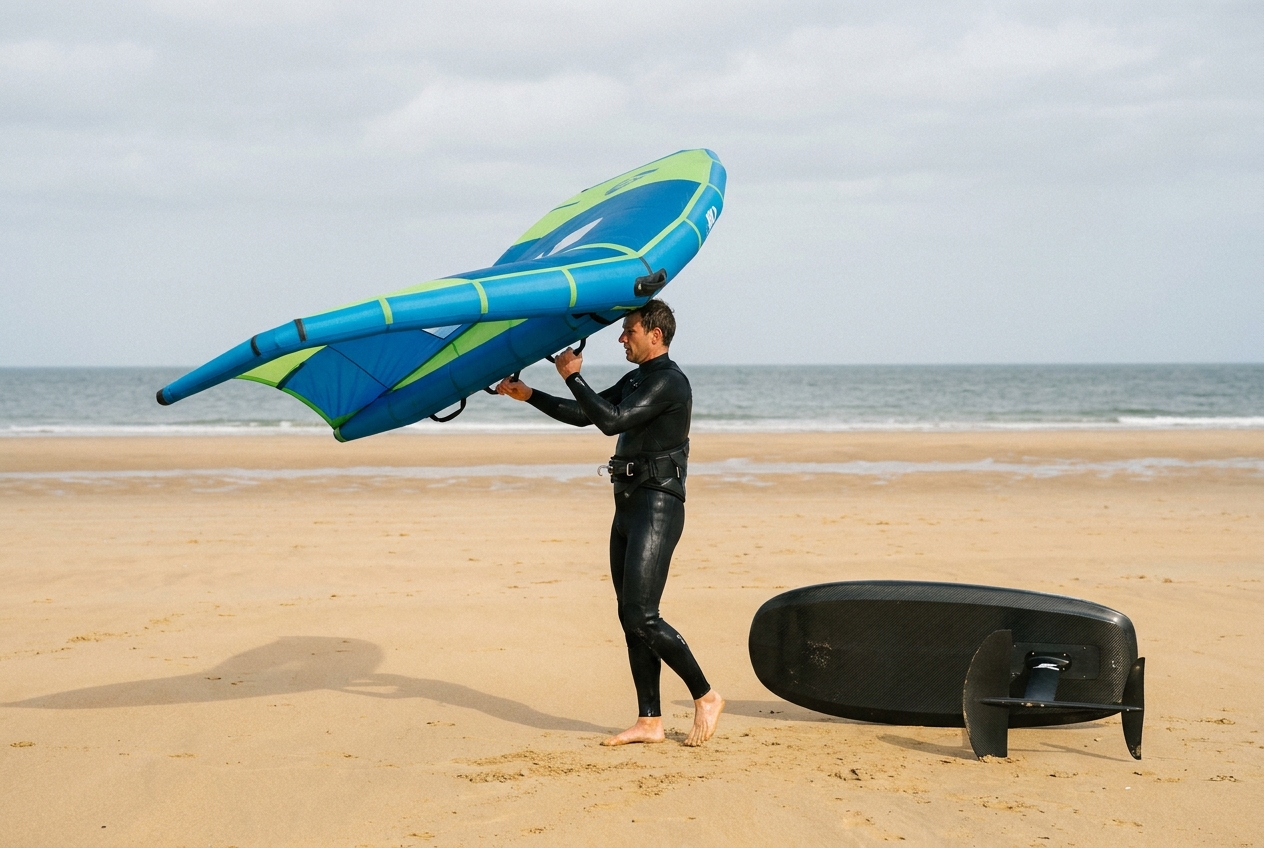
- Session 1: wing control. Learn to fly, flip and depower the wing on the sand, then on your knees on the water.
- Session 2: cruising without the foil. Ride a big board on its hull (or a fin board) to link wing handling with steering and staying upwind.
- Sessions 3-5: first flights. Move to a foil board, pump the wing like you would work a gust, and use front-foot pressure to keep the foil from breaching.
If you are starting from zero rather than from windsurfing, our guide to how long it takes to learn wing foiling breaks the timeline down by background.
Which costs more to get started, wing foiling or windsurfing?
Windsurfing has the cheaper entry point if you already own a board, but once you price a complete new setup the two sports land in a similar band. Current 2026 package pricing looks like this:
| Setup (new, 2026) | Typical price (USD) |
|---|---|
| Wing foil complete beginner pack (GONG inflatable board + wing + foil) | $1,184-2,032 |
| Windsurf beginner rig only (Severne Synergy and similar complete rigs) | $445-1,229 |
| Windsurf beginner board + rig package (STX 280 inflatable, Tahe Beach 185) | $1,799-2,599 |
| Windsurf premium package (Starboard iGo Inflatable Waterman) | $2,299-2,499 |
Two caveats for crossover riders. Windsurfing’s second-hand market is far deeper, so a used rig can undercut every number above, while newer wing foil gear tends to hold its value. And in both sports the board is the expensive half, so if your windsurf board has a foil box you can halve the cost of trying the wing; if you are buying, our wing foil board size calculator shows what volume suits your weight and skill level.
Which works in lighter wind?
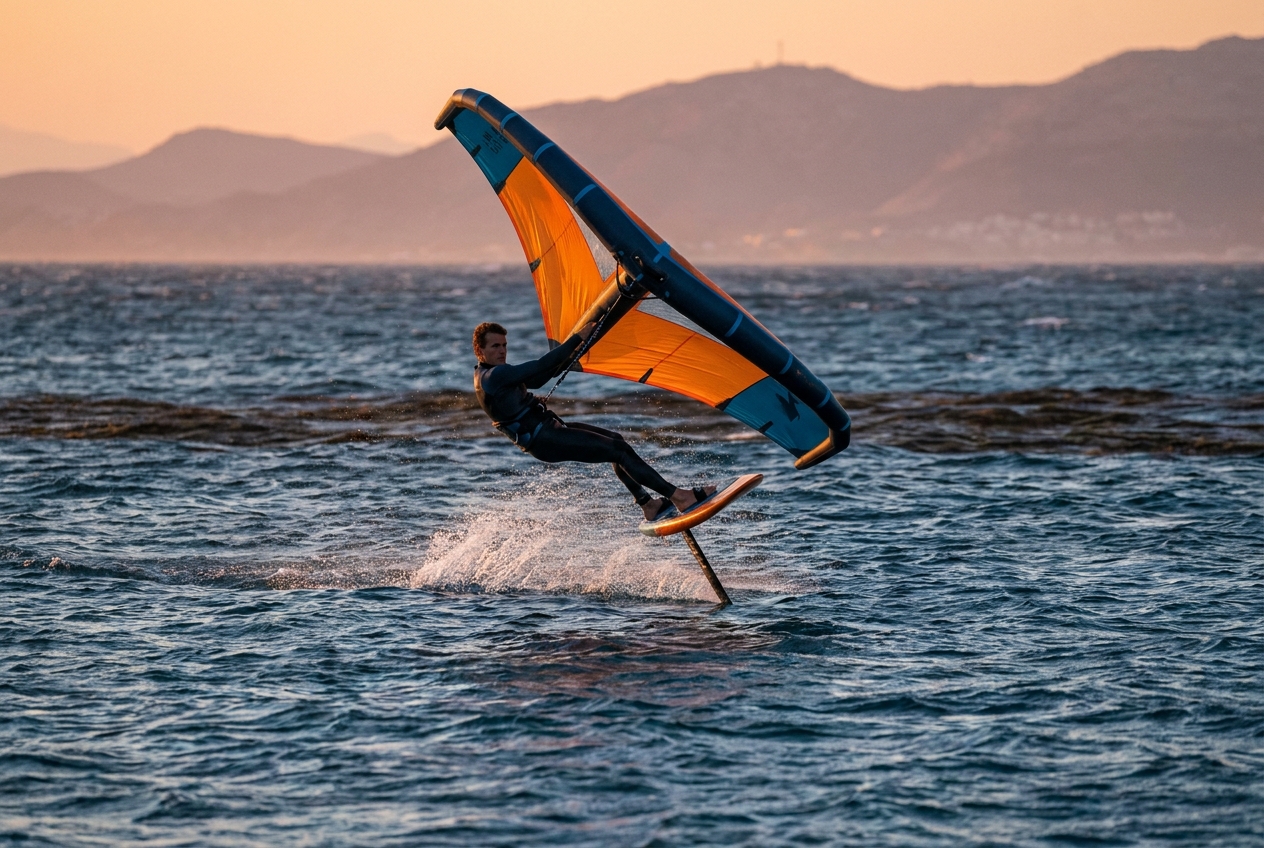
Wing foiling, and it is not close. A wing foiler gets flying in 10-12 knots with a bit of pumping, while a windsurfer on a standard fin board typically needs 15 knots or more before it planes.
| Wing foil | Windsurf (fin board) | |
|---|---|---|
| Fun starts at | 10-12 knots (pump onto foil) | ~15+ knots (planing) |
| Light-wind feel | Silent, smooth flight above chop | Slogging off the plane |
| Strong wind and gusts | Smaller wings, foil handles chop | Excellent: rig locks in, more top-end control |
The key difference is that a foil has no planing hump: you pump onto the foil the way you would work a gust, and then apparent wind does the rest. That 3-5 knot head start is the single biggest reason light-wind windsurfers switch. For a deeper look at usable conditions, see our wing foil wind range guide.
Which is easier to transport and travel with?
Wing foiling wins portability by a wide margin, and it changes how often you actually get on the water.
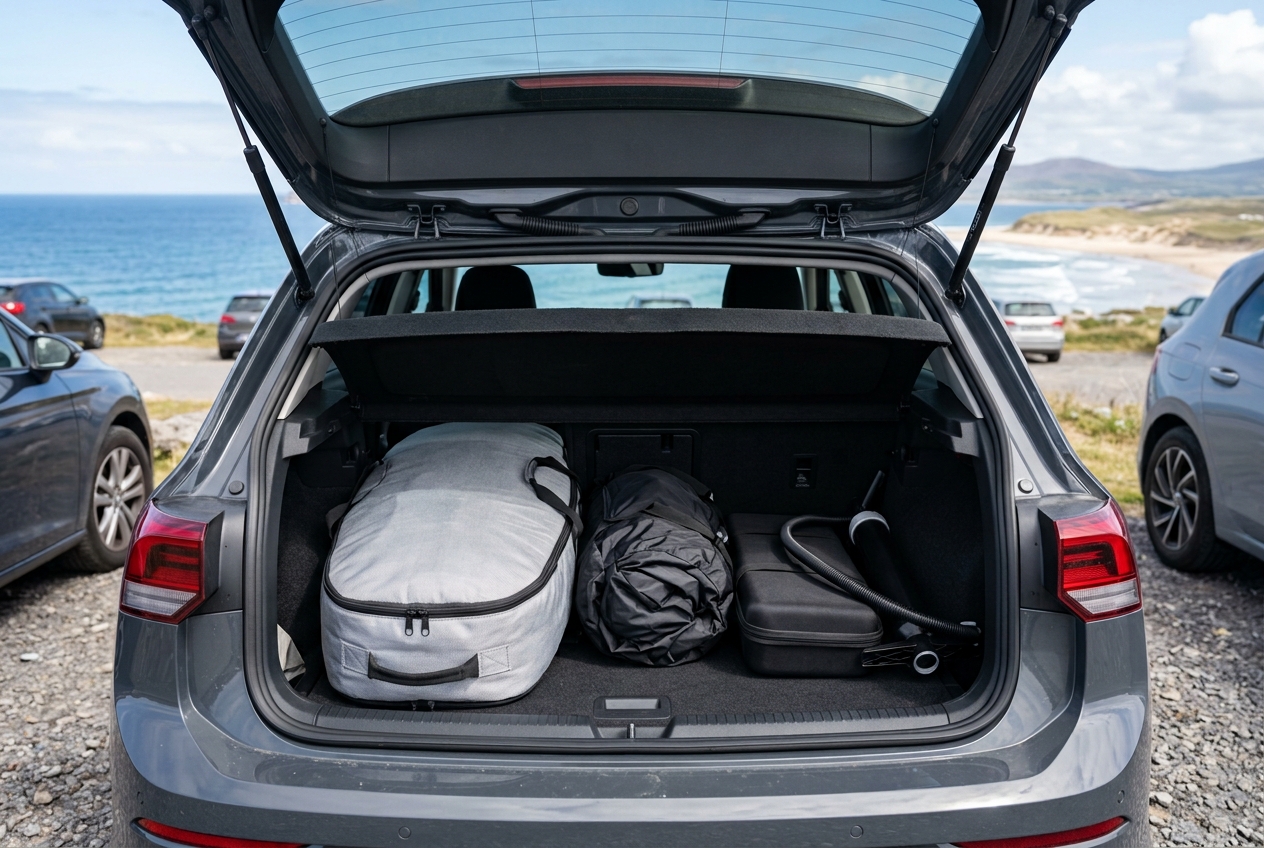
- The wing weighs 4-7 lb (roughly 2-3 kg) and rolls into a small backpack once deflated.
- Rigging takes a couple of minutes: inflate the wing with a pump, clip on the leash, go. No mast, boom or downhaul tension to set.
- An inflatable wing board packs into a bag, so a full kit fits in a car boot or checks in as standard luggage.
- A windsurf quiver means board, mast, boom and several sails, which in practice means roof racks, a van or a garage near the beach.
For travel specifically, this is decisive. A wing foil kit flies to a destination trip without oversize-luggage drama, which is why classic windsurf spots like Vassiliki on Lefkada have exploded with wingers rather than windsurfers.
Should you switch from windsurfing to wing foiling?
Switch if your local spot averages under 15 knots, because you will foil on days you would otherwise spend slogging. Switch too if storage or car space is what keeps you off the water, since the whole wing kit lives in a boot.
Keep windsurfing in the mix if you love powered-up, locked-in speed in 20+ knots, where a tuned rig with harness and footstraps is still a unique feeling. Plenty of riders run both: wing on the light days, windsurf when it nukes. If it is waves rather than wind you are really chasing, our wing foil vs prone foil comparison weighs the same trade-off against paddling into a wave.
Whichever way you lean, take a lesson for your first foil flights rather than self-teaching on your old kit. Our guide to where to learn wing foiling covers schools that cater specifically to crossover windsurfers.
Frequently Asked Questions
Is wing foiling harder than windsurfing for complete beginners?
Slightly, at first. A complete beginner learns two skills back to back: handling the wing, then balancing over a foil, so the first hours feel busier than uphauling a small sail on a wide windsurf board. The curve flips later, because wing foil progress after the first flights is quick, while windsurfing’s road to planing, harness and carve gybes is long.
Do windsurfing skills transfer to wing foiling?
Yes, strongly. Wind awareness, upwind theory, stance and sheet-in reflexes all carry over, which is why experienced windsurfers are typically foiling within three to five sessions. The two genuinely new elements are the free-floating wing, which is not attached to the board, and the hydrofoil itself, which rewards small, quiet inputs instead of big rig movements.
Is wing foiling cheaper than windsurfing?
At entry level they overlap. A complete new inflatable wing foil package runs about US$1,200-2,000, while a beginner windsurf board and rig package sits around US$1,800-2,600, with complete rigs alone from about US$445. Windsurfing gets cheaper if you shop its deep used market; wing foil gear is newer and holds its value better.
What wind do you need for wing foiling compared with windsurfing?
Wing foiling gets going in roughly 10-12 knots with some pumping, and there is no planing hump to push through. A windsurfer on a standard fin board usually needs 15 knots or more to plane. That 3-5 knot gap is the single biggest practical difference between the sports at most coastal spots.
Can you learn wing foiling on a windsurf board?
You can learn wing handling on one. A big old windsurf board, sail removed, is fine for your first sessions of wing control and flat-water cruising. To actually fly you need a board with a foil mount, so most crossover riders rent or borrow a foil-ready board for their first flights, or use a windsurf board with a foil box.
