
Wing foiling is no more dangerous than windsurfing. The first medical study of the sport recorded 5.7 injuries per 1000 hours, most of them bruises and cuts from the rider’s own gear. The hydrofoil is the main hazard, so the right leash setup, a helmet and knowing how to fall matter far more than raw wind strength.
How Dangerous Is Wing Foiling Compared to Other Water Sports?
Statistically, wing foiling sits in the same risk band as windsurfing and below kitesurfing. The first dedicated sports medicine study on wing foiling, published by Dr Thomas Gangl and colleagues, surveyed riders worldwide and found an injury incidence of 5.7 per 1000 hours on the water. For comparison, windsurfing sits around 5.2 injuries per 1000 hours, and kitesurfing runs higher (see our full wing foil vs kitesurfing comparison).
| Discipline | Injuries per 1000 hours |
|---|---|
| Windsurfing | ~5.2 |
| Wing foiling | 5.7 |
| Kitesurfing | Higher than both |
| Elite foil racing (SailGP season 4) | 26.52 |
What the injuries actually look like
In plain terms: 31% of riders in the study picked up at least one injury during the survey period, which works out to roughly 0.86 injuries per wing foiler per year. The overwhelming majority were minor: bruises, strains, cuts and abrasions, mostly to the legs. Serious injuries were rare, and when they did happen, chest fractures dominated. Chronic complaints centred on the knees and shoulders, the same joints that grumble in most board sports. For the full breakdown of what hurts most and how to prevent it, see our guide to common wing foiling injuries.
Where the danger really comes from
Two findings from the study are worth sitting with. First, not a single injury came from a collision with another water user. Second, the main injury mechanism was contact with the rider’s own equipment, and 77.5% of injuries traced back to individual riding errors, often when the rider was fatigued. In other words, the danger is mostly you, your foil, and one run too many at the end of a session.
One caveat: those numbers describe recreational riding. Elite foil racing is a different sport. SailGP’s season 4 medical data recorded 26.52 injuries per 1000 hours for foiling boats, but nobody learning to jibe on a Sunday is operating anywhere near that intensity.
What Makes the Hydrofoil the Biggest Risk?
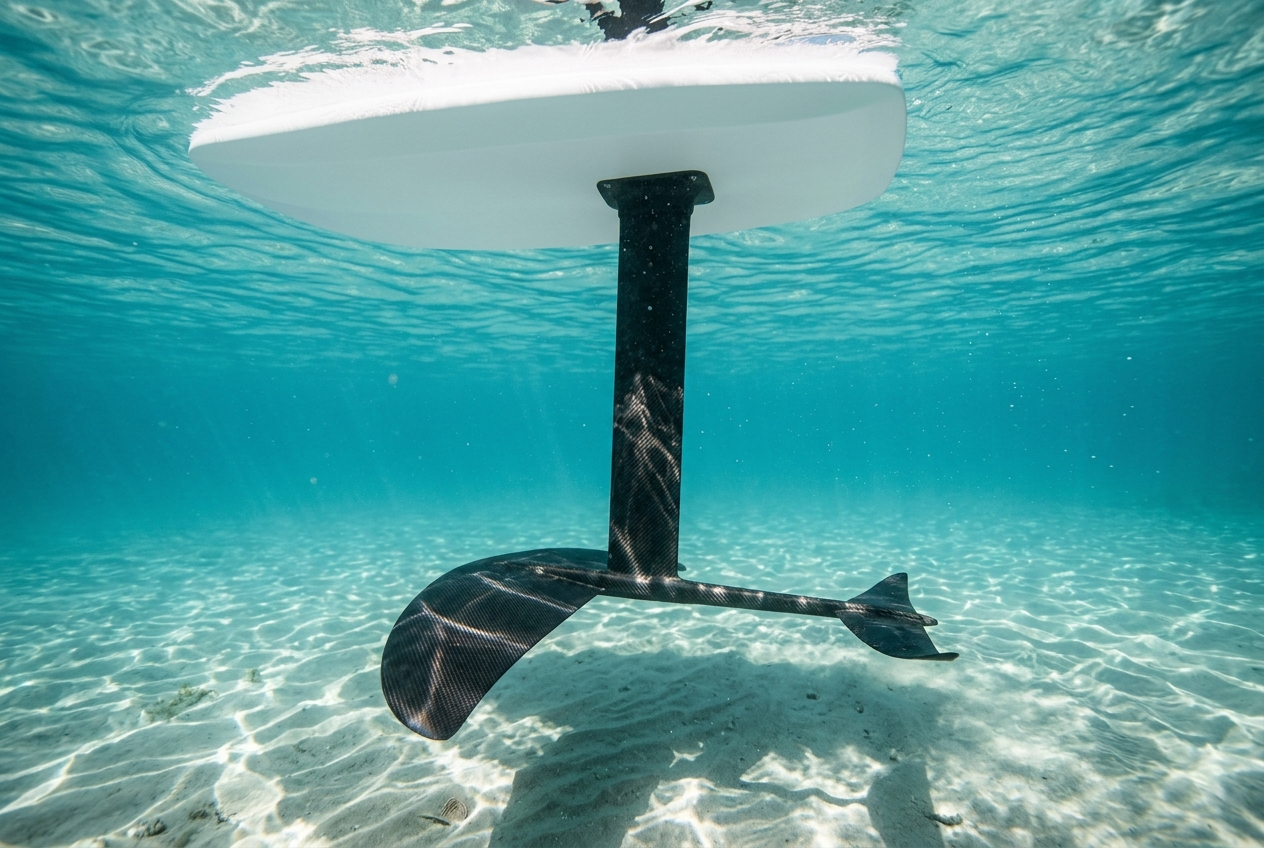
The foil is the sharpest, hardest object within two metres of you, and it is attached to your ankle or your board. Front wings and stabilisers have thin trailing edges that can cut skin on contact, and the mast is a rigid lever that swings the whole assembly around when the board tumbles in white water or gets yanked by a leash under tension.
Most foil contact happens in three situations: falling onto the board instead of away from it, the board flipping back at you in surf or chop while you are in the water, and body-dragging next to the board with the foil swinging beneath it. None of these require big wind or big waves. Plenty of foil cuts happen in moderate breeze in waist-deep water, which is why habits matter more than conditions.
The practical countermeasures are simple:
- Keep the board downwind of you when you are swimming with it.
- Climb on from the side, over the rail, never from behind where the stabiliser sits.
- Dismount early in shallow water: a foil that touches bottom stops dead and throws you forward.
- Treat the tail end of a long session with suspicion, because the injury data shows fatigue-driven errors cluster after the first hour on the water. Pushing that hour out is one of the better arguments for off-water fitness training.
Which Leash Setup Is Safest: Wrist or Waist?
For most riders past their first few sessions, the safest combination is a waist leash for the wing and a calf leash for the board. A waist leash spreads the wing’s pull across your core instead of one arm, leaves both hands free for paddling and board recovery, and holds up better in gusty conditions. A calf or ankle leash for the board keeps the foil at maximum distance from your upper body when you fall.
| Wing leash | Strengths | Weaknesses |
|---|---|---|
| Waist leash | Spreads pull across your core, both hands free, holds up in gusts | Slightly more setup than a wrist leash |
| Wrist leash | Simple, cheap, intuitive for beginners, fine on light-wind days | Arm fatigue in gusts, tangles during transitions, fights you when paddling or climbing back on |
Whatever you choose, the non-negotiable is that both the wing and the board are leashed. A dropped wing travels downwind faster than you can swim, and a lost board in an offshore breeze turns a routine swim into a rescue situation. Check leash cords and pigtails for wear before every session; they are the cheapest parts of your kit and the most consequential when they fail.
Should You Wear a Helmet and Impact Vest?
Yes to both, and the sport’s own culture is already heading that way. In the Gangl study, most participants reported using protective equipment such as helmets and impact vests, and the authors still saw room for wider adoption. There is no downside case: modern water helmets weigh a few hundred grams and impact vests double as flotation.
The helmet earns its place because the foil, mast and board rails are all hard enough to cause head injuries, and because a knock to the head in deep water is a drowning risk before it is anything else. The impact vest does two jobs at once: it cushions the torso, which the injury data flags as the site of the most serious fractures, and its buoyancy keeps you high in the water while you rest, untangle a leash or wait out a lull.
Wetsuits and boots add a quieter layer of protection: neoprene blunts abrasions and glancing foil contact, and boots protect your feet in shallow launches. If you ride downwinders or anywhere offshore, a downwind safety kit in a dry bag backpack covers the stranding scenarios a vest cannot. None of this gear changes how the sport feels. It just changes what a bad fall costs you.
How Do You Fall Without Hitting the Foil?
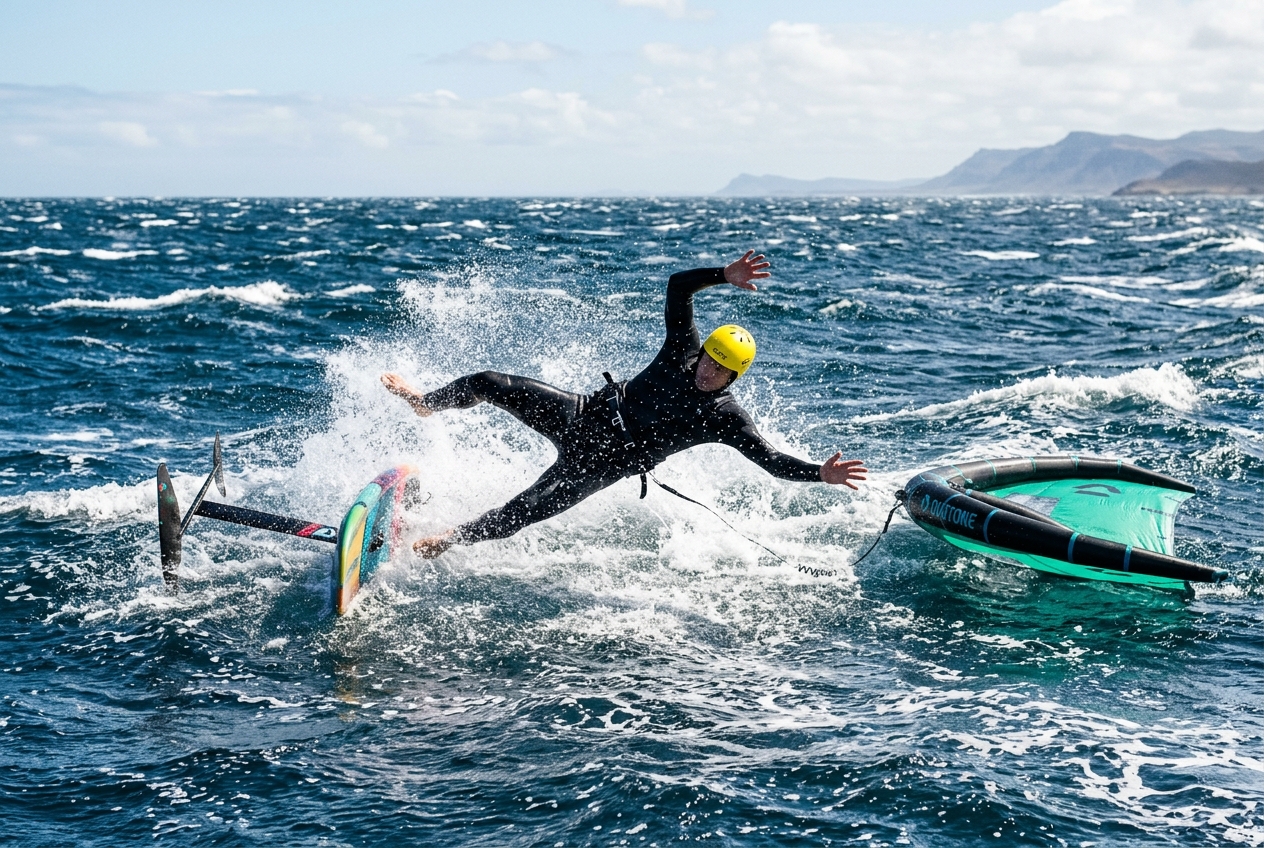
Fall away from the board, let go of everything, and get your arms around your head. The single habit that prevents most foil injuries is falling to the side and slightly behind the board, so the foil continues away from you. Your leashes will bring the gear back; their whole job is to make letting go safe.
A few specifics worth drilling:
- Commit to the fall early when you feel the foil breaching or the nose dropping, rather than fighting a lost cause; controlled exits are gentler than catapults.
- Fall flat and wide, like a starfish, rather than diving in headfirst, because you do not know where the mast is once the board starts tumbling.
- Surface with an arm above your head after a fall.
- Stay upwind of your gear in waves so the white water pushes the board and foil away from you rather than through you.
Practise this deliberately in your first sessions, ideally at one of the best spots to learn wing foiling where you have space to fall. Ten intentional fall-aways in flat water build the reflex that protects you later when a gust or a touchdown gives you no time to think.
What Are the Rules of the Water for Wing Foilers?
Wing foilers follow the same right-of-way rules as other sail-powered craft:
- Starboard tack has priority. The rider with right hand forward and wind over the right side has priority over the rider on port tack.
- Same tack: leeward rider has priority. The downwind rider holds their line and the windward rider keeps clear.
- An overtaking rider always keeps clear.
- Anyone jumping or transitioning gives way to everyone, because a rider mid-manoeuvre cannot.
Beyond the formal rules, foil-specific etiquette exists because foils are fast and quiet. Give swimmers, surfers and beginners far more room than feels necessary; a foil closes distance quickly and is nearly silent doing it. In wave spots, the standard surf priority rules apply, and a foiler’s ability to catch anything early does not entitle them to everything. If in doubt, turn early and turn obviously, so the other rider can read your intention.
The encouraging news from the injury data is that this system works: the wing foiling study recorded zero injuries from collisions between water users. Keep it that way by riding predictable lines, looking before every jibe and tack, and staying well clear of crowded lineups while you are learning.
Frequently Asked Questions
Is wing foiling more dangerous than kitesurfing?
No. The first medical study of wing foiling found an injury rate of 5.7 per 1000 hours, comparable to windsurfing and below kitesurfing. Wing foiling has no lines under high tension and the wing depowers instantly when released, which removes the catapult mechanism behind many serious kitesurfing injuries. The foil itself is the main extra hazard.
Can a hydrofoil cut you?
Yes. Front wings and stabilisers have thin trailing edges that cut skin on contact, and cuts and abrasions are among the most common wing foiling injuries. Most foil contact comes from falling onto the board, the board flipping in white water, or climbing on from behind. A wetsuit, boots and good falling technique prevent the majority of them.
What safety gear do you need to start wing foiling?
A helmet, an impact vest, a leash for the board and a leash for the wing are the core four. Add a wetsuit and boots for abrasion protection, and carry a phone in a waterproof pouch if you ride anywhere offshore winds or currents could strand you. Beginners should also start with a shorter mast, which reduces fall height and foil leverage.
When do most wing foiling injuries happen?
When the rider is tired. The wing foiling injury study attributed 77.5% of injuries to individual riding errors, often linked to fatigue, typically while foiling straight ahead or attempting a trick. The most effective safety habit is ending sessions while you still have energy in reserve, rather than squeezing in one last run on empty arms and legs.
Is wing foiling safe for beginners to learn?
Yes, provided you learn in the right conditions: onshore or side-onshore wind, water deep enough for the foil but close to shore, and no crowds. Take at least one lesson (see our lessons vs self-teaching breakdown), wear a helmet and impact vest, and practise falling away from the board before you chase flight. Most beginner injuries are minor bruises from board contact, not foil strikes.
New to the sport? Our complete beginner’s guide covers gear, conditions and your first sessions, and our wing foil wind range guide helps you pick conditions you can handle.
