
Tarifa gets the headlines and the Insta-fame, but tucked into the top corner of Catalonia is a stretch of coast that wing foilers keep quietly to themselves: the Bay of Roses, anchored by the long sandy beach at Sant Pere Pescador and the canal-laced resort of Empuriabrava. This is the wind capital of the Costa Brava, a place where a powerful north wind funnels down off the Pyrenees and a gentle sea breeze rolls in on warm afternoons. In other words, it has two completely different moods and a beach long enough to suit both.
The headline ingredients are exactly what a wing foiler orders: kilometres of open sandy beach, shallow sandbanks that flatten the water close to shore, and a long-established watersports culture that means schools, rentals and other riders are never far away. Decades of windsurfers and kitesurfers got here first, which is good news for you because the infrastructure is already built. The foilers just slotted in alongside.
It is also gloriously easy to combine with a holiday. Girona is half an hour up the road, the medieval villages of the Empordà are a short drive inland, and the food is the kind of Catalan cooking people plan entire trips around. Pack the wing, sure, but leave room in the schedule for the rest. Here is everything you need to know before you point the car towards the Bay of Roses.
Wing Foiling Conditions
Wind Patterns and Seasonality
The Bay of Roses runs on two very different winds, and understanding which one you are dealing with is most of the battle. The famous one is the Tramuntana, a strong, dry north wind that pours down out of the Pyrenees and across the bay. It is a side-shore wind here, so it keeps the water relatively flat or only lightly choppy while still delivering serious power. Locals reckon the Tramuntana is most active from roughly September through to May, and it does not do things by halves: gentler days sit around 12 to 20 knots, classic sessions land in the 20 to 35 knot range, and when it truly loses its temper it can blow well past 60 knots. That upper register is for watching from the beach with a coffee, not for launching.
The friendlier character is the Garbi, the southwest thermal sea breeze that builds on sunny summer afternoons. This is the wind that makes the bay such a good place to learn and to log relaxed cruising sessions. Through July and August the thermal typically kicks in during the early afternoon, roughly between 1pm and 6pm when the sun has done its work, delivering a steady onshore breeze in the region of 13 to 20 knots. Mornings are often glassy, the wind fills in after lunch, and you ride until the evening cools things off. It is a pleasingly predictable rhythm to build a day around.
For wing foilers, that gives you a genuine choice. Want big-wind, big-grin sessions and do not mind a wetsuit and gustier air? Aim for the shoulder and cooler months when the Tramuntana is in charge. Want warm, consistent thermals to learn or cruise on? The May-to-September window, and especially the heart of summer, is your friend. Many riders split the difference and target late spring or early autumn, when you can catch both flavours and the beaches are calmer.
Water Conditions
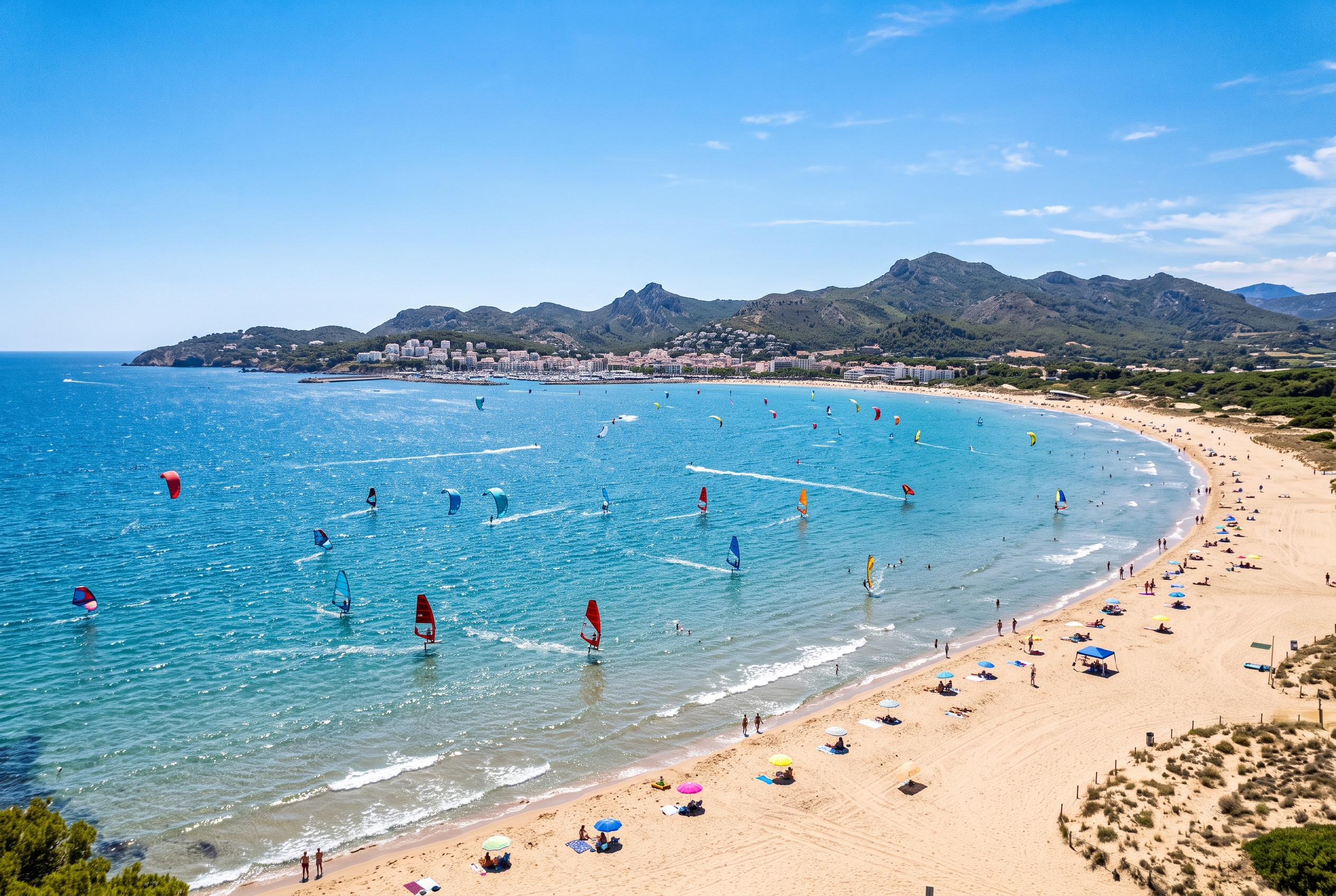
The defining feature of the Sant Pere Pescador beach is the seabed. A vast sandy beach with gently sloping depths created by offshore sandbanks means you get reassuringly shallow water close to shore, which is exactly what you want when you are learning to manage a foil and would rather not be doing it in deep water with a strong current. With the Tramuntana, the side-shore angle keeps the surface flat to lightly choppy, which is forgiving terrain for early flights and for working on transitions.
Water temperature follows a classic Mediterranean curve. Winter is genuinely cold for the region, averaging around 13 to 14°C, so the off-season Tramuntana crew earn their sessions. Spring sits in the low-to-mid teens and warms as the season turns. Summer is the sweet spot, with the bay typically running around 21 to 26°C and nudging towards 27°C in the hottest weeks. Autumn cools off gradually, generally landing somewhere between 17 and 22°C depending on how late you go.
Wetsuit-wise, plan around that. Peak summer is shorty or even boardshorts-and-rashguard territory for many riders, especially since wing foilers spend a lot of time out of the water. Spring and autumn call for a 3/2 or a 4/3 as the temperature drops, and committed winter Tramuntana hunters will want a 4/3 or 5/4 with boots, and gloves and a hood on the coldest days. If in doubt, check our wing foil calculator to dial in gear choices once you know the day’s wind.
Best Spots for Different Skill Levels
The beauty of the Bay of Roses is that one enormous beach covers most skill levels, but a few distinctions help. For beginners, the main Sant Pere Pescador beach in front of the big watersports centres is hard to beat: shallow sandbanks, plenty of space to fall over without consequence, and gentle summer thermals that build gradually rather than slamming on. Morning light wind followed by an afternoon sea breeze gives you a natural learning curve, and you are never far from an instructor or a rescue craft.
For improvers and intermediates, the same beach simply gets better as the breeze fills in. The steady afternoon thermal in the mid-teens to low-twenties of knots is ideal for nailing tacks and gybes, building toeside confidence and stretching your downwind legs along a coastline that just keeps going. The flat-ish water close in means mistakes are cheap.
For advanced riders, the Tramuntana is the main event. When it is properly switched on, the bay delivers powered-up, flat-water blasting that rewards good kit choices and clean technique. There are also more characterful spots scattered along this coast for those who want to explore, including the La Muga river-mouth area nearby, which gets a name-check for its stable wind and flat water, and longer downwind runs are very much a thing here for SUP and wing foilers alike. Just respect the upper end of the Tramuntana scale; it does not negotiate.
Local Wing Foiling Scene
Schools and Lessons
This is a mature watersports destination, so you are spoiled for instruction. The ION CLUB Golf de Roses centre sits right on the Sant Pere Pescador beach and runs wingfoil courses for all levels, typically scheduling the foiling sessions for the afternoons when the thermal is reliable. Fasewind, based at Camping Las Dunas in the middle of the bay, is a true all-rounder offering windsurf, kitesurf, wing foil, foil, SUP and more, with lessons and rentals for beginners through to pros. The Escola Kite Surf Sant Pere Pescador rounds out the trio, teaching wing foil from the ground up: wind theory and rigging first, then dry-land work with the wing, then water time on a high-volume foil board.
On cost, expect wing foil private lessons in the region of €80 per hour for one student with their own gear and instructor, rising to around €85 in July and August. Sharing brings it down: roughly €60 per hour each for two students riding their own wings, or about €65 in peak season. Lessons generally bundle the kit you need. If you have never flown a foil before, a couple of structured sessions here is money very well spent.
Gear Rentals
If you are already self-sufficient, the same centres run rental and test-centre operations, which is genuinely useful: this coast is a good place to demo wings and foils across the season’s varied wind without committing to a purchase. As a rough reference point on pricing in the area, kitesurf board rental runs around €30 for a full day, and wing foil rental sits in a comparable bracket. Booking ahead in peak summer is wise, since the popular gear sizes for the lighter thermal days move fast. Travelling without your own quiver is entirely viable here.
Clubs and Community
The community here is large, international and friendly, built on decades of windsurf and kite heritage that has welcomed wing foiling with open arms. The bay has enough pedigree to host serious events; the Costa Brava recently staged the GWA Youth Wingfoil World Championships, which tells you the wind and the organisation are taken seriously at the highest level. On a normal summer afternoon you will share the water with riders from across Europe, and the surf bars attached to the bigger centres are the natural place to swap conditions intel and rig advice over a cold drink afterwards.
Off the Water
Cultural Attractions
The Empordà region punches far above its weight culturally. Just down the coast lie the Greco-Roman ruins of Empúries, one of the most important classical sites in the western Mediterranean and an easy, atmospheric half-day. Inland, the city of Girona rewards a wander with its tangle of medieval streets, a dramatic cathedral and a famously well-preserved old Jewish quarter. And this is Salvador Dalí country: the surreal Dalí Theatre-Museum in nearby Figueres is one of Spain’s most-visited museums and exactly the kind of gloriously strange day out that pairs well with a windless morning.
Dining
Catalan cooking is reason enough to visit. The Empordà is a serious gastronomic region, the home turf of some of Spain’s most celebrated kitchens, and that ambition trickles all the way down to the village tavern. Expect outstanding seafood straight off the local boats, rice dishes, botifarra sausage, and the sweet-and-savoury surf-and-turf combinations the region is known for. Eat late, as the locals do, and lean into long lunches on the days the wind sleeps in. A post-session plate of grilled fish with a glass of Empordà white is hard to improve upon.
Nightlife and Entertainment
This is not a thumping party coast, and most wing foilers will count that as a feature. Empuriabrava and Roses offer the liveliest evenings, with a spread of bars, beachfront terraces and a relaxed resort buzz that suits an early-to-bed, early-to-rig crowd. The surf bars at the watersports centres are the real social hub during the season. If you want bigger nightlife you can drive to it, but most people here are saving their energy for the afternoon thermal.
Nature and Sightseeing
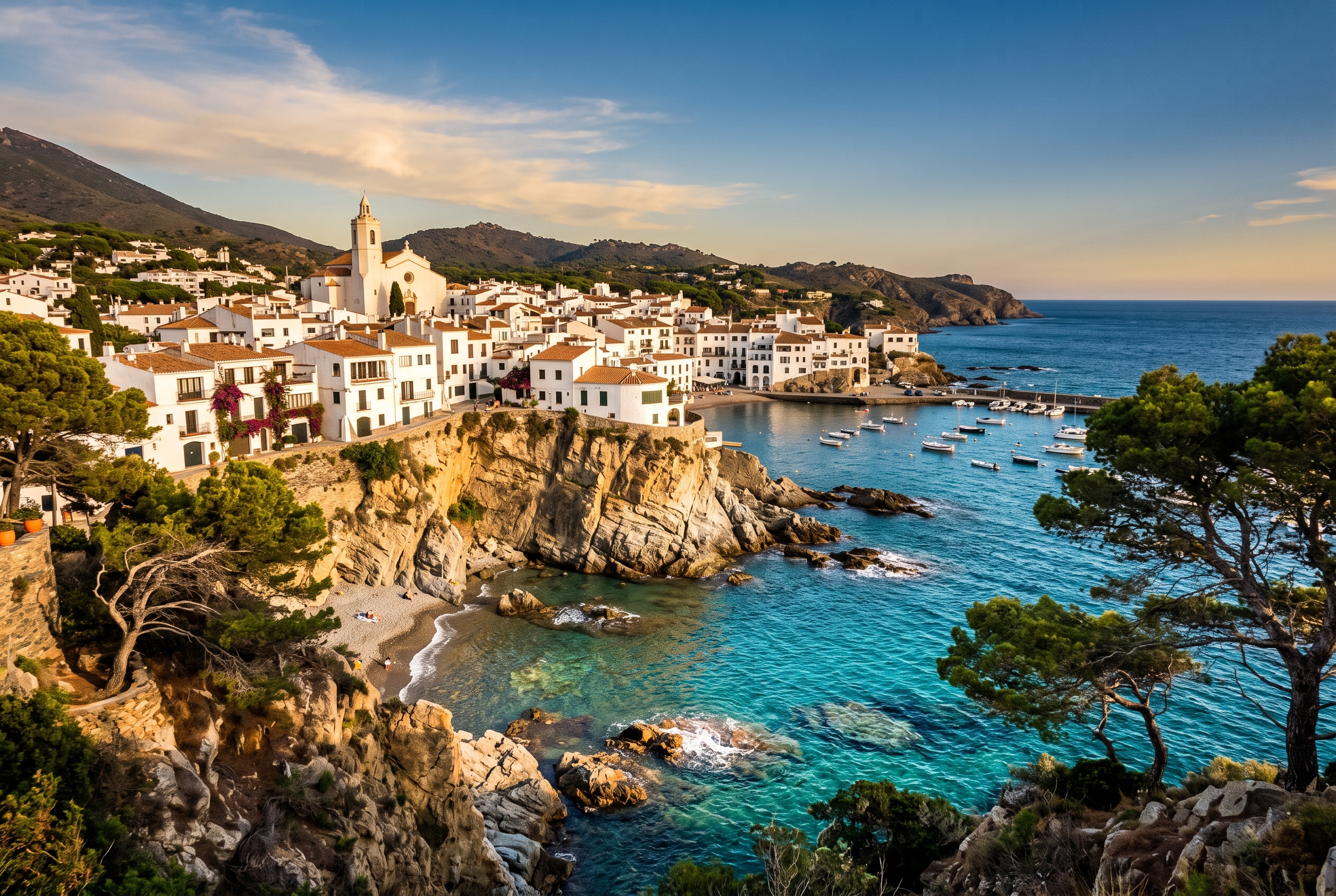
Right behind the beach sits the Aiguamolls de l’Empordà natural park, a protected wetland that is a magnet for birdlife and a lovely, flat place to walk or cycle on a day off. The wider Costa Brava lives up to its name, the “rugged coast”, with pine-fringed rocky coves, turquoise water and whitewashed villages strung along dramatic cliffs to the south. Hire a kayak, walk a stretch of the coastal camí de ronda path, or simply drive down to a cove for a swim. The contrast between the long open Bay of Roses and the jagged southern coast is one of the area’s quiet pleasures.
Practical Travel Information
How to Get There
The closest airport is Girona–Costa Brava (GRO), a tidy little gateway well served by low-cost carriers across Europe. From GRO it is a short hop to the bay: by car or pre-booked transfer you are looking at roughly 35 to 40 minutes. Barcelona (BCN) is the bigger alternative with far more international connections, sitting around a couple of hours’ drive south, which is very manageable if it lands you a better or cheaper flight. Public transport is possible via bus connections but is slow and fiddly with board bags. The honest recommendation: hire a car. Distances between the beach, the villages, the restaurants and the sightseeing are small, and having wheels turns a good trip into a flexible one, especially when you are chasing wind windows.
Where to Stay
Sant Pere Pescador is camping country, and that is no insult. The big beachfront campsites such as Amfora, Las Dunas, La Ballena Alegre and Las Palmeras are well-run operations with bungalows, pools, direct beach access and, crucially, watersports centres on site. For wing foilers, staying where the gear lives is hard to argue with. If camping is not your style, Empuriabrava and Roses offer apartments and hotels within a short drive, and the inland villages have characterful guesthouses for a quieter base. For the convenience-first traveller, pick a campsite that hosts a school and you can roll from tent to water in minutes.
Best Time to Visit
For warm water and dependable, learner-friendly thermals, June to September is the prime window, with July and August offering the most consistent afternoon Garbi. For stronger, more powered-up Tramuntana sessions and quieter beaches, the shoulder months from roughly April to early June and again in September and October are excellent, with April through October broadly the most rewarding stretch overall. Hardcore strong-wind riders happily chase the Tramuntana right through the cooler months, but that is a rubber-and-resolve affair. If you want the best of both worlds and the smallest crowds, target late spring or early autumn.
Budget Estimates
Costa Brava is mid-range for Europe, and you can scale it to taste. Wing foil private lessons run around €80 to €85 per hour, dropping to roughly €60 to €65 per person when shared, and gear rental in the area sits near €30 for a full day. Campsite accommodation is the budget-friendly backbone of the region, while apartments and hotels cost more in peak summer. Add a hire car, eat at least one proper Catalan meal out, and budget for a Dalí museum ticket or two. None of the numbers here are exorbitant, and a self-catering, camping-based trip with your own gear can be genuinely affordable by Western European standards.
Wrapping Up
The Bay of Roses is the kind of wing foiling destination that quietly over-delivers. You get a beginner-friendly beach with shallow sandbanks and warm summer thermals, a serious strong-wind season courtesy of the Tramuntana, a deep bench of schools and rentals, and a backdrop of Catalan food, Roman ruins and Dalí-grade weirdness for the days the wind takes a nap. It is easy to reach, easy to love, and noticeably less hectic than the marquee spots further south.
If you are still building your skills before booking, start with our beginner’s guide to wing foiling so you arrive ready to make the most of those afternoon sessions. And if you are mapping out a European wing-foiling tour, slot the Costa Brava alongside the wind machine that is Tarifa down south and the mirror-flat lagoon of Lo Stagnone in Sicily for a trio that covers every mood the sport has to offer.
Frequently asked questions
When is the best season to wing foil Costa Brava?
June to September brings warm water and dependable summer Garbi thermals for learning, while April-June and September-October offer stronger Tramuntana sessions and quieter beaches. April through October is the most rewarding overall window.
How much wind does the Bay of Roses get?
The summer Garbi thermal usually delivers around 13-20 knots on sunny afternoons. The north Tramuntana is stronger and gustier, with classic sessions of 20-35 knots and occasional storms well past 60 knots best watched from the beach.
Is Sant Pere Pescador good for beginners?
Yes. The long sandy beach has shallow offshore sandbanks giving reassuring waist-deep water, plus gentle, gradually building summer thermals and several schools running wing foil courses for all levels.
What water temperature and wetsuit should I expect?
Summer water runs roughly 21-26C, suiting a shorty or rashguard. Spring and autumn in the mid-teens call for a 3/2 or 4/3, and winter Tramuntana hunters face 13-14C needing a 4/3 or 5/4 with boots, gloves and hood.
How do I get there and what does it cost?
Fly into Girona (GRO), about 35-40 minutes away, or Barcelona (BCN), around two hours by drive. Hiring a car is recommended. Wing foil lessons run about 80-85 euros per hour private, gear rental near 30 euros a day, with budget-friendly beachfront campsites.
