
If you drew up a wishlist for a wing foiling destination, it would probably read something like this: wind that turns up on time, water you can stand in when things go sideways, sunshine that ignores the calendar, and a town that knows the difference between a leading edge and a salad fork. El Gouna, sitting on Egypt’s Red Sea coast just north of Hurghada, ticks every one of those boxes and then orders a round of fresh juice on the marina to celebrate.
Built from scratch on a stretch of desert lagoon, El Gouna is a purpose-made resort town threaded with canals, sandbars and shallow turquoise water that looks like it was engineered specifically to teach people how to fly above the surface. It has been a kitesurfing pilgrimage site for two decades, which means the infrastructure, instructors and equipment are already dialled in. Wing foilers simply get to walk into a scene that has been quietly perfecting itself for the wind-sport crowd since long before the wing existed.
What makes it genuinely special, though, is the combination that is surprisingly hard to find elsewhere: reliably strong wind sitting right on top of warm, flat, waist-deep lagoon water. Most destinations make you choose. El Gouna hands you both, wraps them in 300-plus sunny days a year, and parks Hurghada airport a half-hour taxi ride away. Let’s get into why this corner of the Red Sea deserves a spot near the top of your travel list.
Wing Foiling Conditions
Wind Patterns and Seasonality
El Gouna’s reputation rests on a single, beautifully boring fact: the wind shows up. The prevailing northerly and north-westerly Red Sea wind funnels down the coast with a consistency that borders on the unfair, and the area is widely reported to deliver in the region of 300-plus windy days per year. That is the kind of statistic that makes riders from gustier, fickler home spots quietly weep into their booties.
Because the wind arrives as a side-onshore northerly rather than a moody offshore squall, it tends to be cleaner and more predictable than the punchy thermals you fight at many destinations. For wing foilers that matters enormously: you get to focus on flagging the wing, finding the foil and holding a line, rather than bracing for the next random gust. Average wind speeds across the season generally sit in the 15 to 25 knot band, which is a sweet spot that covers everything from a relaxed cruise on a big wing to powered-up freeriding on something smaller.
The strongest and most reliable winds run roughly from March through November, the core of the season, with the highest consistency of stronger breeze typically landing in the summer months around June to September. Spring and autumn deliver steady 15 to 22 knot conditions that suit just about everyone. Winter, from December to February, is the quieter chapter: the wind softens to a lighter, cleaner 12 to 18 knots, which is honestly ideal for wing foilers who would rather glide than get overpowered, and the crowds thin out at the same time. If you want raw power for jumps and progression, aim for summer. If you want forgiving, lower-stress sessions and fewer people sharing the lagoon, winter is your friend. Either way, you are unlikely to be sitting on the beach watching a glassy, windless sea.
Water Conditions
Here is where El Gouna stops being merely good and becomes a little bit magic. The shoreline is a maze of shallow, flat-water lagoons over sandy bottom, and the water is warm enough that wetsuit anxiety is mostly someone else’s problem. Sea temperatures sit around 21°C in the depths of winter and climb to roughly 28 to 30°C through summer, so for much of the year a shorty or even boardshorts will do, with a light full wetsuit advisable for cooler winter sessions when the breeze has a chilly edge.
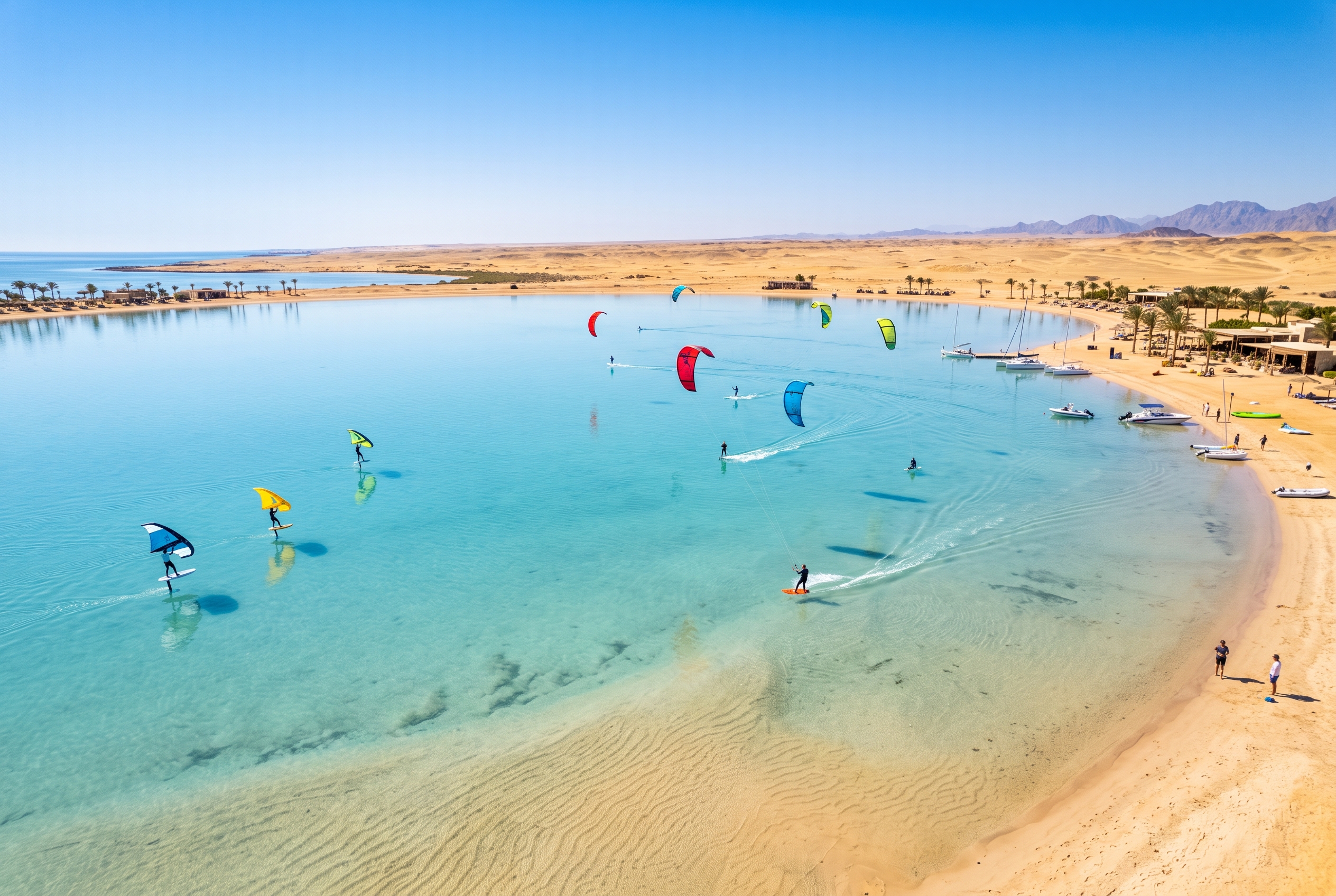
The flat water is the headline act. In the main lagoon areas the depth largely runs between roughly 40 centimetres and a metre across a generous standing zone, which means that when a transition goes wrong, and early on they all go wrong, you can simply put your feet down, collect your dignity and your foil, and try again. For learning to fly a hydrofoil, that is worth its weight in gold; nothing accelerates progress like being able to recover quickly without a long, demoralising swim back to shore. Glassy, mirror-flat sections make foiling feel almost frictionless, while further out past the shallows the water deepens and picks up chop, and a small wave can form near the offshore reef when the wind is up, giving more advanced riders something to play with.
One practical note worth filing away: the lagoons are tidal, and the shallowest spots can become too shallow to safely ride around low tide, so sessions tend to cluster either side of high water. Local schools know the tide chart intimately, so a quick chat on arrival saves you from marching across a sandbar with a foil under your arm at the wrong moment.
Best Spots for Different Skill Levels
The beating heart of the action is Mangroovy Beach at the northern end of El Gouna, a public beach that opens onto a huge riding area stretching several hundred metres out toward an offshore reef. This is the spot you will hear about again and again, and for good reason: it manages to serve every level of rider at once.
Beginners get the dream setup. The inshore zone offers shallow, flat water for roughly 150 metres from the beach, mostly knee-to-waist deep, with a designated learning area often marked out by buoys to keep it clear of faster traffic. You can practise water starts, work on your foil control and bail repeatedly without ever being out of your depth. It is about as low-stakes an environment as wing foiling offers.
Intermediates have room to stretch. Once you are linking rides, the wide standing area lets you work on tacks, gybes and toeside without the pressure of deep water, and you can progress gradually outward as your confidence grows. The consistency of the wind here means you can drill the same manoeuvre session after session in repeatable conditions, which is exactly how skills get locked in.
Advanced riders head for the deeper, choppier water beyond the shallow shelf, where stronger wind days can stack up enough swell near the reef for some downwind glide and small-wave riding. With the wind blowing all day during peak season, the truly committed can simply stay out and rack up the hours. Beyond Mangroovy, a number of operators run boat or buggy trips to more remote stretches of the lagoon system and out toward nearby islands such as Tawila, where you can foil flat, empty water with nothing but desert on the horizon.
Local Wing Foiling Scene
Schools and Lessons
El Gouna is unusually well stocked with professional water-sports centres, a legacy of its long kitesurfing history that wing foilers now inherit. Several established schools run wing foil lessons alongside their kite programmes, including Kitepower El Gouna, KBC (the Kiteboarding Club), and the Duotone Pro Center, all of which operate directly on the beach with their own storage, rescue cover and instructor teams. Many are IKO-certified and run lessons in multiple languages, which makes booking from abroad refreshingly painless.
The shallow lagoon is a colossal advantage for tuition. Instructors can wade out alongside you, your kit stays within walking distance, and the warm standing water turns the usual frustrating early-stage swimming into quick resets. If you have never touched a wing before, El Gouna is one of the more forgiving places on the planet to start. If you already foil and just want a clean refresher or to nail your first toeside gybe, the local coaches have seen it all and will happily point you at the right patch of flat water.
Gear Rentals
Travelling with a full foil quiver is a genuine hassle, so the strength of El Gouna’s rental scene is a real selling point. The major centres carry deep, modern rental fleets, with operators stocking large quantities of current kit from brands like F-ONE and Duotone, and offering wing foil packages for riders who would rather arrive with hand luggage than wrestle a board bag through three airports.
Renting also lets you size up or down as the wind dictates across a trip, which in El Gouna’s variable-but-reliable conditions is more useful than it sounds. Storage lockers, on-site gear washing and demo equipment are common, so you can try a different foil or wing size without committing to a purchase. Book your rental ahead during peak season, because the busy weeks see the best kit go fast.
Clubs and Community
For a town built in the desert, El Gouna has a genuinely sociable wind-sport community. The beach clubs double as gathering points, with swimming pools, bars and shaded decks where riders compare sessions and trade tips between tides. Because so many visitors are repeat travellers and seasonal regulars, the vibe leans friendly and international rather than cliquey. Wing foiling is the fast-growing newcomer here, so you will find a healthy mix of curious converts from kiting and windsurfing, all of whom are usually delighted to talk gear at length, whether you asked or not. Events, downwind missions and informal meet-ups bubble up throughout the season, and the schools are the best place to plug into them.
Off the Water
Cultural Attractions
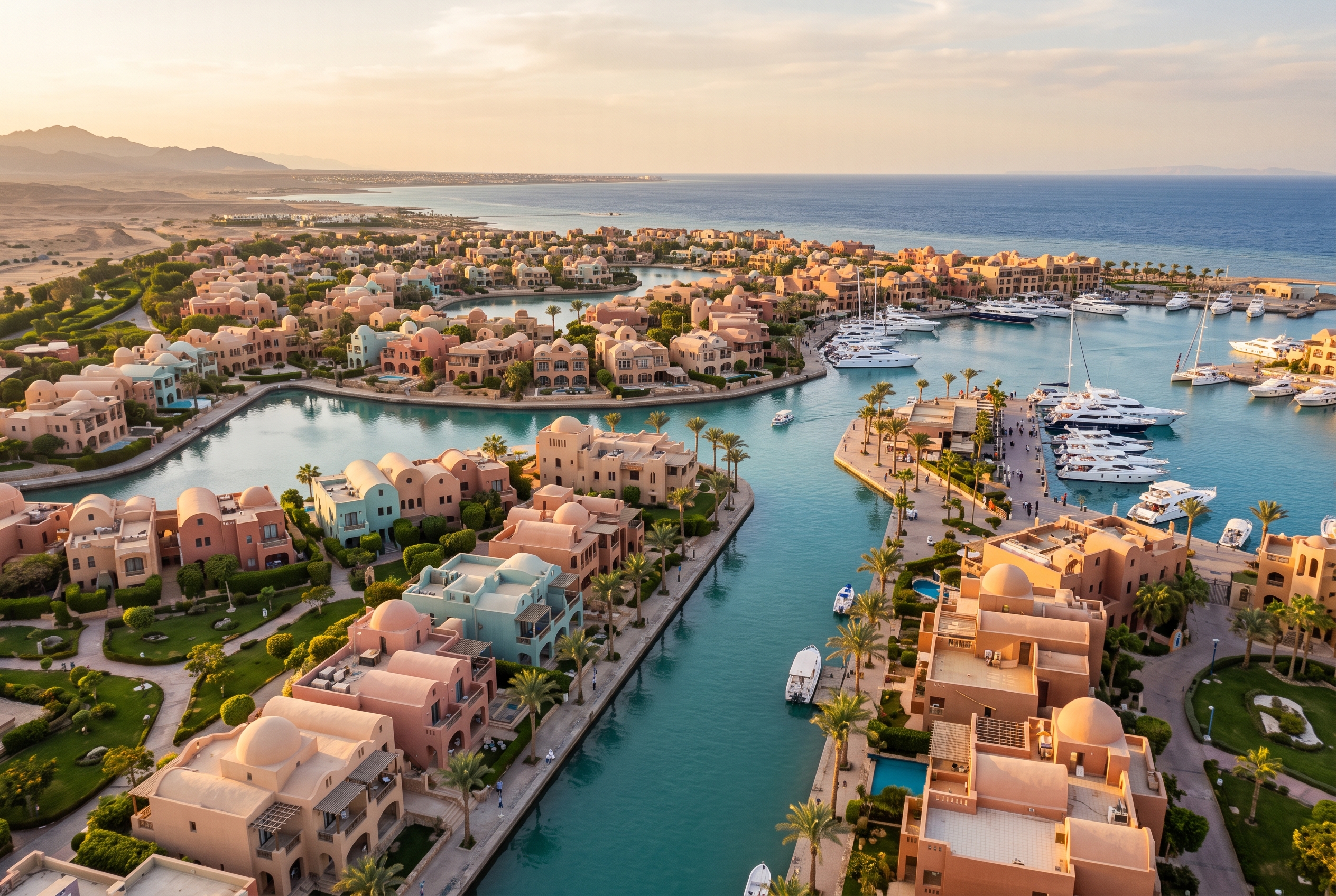
El Gouna itself is a modern resort town rather than an ancient site, but its design is part of the charm: pastel, Nubian-inspired low-rise architecture laced with canals and lagoons, often described as a kind of Egyptian Venice. Downtown El Gouna is a walkable hub of art galleries, boutiques, cafés and squares that come alive in the evening. For deeper history, you are well placed to organise day trips to Egypt’s headline acts, with Luxor’s temples and the Valley of the Kings within reach for those willing to make a longer overland or short domestic-flight journey from the Red Sea coast.
Dining
Post-session refuelling is taken seriously here. Abu Tig Marina is the dining centrepiece, a yacht-lined promenade ringed with restaurants and cafés. Pier 88 sits on a floating deck over the water and is one of the town’s best-known spots for Mediterranean food and seafood, while places like Sotto Sopra handle the Italian cravings with pizza and pasta. Beyond the marina you will find everything from casual local Egyptian fare to international menus, so a week of riding never has to mean a week of the same dinner. After burning through a long, windy day on the foil, the calorie maths is firmly in your favour.
Nightlife and Entertainment
El Gouna’s nightlife is stylish but relaxed rather than raucous, centred on beach clubs, marina bars and live-music venues. Regular street festivals bring music and food to the downtown and marina areas on set evenings through the week, giving the town a buzzy, social feel after dark. It is the kind of place where you can have a proper night out or a quiet drink watching the boats, depending entirely on how much your legs have left after a day of pumping onto foil.
Nature and Sightseeing
The Red Sea’s underwater world is reason enough to pack a mask. El Gouna sits on coral reefs teeming with marine life, and diving and snorkelling trips are easy to arrange, including boat excursions to nearby reefs and uninhabited islands. On land, the Eastern Desert presses right up against the coast, and desert safaris by 4×4, quad or buggy run out to the dunes for sunrise and sunset trips, sometimes paired with Bedouin-style dinners under the stars. The contrast, flat turquoise lagoon on one side and stark red-brown desert on the other, is a large part of what makes the place so photogenic between sessions.
Practical Travel Information
How to Get There
Getting to El Gouna is mercifully simple, which is not always a given for a world-class wind spot. The gateway is Hurghada International Airport (HRG), which receives direct flights from across Europe and beyond, especially during the cooler northern-hemisphere months when the charter traffic ramps up. From the airport, El Gouna is only about a 30 to 40 minute drive north along the coast road.
Most schools and hotels will arrange an airport transfer for you, often with a driver waiting in arrivals holding a sign with your name, which takes the stress out of navigating taxis with a board bag in tow. Within El Gouna, the town runs its own network of shuttle buses, tuk-tuks and water taxis, so you generally will not need a car once you have arrived. Check current visa requirements for Egypt before you travel, as many nationalities can obtain a tourist visa on arrival or via the official e-visa system.
Where to Stay
Accommodation in El Gouna spans the full spectrum, from simple studios and apartments up to luxurious villas with private pools, plus a roster of resort hotels. The general standard is noticeably higher than in neighbouring Hurghada, and many properties cluster around the lagoons and the Abu Tig Marina. There are hundreds of vacation rentals to choose from, and a number of operators bundle accommodation together with kite and wing services into packages, which can simplify booking and sometimes save money. If riding is your priority, staying near Mangroovy Beach or close to your chosen school will minimise the daily shuttle and maximise water time.
Best Time to Visit
For the most reliable, powered-up conditions, target the core season from roughly April to October, with summer delivering the strongest, most consistent wind for progression and freeriding. If you prefer lighter, cleaner breeze, smaller crowds and pleasant air temperatures, the shoulder months and even winter are appealing, with December to February offering softer winds well suited to mellow wing foiling, just pack a wetsuit for those cooler sessions. There is genuinely no dead season here; it is more a question of matching the month to the kind of riding you want.
Budget Estimates
El Gouna lands in the mid-range bracket overall: more polished and pricier than budget Egyptian beach towns, but generally better value than comparable European or Caribbean wind destinations once you factor in the strength of the season. Flights are often the biggest single cost, and charter routes during the European winter can be reasonable. On the ground, lesson packages, equipment rental, accommodation and dining all come at a range of price points, with package deals from the schools frequently offering the best value for a riding-focused trip. As prices shift with season, exchange rates and operator, always confirm current rates directly with schools and accommodation providers before booking rather than relying on old figures.
Wrapping Up
El Gouna is one of those rare destinations where the conditions seem almost suspiciously well suited to wing foiling. Steady, clean northerly wind for the vast majority of the year, warm flat-water lagoons shallow enough to stand in while you make every beginner mistake in the book, a deep bench of professional schools and rental fleets, and a genuinely pleasant resort town to come back to each evening. Whether you are stepping onto a foil for the first time or chasing your hundredth gybe, the Red Sea makes a compelling case for itself.
If you are still building the basics before you book, our complete beginner’s guide to wing foiling will get you oriented, and the wing foil calculator can help you work out which wing and foil sizes to rent for El Gouna’s wind range. And if the Red Sea has you dreaming of more African flat-water and wind, the lagoons of Dakhla in Morocco make a natural next stop on the list.
Frequently asked questions
When is the best season to wing foil in El Gouna?
The core season runs roughly March to November, with summer (June-September) bringing the strongest, most consistent wind. Winter offers lighter, cleaner breeze and fewer crowds, so there is no real dead season.
How much wind does El Gouna get?
The prevailing northerly Red Sea wind blows on the order of 300-plus windy days a year, with average speeds generally in the 15 to 25 knot range, softening to about 12 to 18 knots in winter.
Is El Gouna good for beginners?
Yes. Mangroovy Beach has a large shallow, flat-water lagoon mostly between roughly 40cm and 1m deep with a buoyed beginner zone, so you can stand up and recover quickly while learning, supported by several professional schools.
What is the water temperature and do I need a wetsuit?
Sea temperatures run from around 21°C in winter to roughly 28-30°C in summer. Boardshorts or a shorty suit much of the year; a light full wetsuit is advisable for cooler winter sessions.
How do I get to El Gouna and is it expensive?
Fly into Hurghada International Airport (HRG), then a 30-40 minute drive north; schools and hotels arrange transfers. It is mid-range value overall, with school packages often the cheapest option; confirm current rates before booking.
