
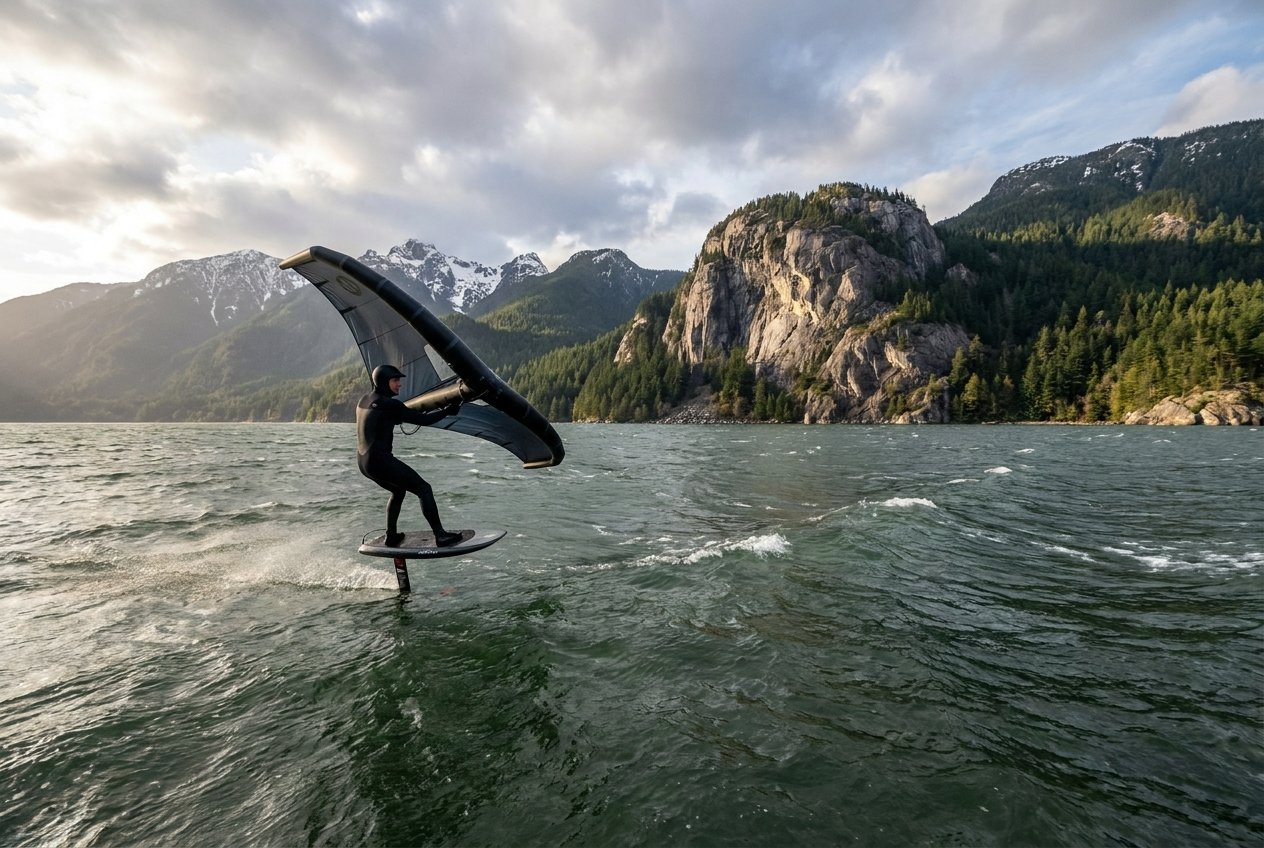
Wing foiling in Squamish means the Spit, a Squamish Windsports Society-managed launch on Howe Sound where a thermal inflow builds most summer afternoons, often 18-25 knots. Two schools, InFlow Adventure and Squamish Watersports, teach at the Spit, whose season runs mid-May to mid-September. Water stays cold year-round, so a thick, cold-water wetsuit is standard kit here, not an option.
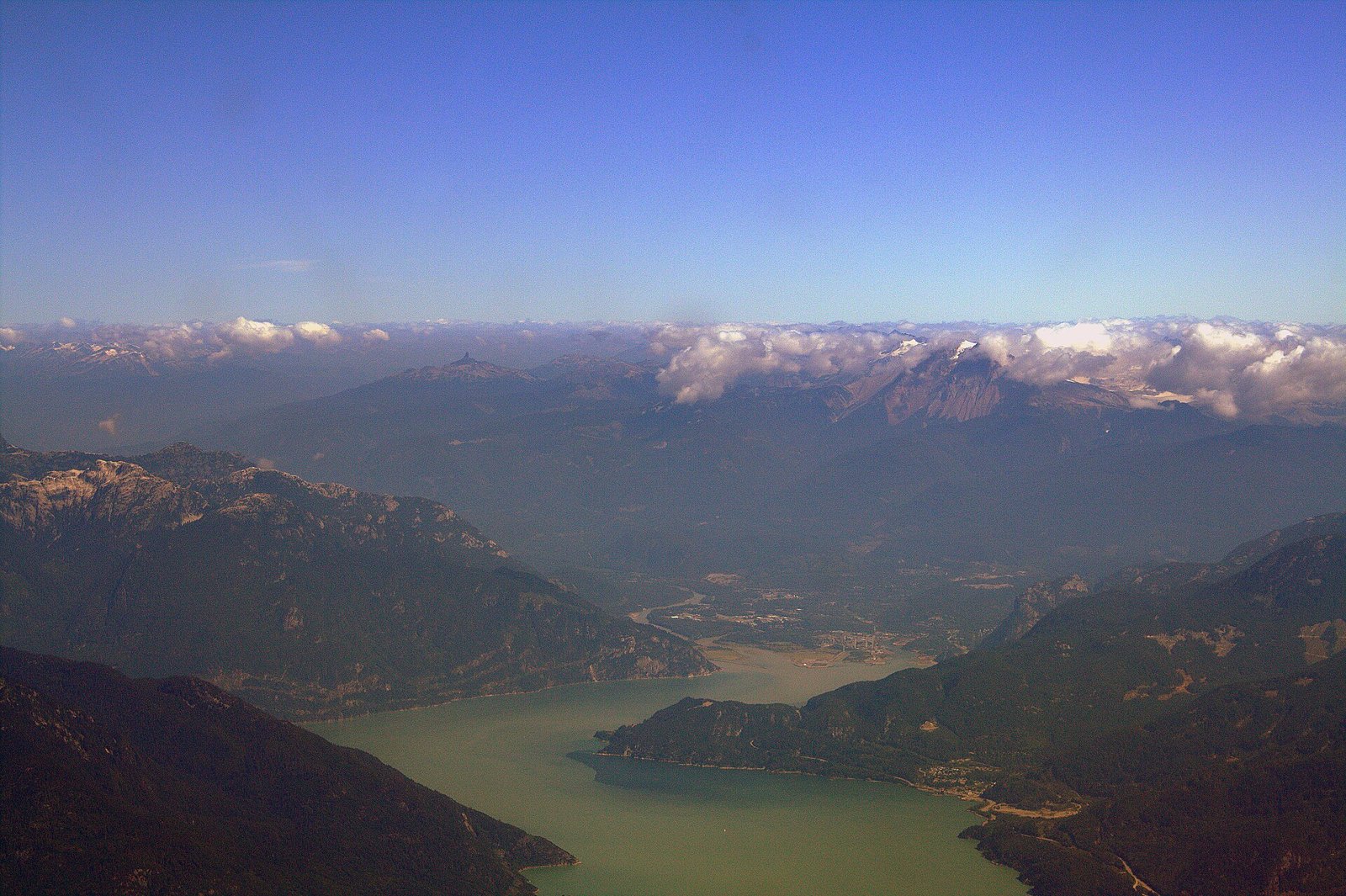
The reliability is the whole draw. Squamish sits at the end of a narrow fjord between the Tantalus Range and the Stawamus Chief, and that geography turns an ordinary afternoon thermal into one of the most consistent wind engines on the BC coast. It’s also close enough to Vancouver that most riders treat the two as one regional scene rather than separate trips.
Where Do You Wing Foil in Squamish?
The launch is the Squamish Spit, a narrow sandbar at the mouth of the Squamish River where Howe Sound opens out. It’s managed as the Squamish Spit Windsports Recreation Site, a dedicated launch rather than a shared public beach, and it’s built specifically around wind sports.
- Launch: the Squamish Spit, at the mouth of the Squamish River on Howe Sound
- Water: flat water below the launch zone, small chop further out in the fjord
- Crowd factor: shared with kiteboarders and windsurfers, the spot’s original users
- Skill level: a genuine wind destination, better suited to riders past the beginner stage
Access isn’t free and open. The Squamish Windsports Society (SWS), the nonprofit that runs the site, requires a paid membership for anyone on the Spit itself, whether you walk in or take the shuttle boat across from the mainland side.
| Pass | Price (CAD) | Notes |
|---|---|---|
| Adult Membership | $90 | Includes one day pass; required to be on the Spit |
| Youth Membership (under 21) | $45 | Includes one day pass |
| Day Pass (member) | $40 | Each additional day after membership |
| Day Pass (non-member) | $65 | Includes shuttle and island access |
| Adult Season Shuttle Pass | $400 | Unlimited season access plus shuttle |
Budget the membership into the trip, not just the lesson. A first-time visitor doing a single lesson day is realistically paying the $90 adult membership on top of whatever the school charges, since that fee is what gets you onto the island at all.
Why Does the Wind Blow So Reliably Every Afternoon?
It’s a thermal, not a weather system. As the interior valleys inland of Squamish heat up through the morning, that warm air rises and pulls cooler, denser marine air up Howe Sound to replace it, an inflow that runs from the coast toward the mountains rather than the other way round.
What makes Squamish specifically strong is the fjord itself. The wind consolidates as it funnels between the mountains that hem in the narrow channel, a venturi effect that speeds the airflow up rather than letting it spread out. The stronger the temperature and pressure gap between the coast and the interior, the harder that funnel pulls.
- Builds: from around mid-morning, well before noon
- Peaks: mid-afternoon
- Drops: as the evening sun crests the Tantalus Range
- Season: mid-spring through mid-fall, strongest June to August
| Source | Typical afternoon wind |
|---|---|
| Squamish Windsports Society | 18-24 knots, steady from midday to evening |
| InFlow Adventure (local school) | 22-25 knots across the fjord |
| MacKite travel guide | Roughly 13-26 knots, most days over 17 knots |
July and August are as close to a sure thing as wind sports get on this coast. The Squamish Windsports Society rates those two months as effectively 100% windy days, which is why the site’s own operating season runs mid-May to mid-September rather than year-round.
Is There a Wing Foiling School in Squamish?
Yes, two: InFlow Adventure Co., based on the Squamish oceanfront, and Squamish Watersports Ltd, which also runs kite and wake foiling out of the same Howe Sound waters. Between them they cover group intros through to multi-session beginner courses and private coaching.
| School | Session | Duration | Price (CAD) |
|---|---|---|---|
| Squamish Watersports | Introduction to WingFoil (group) | 3 hours | $125 per person |
| Squamish Watersports | Private lesson | 3-hour minimum | From $370 |
| Squamish Watersports | Semi-private (2 people) | 3-hour minimum | From $660 |
| InFlow Adventure | Wing Foil 101 (beginner course, 4 sessions) | 12 hours total | $1,250.99 |
| InFlow Adventure | Private/semi-private coaching | 6 hours | $999.99 |
Read the fine print before booking. Squamish Watersports’ group intro only runs 15 May to 15 September and needs four participants to go ahead, so a solo booking outside a group tour is safer as a private lesson. Factor lesson cost into your overall budget alongside the Spit membership fee above.
What’s the Water Like and What Wetsuit Do You Need?
Cold, and it doesn’t really change with the air temperature. Howe Sound is fed by mountain snowmelt, so even on a 30°C Squamish afternoon the water itself stays in single digits to the high teens Celsius depending on the season.
| Season | Avg. water temp (Howe Sound) |
|---|---|
| Winter | 6.8°C |
| Spring | 10.2°C |
| Summer | 17.7°C |
| Autumn | 12.1°C |
August, the warmest month, still only averages around 18.7°C, and January drops to about 6.5°C. The Squamish Windsports Society is blunt about it: the water is snowmelt off the mountains and never warms up much, so plan for the possibility of being in it for a while if things go wrong.
A thick, cold-water wetsuit is standard for most riders at the Spit, and Squamish Watersports includes wetsuit rental as part of its lesson packages. Booties are worth adding regardless of the season, since the launch itself involves standing in the same snowmelt water.
Should You Base in Squamish or Add It to a Vancouver Trip?
Add it on. Vancouver’s Jericho Beach scene is the lighter-wind, city-based option, and its own school, Windsure, sends riders to Squamish’s InFlow Adventure specifically for stronger, more consistent wind. The drive between the two is about 69km and just over an hour.
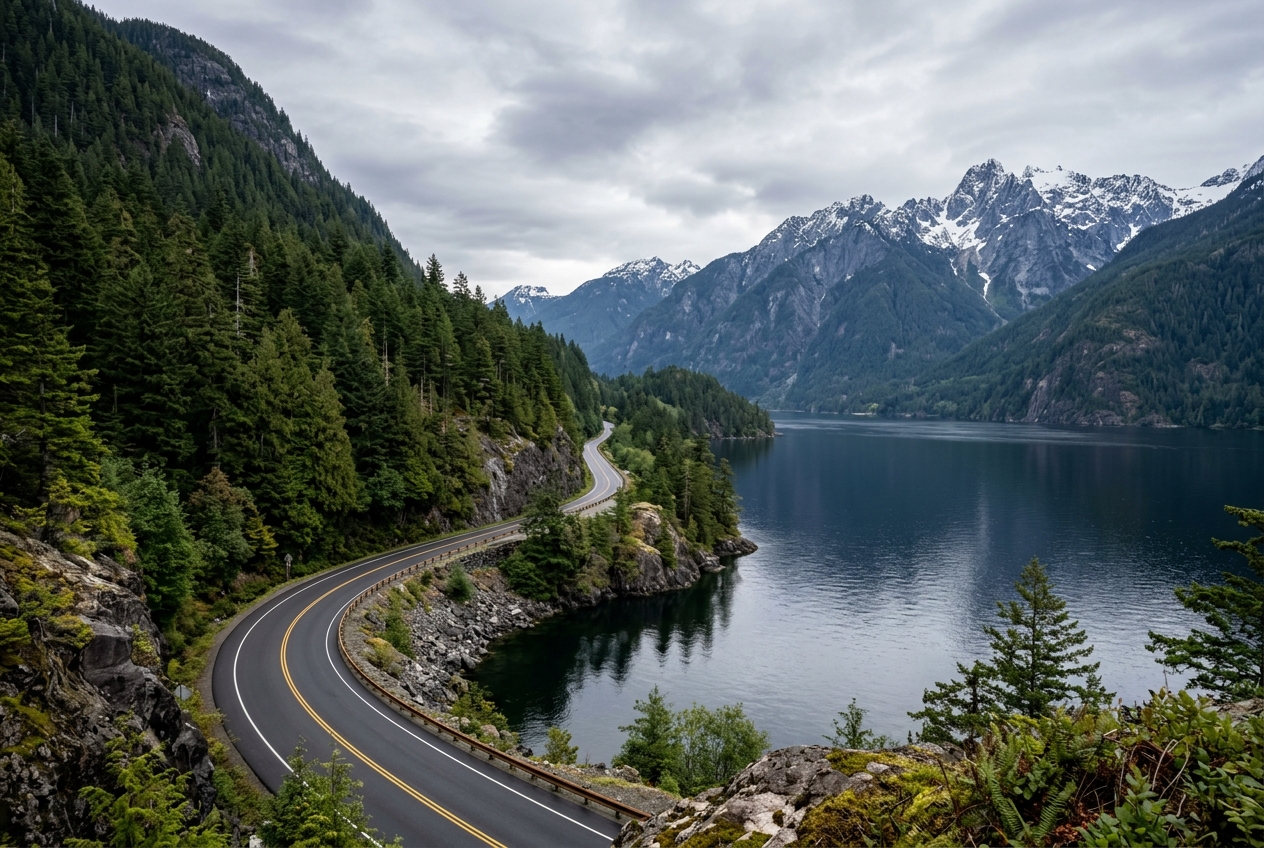
A practical split: keep Vancouver as your base for the city, flights and everything off the water, then drive up for wind days. July and August, when Squamish is close to guaranteed, are worth a dedicated few days at the Spit rather than a single day trip.
Wrapping Up
The Squamish Spit earns its reputation honestly: a real thermal engine driven by geography, not a marketing claim, backed by two schools and a membership system built specifically for wind sports. Cold, snowmelt-fed water is the trade-off, so pack the wetsuit and budget the Windsports Society membership alongside the lesson, and pair it with a Vancouver trip rather than treating it as a separate destination.
Frequently asked questions
Why does the wind blow every afternoon at the Squamish Spit?
It's a thermal inflow. The interior valleys behind Squamish heat up through the morning, and that rising warm air pulls cooler, denser marine air up Howe Sound to replace it. The narrow fjord then funnels the airflow between the mountains, a venturi effect that speeds the wind up, which is why the Spit is so consistent.
How windy does it get at Squamish?
The Squamish Windsports Society describes a typical day as steady wind from midday to evening, usually 18-24 knots, with July and August close to 100% windy days. InFlow Adventure puts its thermal inflow at 22-25 knots across the fjord. It builds from mid-morning, peaks mid-afternoon, and drops as the evening sun crests the Tantalus Range.
How do you get onto the Squamish Spit?
You need a paid membership from the Squamish Windsports Society, which manages the site, whether you walk in or take its shuttle boat. An adult membership costs $90 CAD and includes one day pass, with further days at $40 for members or $65 for non-members using the shuttle. Budget this separately from any lesson.
Is there a wing foiling school in Squamish?
Two. InFlow Adventure runs a 12-hour, four-session Wing Foil 101 beginner course for $1,250.99 CAD and 6-hour private coaching for $999.99. Squamish Watersports offers a $125-per-person group intro (15 May to 15 September only, minimum four people) plus private lessons from $370.
Should you wing foil in Squamish or Vancouver?
Squamish for wind, Vancouver for convenience. Vancouver's Jericho Beach is lighter and more variable, and its own school Windsure recommends Squamish for stronger, more consistent conditions. The two sit about 69km and just over an hour's drive apart, so most visitors base in Vancouver and drive up to the Spit for wind days.
