
Wing foiling on Hayling Island means picking the right launch for the day: West Beach, Esso Beach on Langstone Harbour, or Hayling Island Sailing Club on Chichester Harbour. Between them, almost any wind direction has somewhere that works, making this small island off Portsmouth the busiest wing foil scene on the UK south coast.
Two schools teach here, the water sits in single figures for half the year, and which beach you rig at depends as much on the tide as the wind. This guide covers the three spots, the tidal windows, the lesson options, and what a session actually needs once you factor in a British winter.
Where Do You Wing Foil on Hayling Island?
There are three distinct launches, and locals pick between them based on wind direction and tide rather than treating Hayling as one beach. West Beach is the main and most popular spot, Esso Beach is the beginner-friendly flatwater option on the harbour side, and Hayling Island Sailing Club (HISC) is a members-only club on the Chichester Harbour side for confident, current-savvy riders.
| Spot | Wind directions that work | Best suited to |
|---|---|---|
| West Beach | E, SE, S, SW, W | Waves to flatwater, most popular launch |
| Esso Beach (Langstone Harbour) | S, SW, W, NW, N | Beginners, flatwater |
| HISC (Chichester Harbour) | W, N, NE, E, SE, S | Intermediate and above, members only |
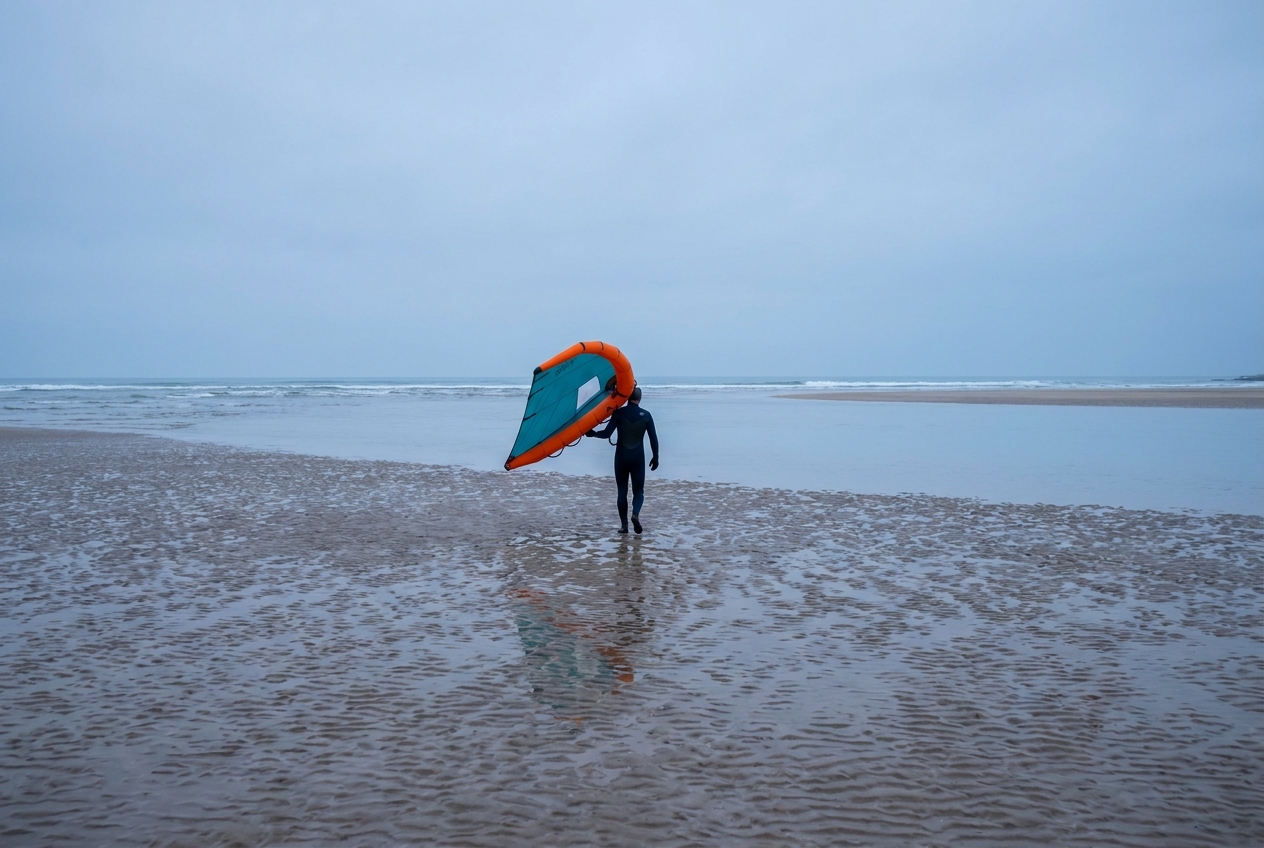
Stacked together, the three spots cover nearly every point of the compass, which is the basis for Hayling’s reputation as one of the only south coast spots that can work in any wind direction. Picking the right one for the day’s forecast matters more here than at a single-beach destination.
Why Does Almost Any Wind Direction Work Here?
Because Hayling is an island with launches facing three different ways. West Beach faces the open Channel to the south and west, Esso Beach sits inside the shelter of Langstone Harbour facing north and west, and HISC looks out over Chichester Harbour to the east. A wind that closes out one beach usually opens up another.
- Prevailing direction: west-southwest, consistent across the year
- Typical strong-wind days: around 3 days a month with gusts over 25mph (40kph) in a representative month like September
- What this means: pick the beach that matches the forecast direction rather than waiting for one spot to come good
That WSW prevailing wind favours West Beach and Esso Beach most often, but a northerly or easterly day, which would skunk most single-beach UK spots, just means a drive round to HISC or Esso instead.
What Are the Tidal Windows Like?
Longer than most UK spots. The Solent has a double high water, plus a young flood stand, a quirk where the tide barely rises for a couple of hours after low water. The young flood stand is one of the effects caused by the Solent’s two entrances either side of the Isle of Wight, and it flattens out the tidal curve and stretches the window of manageable water compared with a normal single-peak UK tide.
| Spot | Tide advice |
|---|---|
| West Beach | Low to mid tide best for flatwater, but mid tide runs strong rip currents pulling into Langstone Harbour; high tide brings a shore dump that can damage gear |
| Esso Beach | High tide best, especially in westerlies; avoid low tide, which exposes sharp shingle |
| HISC | Tide rips run 10-15 knots in places; strong currents demand a confident, experienced sailor |
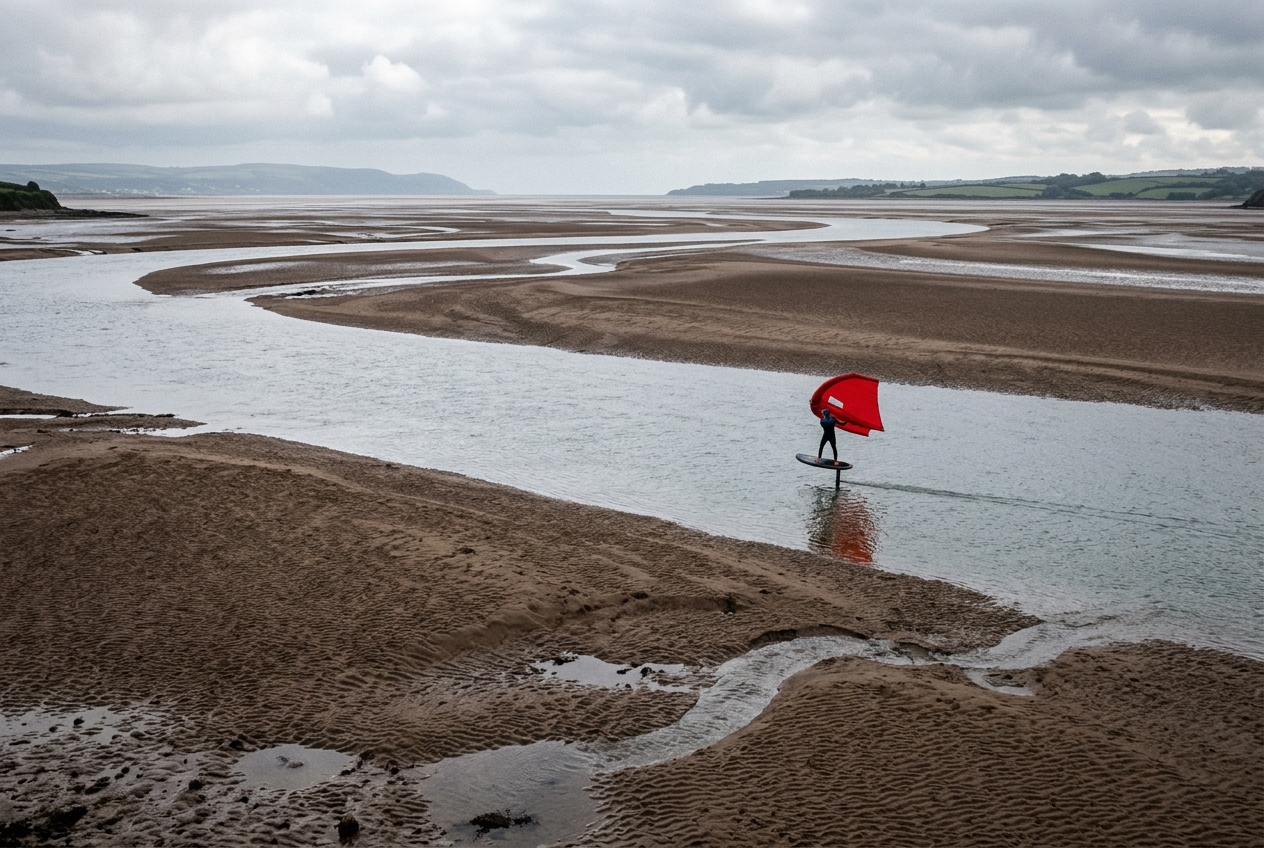
One warning for West Beach: mid tide brings strong rip currents that pull into Langstone Harbour, so stay alert to drift even on a flat day. West Beach and Esso Beach effectively run on opposite tide preferences, so checking both against the tide table, not just the wind forecast, is the difference between a flat session and a shore dump. HISC’s current is strong enough that it is not a spot to learn tidal timing on. Between the tide rips and the boat traffic, HISC is where the safety basics stop being optional.
Is There a Wing Foil School on Hayling Island?
Yes, two. CBK Hayling Island has run lessons from the island’s seafront since 1999, originally as a kitesurf school, and now teaches wing foiling alongside kiting and SUP. Glide Sports is a mobile school based nearby in Chichester that covers the coast from Hayling Island to Bognor Regis, timing lessons to the tide rather than being fixed to one beach.
| School | Session | Duration | Price |
|---|---|---|---|
| CBK Hayling Island | 1-2-1 private course | 2 hours minimum | £150 |
| CBK Hayling Island | 2-2-1 group course | 3 hours | £130 per person |
| Glide Sports | 1-on-1 private lesson | 2 hours | £150 |
| Glide Sports | 2-on-1 private lesson | 2 hours | £195 |
Glide Sports only runs scheduled lessons between 1 May and 31 October, so a winter booking on Hayling means CBK. Both schools supply equipment, which is worth taking up as a first session rather than buying gear before you know the tidal quirks of this coast. When you do buy, our wing foil gear calculator sizes the right board and wing for your weight and local wind.
What Does a British Wing Foil Session Actually Need?
A proper wetsuit, most of the year. The Solent stays cold even in summer, and at West Beach and Esso Beach in particular the exposed sandbanks and shore break mean you’re in and out of the water constantly, not just riding on top of it.
| Season | Avg. water temp (Solent, Lee-on-the-Solent) |
|---|---|
| Winter | 8.3°C |
| Spring | 10.1°C |
| Summer | 17.5°C |
| Autumn | 15.1°C |
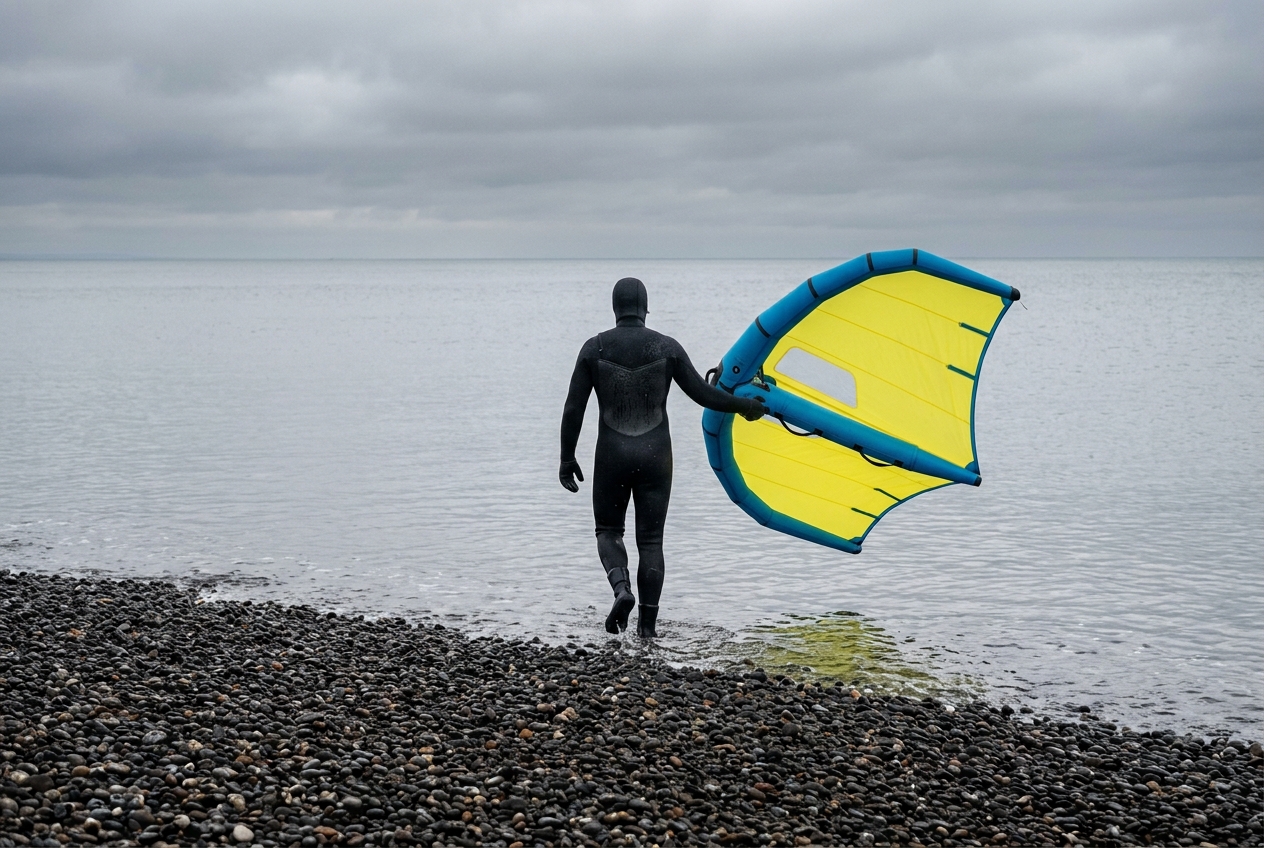
- Wetsuit: a winter-weight suit for anything outside high summer; the Solent never reaches shorty territory the way southern Europe does
- Boots: useful everywhere, essential at Esso Beach for the sharp shingle seabed
- Water quality: Esso Beach carries a sewage discharge risk after heavy rain, worth checking before a session
- Traffic: HISC has boat traffic and underwater obstacles on top of the current, so it’s not the place to learn
How Do You Get to Hayling Island?
By road via a single bridge. The A3023 is the only vehicle route onto the island, and it can back up on busy summer weekends since there’s no alternative crossing. Havant, about 5 miles from the beaches, is the nearest railway station.
- By train: direct services to Havant from London Waterloo take around 1 hour 16 minutes; Havant also connects to Portsmouth, Southampton, Gatwick and Brighton
- By air: Southampton Airport is closest at 23 miles; Gatwick and Heathrow are both roughly 67-68 miles away
- By road: around 72 miles from South London, all via the A3023 bridge
Once you’re across the bridge, all three launches sit within a few miles of each other, so a car (or a bike, on a calm day) is enough to check conditions at West Beach and Esso Beach before committing to a rig-up.
Wrapping Up
Hayling Island earns its reputation as the UK’s busiest single wing foil spot through geography, not marketing: three launches facing three directions mean somewhere almost always works, and the Solent’s stretched tidal window gives you longer to use it than most British coastlines. The trade-off is that you need to read the tide table as closely as the wind forecast, and pack for cold water most of the year.
New to the sport rather than just new to this coast? Start with our beginner’s guide before booking a lesson, and check what wing foiling actually costs once you’re weighing up buying gear against renting it from CBK or Glide Sports each session.
Frequently asked questions
What's the best spot to wing foil on Hayling Island?
It depends on wind direction and tide. West Beach is the main and most popular launch and handles E through W winds. Esso Beach on Langstone Harbour is the beginner-friendly flatwater option for S through N winds. Hayling Island Sailing Club, on the Chichester Harbour side, is members-only and needs a confident, current-savvy rider.
Which wind directions work at Hayling Island?
Nearly all of them, split across three launches. The prevailing wind is west-southwest, which suits West Beach and Esso Beach. Because the island has beaches facing the open Channel, Langstone Harbour and Chichester Harbour, a wind that shuts down one beach usually opens up another, making Hayling one of the only south coast spots that works in any direction.
What's the tide advice for wing foiling at Hayling Island?
West Beach and Esso Beach prefer opposite tides. West Beach is best at low to mid tide for flatwater, but mid tide runs strong rip currents into Langstone Harbour and high tide brings a gear-damaging shore dump. Esso Beach is best at high tide, as low tide exposes sharp shingle. HISC runs tide rips of 10-15 knots in places.
Is there a wing foil school on Hayling Island?
Two. CBK Hayling Island has taught from the island's seafront since 1999 and runs private lessons from £150 for 2 hours or group sessions at £130 per person for 3 hours. Glide Sports, a mobile school based in Chichester covering Hayling to Bognor Regis, runs private lessons from £150 for 2 hours, but only between 1 May and 31 October.
How cold is the water and what wetsuit do you need?
Cold most of the year. The Solent around Hayling averages about 8.3°C in winter, 10.1°C in spring, 17.5°C in summer and 15.1°C in autumn. A winter-weight wetsuit is the standard choice outside high summer, and boots are worth wearing everywhere, especially at Esso Beach where the seabed is sharp shingle at low tide.