
Wing foiling in Lorient means picking your water: flat and current-checked in the Ria d’Étel, or open Atlantic swell at Fort Bloqué and Guidel-Plages twenty minutes away. Add a 4m-plus tidal range, a reliable southwest Suroît wind, and Île de Groix a 45-minute ferry ride offshore, and it is clear why south Brittany’s wing scene runs this deep.
Lorient itself is a working port city, not a beach resort, so nobody rigs a wing on the harbour steps expecting postcard water. What the city gives you instead is options: a sheltered ria half an hour up the coast, an Atlantic-facing surf beach the other way, and a genuine year-round foiling community that treats the sport as normal rather than a novelty. This guide covers where to actually launch, what the wind and tide are doing to you, and which schools can get you started.
Where Do You Wing Foil Around Lorient?
Fort Bloqué and Guidel-Plages: the open-coast option
Fort Bloqué sits in Ploemeur, a fifteen-minute drive west of central Lorient, and is a 1.5km sandy beach that works year-round thanks to frequent swell. Quality conditions need a west or southwest swell paired with an east-northeast wind, and the break starts firing from about 1m of swell and holds up to roughly 2.5m before it maxes out. It is rated suitable for every level, from a first flight to advanced wave riding.
Just along the coast, Guidel’s La Bassine and Plage de la Falaise offer flatter water for skill-building on southwest, south or south-easterly wind, again open to all abilities. Fort Bloqué itself is more wind-tolerant again, working across northwest through south-east directions at low to mid-tide. Between the two beaches you have a genuine progression: flat water to drill technique, open swell to actually surf the foil.
- Fort Bloqué: W/SW swell + ENE wind, 1-2.5m swell window, low-mid tide, all levels
- La Bassine (Guidel): flat water, SW/S/SE wind, mid-high tide, all levels
- Plage de la Falaise (Guidel): flat water, SW/S/SE wind, low-mid tide, all levels
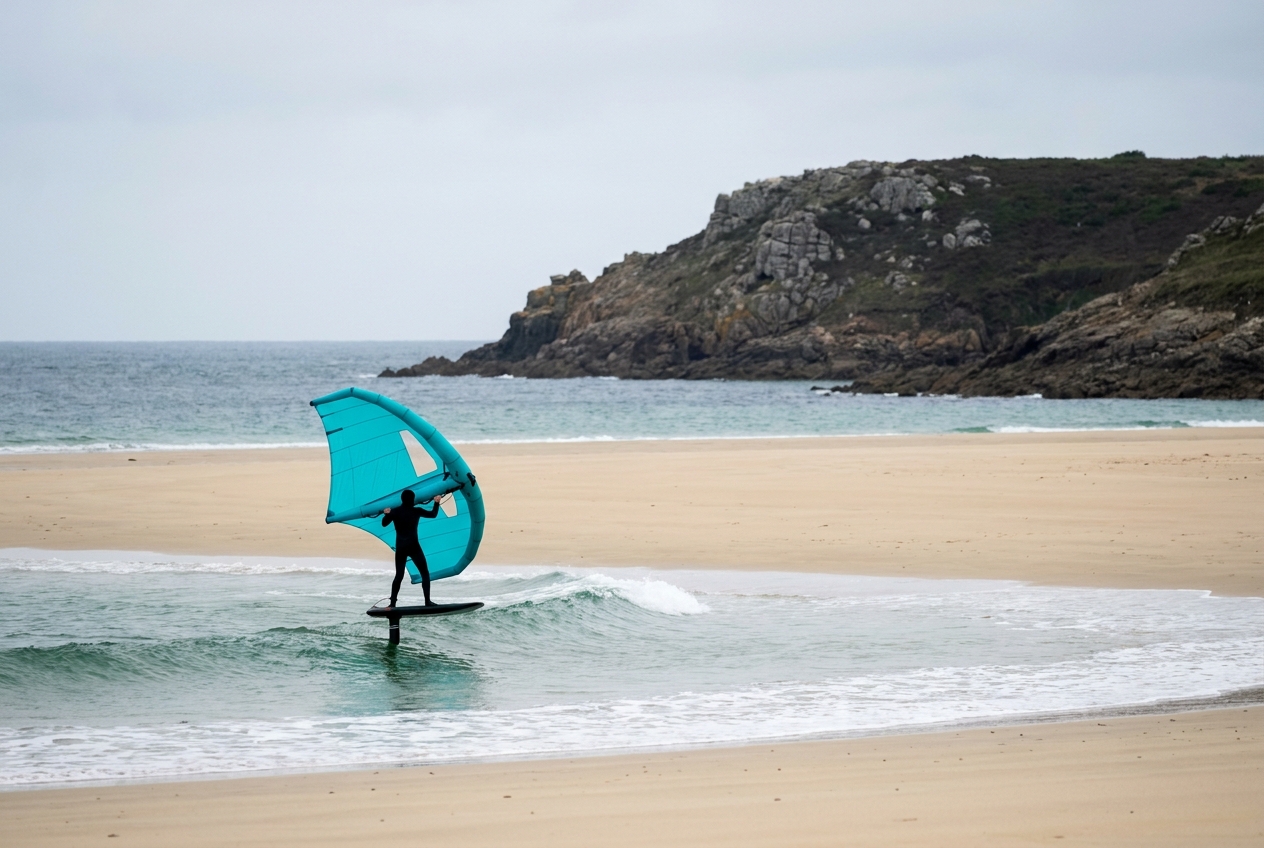
The Ria d’Étel: the flat-water learning ground
About 35 minutes from Lorient, the Ria d’Étel is where most of the region’s beginner lessons actually happen. It is a sheltered tidal inlet rather than open coast, so the water stays flat and there is no swimmer traffic to dodge. West or southwest wind gives the smoothest sailing, and locals describe the water on those days as absolutely glass.
The catch is the current. The ria only works well from mid-rising tide onward, and the flow through the narrow mouth (the Barre d’Étel) runs hard on big tides. The middle of the channel carries the strongest current while the east bank stays comparatively calm, so stick to the east bank the way schools do with beginners, and ask a local school before riding it on a big coefficient.
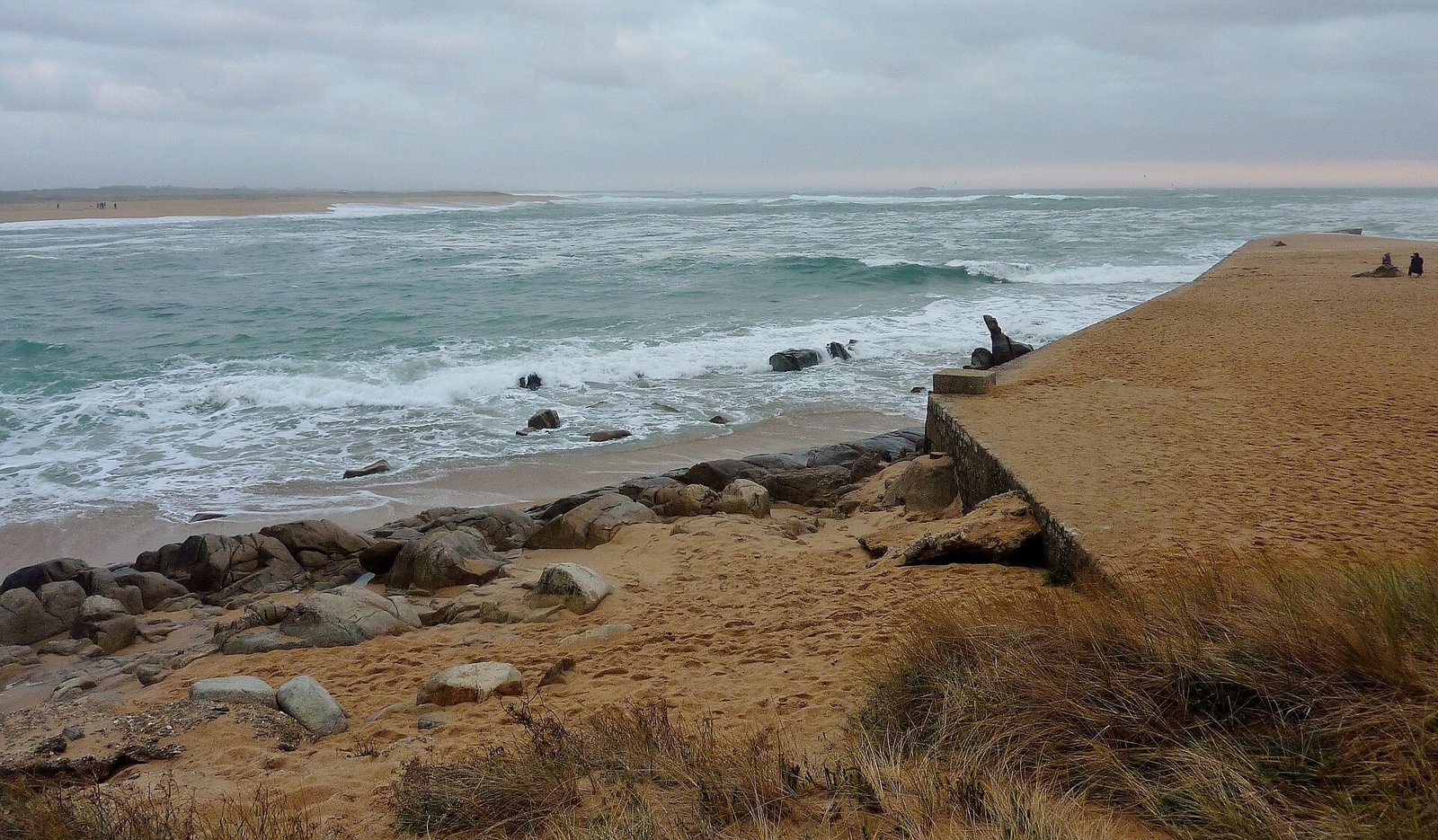
Lorient harbour and a day trip to Île de Groix
Lorient’s own roadstead hosts wing foil sessions year-round, including through winter by request, run out of the harbour rather than a beach launch. It is a workable option if you are based in the city and do not want the drive out to Étel or Fort Bloqué.
Île de Groix sits a 45-minute ferry ride offshore from Lorient, with BreizhGo Océane running the year-round public service and faster seasonal operators (20-45 minutes) adding extra crossings from April to September. Local operators run occasional wing foil sessions over on the island, usually requiring a minimum of two riders to book, which makes it more of a special outing than a regular spot.
What’s the Wind and Swell Like in South Brittany?
The Suroît, literally the southwest wind in Breton, is the dominant direction along this coast in every season. Northwest wind (the Noroît) shows up more often in summer, while south-easterlies become more frequent in winter, so the compass needle you are watching genuinely shifts through the year rather than sitting still. Our wing foil wind range guide covers how much wind each setup needs.
Summer brings a thermal sea-breeze effect on top of that pattern: the land heats faster than the water during the day, and the resulting sea breeze reinforces the onshore flow through the afternoon. That is the wind window most of the region’s beginner lessons are booked around, since it is more predictable than a passing Atlantic front.
The Atlantic swell window
Fort Bloqué’s actual swell, as opposed to the local wind, is generated by the North Atlantic further out and arrives on a west/southwest fetch. That swell is present most reliably from autumn through winter, when the Atlantic’s storm-track depressions are stacked up and firing groundswell at the whole Biscay-facing coast, which is also why the beach is rated a year-round spot rather than a summer-only one. Pack a wave-capable board setup for that season and a flatter freeride setup for the calmer summer months at Étel and the harbour.
| Spot | What drives it | Best window |
|---|---|---|
| Fort Bloqué | Atlantic groundswell + ENE wind | Autumn-winter for swell, year-round rideable |
| Ria d’Étel | Local SW/W wind, no swell | Spring-summer, mid-rising tide only |
| Lorient harbour | Local wind, sheltered roadstead | Year-round, including winter |
How Do the Tides Affect a Session Here?
South Brittany’s tides are big by wing foiling standards, with a spring-tide range of 4m-plus at Lorient. The biggest spring tides of the year fall around the equinoxes, and the neaps in between bring a much smaller swing, so check maree.info for the actual coefficients the week you plan to ride. Coefficients scale from around 20 (weakest neaps) to 120 (strongest springs), and that number is the single most useful thing to check before a session here, more so than at most other wing foiling destinations.
At the Ria d’Étel specifically, the coefficient matters most: the current through the Barre d’Étel runs hard on big tides, so stay on the east bank and check with a local school before riding it on a big coefficient. The session itself only starts working from mid-rising tide. Fort Bloqué is more forgiving, holding up across low to mid-tide regardless of coefficient, though a big spring tide backwash makes the beach easier at low tide than high.
Which Wing Foil Schools Operate Around Lorient?
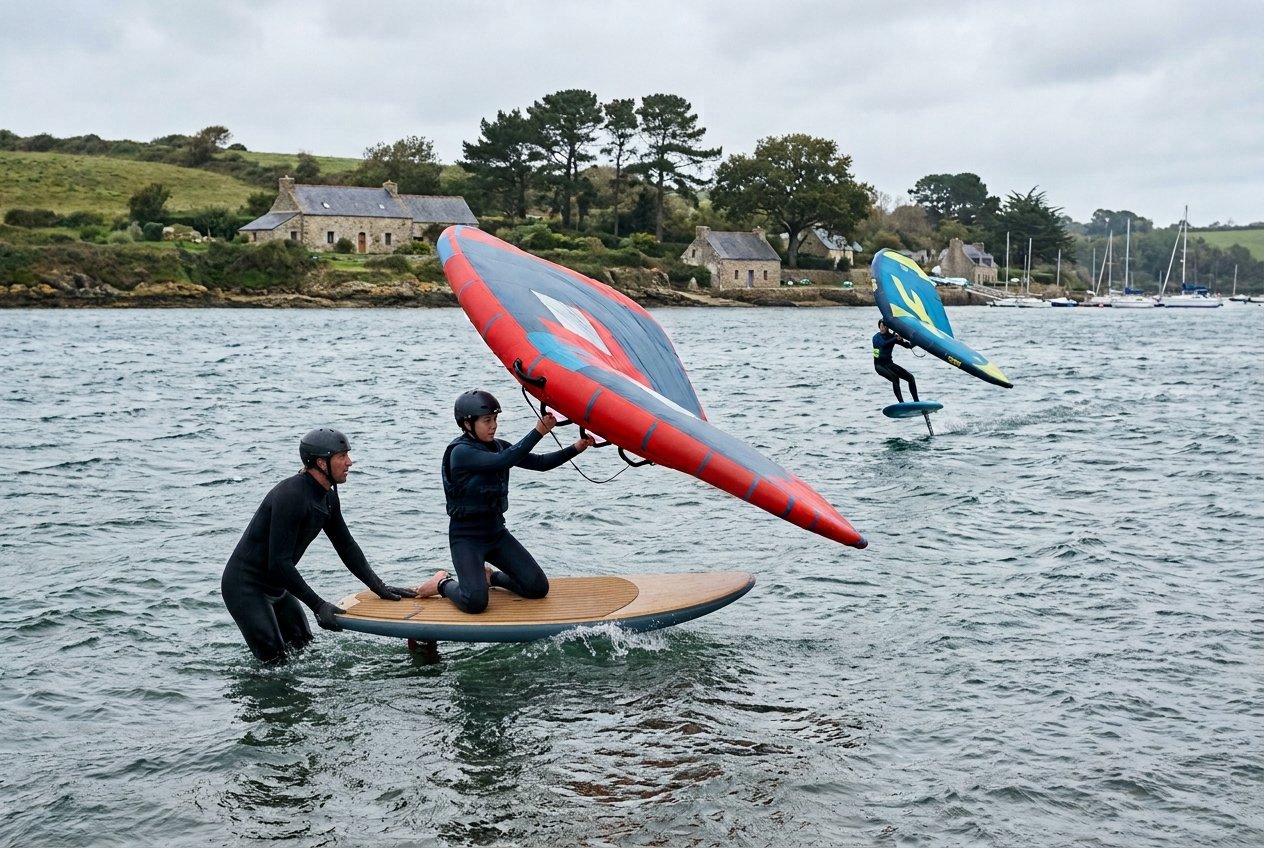
The region has a genuinely dense school scene for its size, split between the city itself, the Étel inlet, and the wider Quiberon Bay area. Most run three-hour or two-hour group sessions with equipment supplied, and several rotate location daily depending on which way the wind is blowing.
| School | Base | Format | Price |
|---|---|---|---|
| French Foil (with Sellor) | Lorient harbour / roadstead | 2h beginner session, max 4 | €135 adult, €85 (9-16) |
| NKS56 | Quiberon Bay, ~35 min from Lorient | 3h boat-based session | €120-150 single, €360-450 for 3 |
| Kite Spirit | Ria d’Étel + sea-water pool | 3h session, min 10 knots | €110-130 single, €500-750 packs |
| Ty Kite Skol | Lorient, Guidel-Plage, Fort-Bloqué, Larmor-Plage, Moëlan, Névez | 3-session stage, max 3 students | Custom, contact for rates |
Ty Kite Skol runs as an itinerant school rather than a fixed base, moving between six named beaches depending on the day’s wind, which mirrors how most experienced local riders treat the whole area as one interchangeable spot list rather than a single home break.
When’s the Best Time to Wing Foil Near Lorient?
There is no true off-season here; French Foil runs sessions out of the Lorient roadstead through winter by request, and Fort Bloqué is rated a year-round beach because its swell is most consistent in exactly the months other spots go quiet. That said, the calendar still splits into two different trips depending on what you want.
- Spring-summer: best for beginners and flat-water progression at the Ria d’Étel, riding the thermal sea-breeze window on SW/W wind.
- Autumn-winter: best for Fort Bloqué’s Atlantic groundswell, but expect more southeasterly wind days and cooler water.
Wrapping Up
Lorient rewards wing foilers who plan around the tide table as much as the wind forecast: flat, current-checked sessions in the Ria d’Étel on the right coefficient, open Atlantic swell at Fort Bloqué when autumn storms line up, and a genuinely year-round harbour option in between. Add four-plus active schools, a 45-minute ferry to Île de Groix, and a coastline that never fully shuts down, and it is easy to see why south Brittany’s wing scene clusters this tightly around one port city.
Use our wing foil calculator to size gear for the wind ranges above, and for another French option with a very different wind engine see our guide to Leucate and La Franqui, where the Tramontane blows over 300 days a year.
Frequently asked questions
Is Lorient a good place to learn wing foiling?
Yes, mostly via the Ria d'Étel about 35 minutes away, which schools use specifically because it stays flat and has no swimmer traffic. It only works from mid-rising tide and the current through the Barre d'Étel runs hard on big tides, so lessons are scheduled around the tide table rather than a fixed daily time.
Do you need to know the tide coefficient before a session in Lorient?
Yes, more than at most destinations. South Brittany's spring-tide range runs 4m-plus, and coefficients scale from around 20 at the weakest neaps to 120 at the strongest springs, with the biggest tides around the equinoxes. At the Ria d'Étel the current runs hard on big coefficients, so check maree.info for your week and ask a local school.
What wind direction is best for wing foiling near Lorient?
Southwest, the Suroît, is the region's dominant wind year-round and the direction the Ria d'Étel sails best on. Fort Bloqué is the exception, wanting an east-northeast wind against a west or southwest Atlantic swell rather than a straight onshore southwesterly.
Can you wing foil year-round in Lorient?
Yes. French Foil runs sessions out of the Lorient roadstead through winter on request, and Fort Bloqué is rated a beach that works year-round because its Atlantic swell is actually strongest in autumn and winter. Water gets colder in that window, so a full wetsuit becomes non-negotiable.
Is it worth wing foiling on Île de Groix instead of the mainland?
It is more of a special-occasion trip than a default plan. The ferry takes about 45 minutes from Lorient, and local operators running sessions on the island generally require a minimum of two riders to book, so it suits a small group more than a solo rider chasing a quick session.