
Wing foiling injures roughly 31% of riders each year, an incidence of 5.7 per 1000 hours on the water, but the injury usually isn’t caused by another person. Most damage is bruises, sprains and cuts to your foot and lower leg from your own gear, and 77.5% of injuries came from individual riding errors, typically late in a session as fatigue sets in.
What are the most common wing foiling injuries?
The most commonly injured body parts are the foot, lower leg, knee and thorax, roughly in that order. The most frequent injury types are contusions, followed by joint sprains, cuts, abrasions, lacerations and fractures.
These figures come from the first dedicated medical study on the sport, a survey of 415 wing foilers published in the Open Access Journal of Sports Medicine. Researchers led by Dr Thomas Gangl recorded 356 separate injuries among the 129 riders (31%) who reported at least one in the past 12 months.
Most of it heals on its own. Here’s what happened to the injured riders afterward, by how long their symptoms lasted:
| Duration of symptoms | Share of injured riders |
|---|---|
| A few days | 40% |
| Several weeks | 35% |
| Several months | 16% |
| Ongoing complaints | 9% |
Of the injured group, 32% saw a doctor, 25% saw a physiotherapist and 9% needed surgery, while half required no further treatment at all. The riders whose symptoms never fully cleared up were mostly dealing with shoulder dislocations, rotator cuff tears or a herniated disc, not the cuts and bruises that make up most of the numbers above.
How badly can a wing foil cut you?
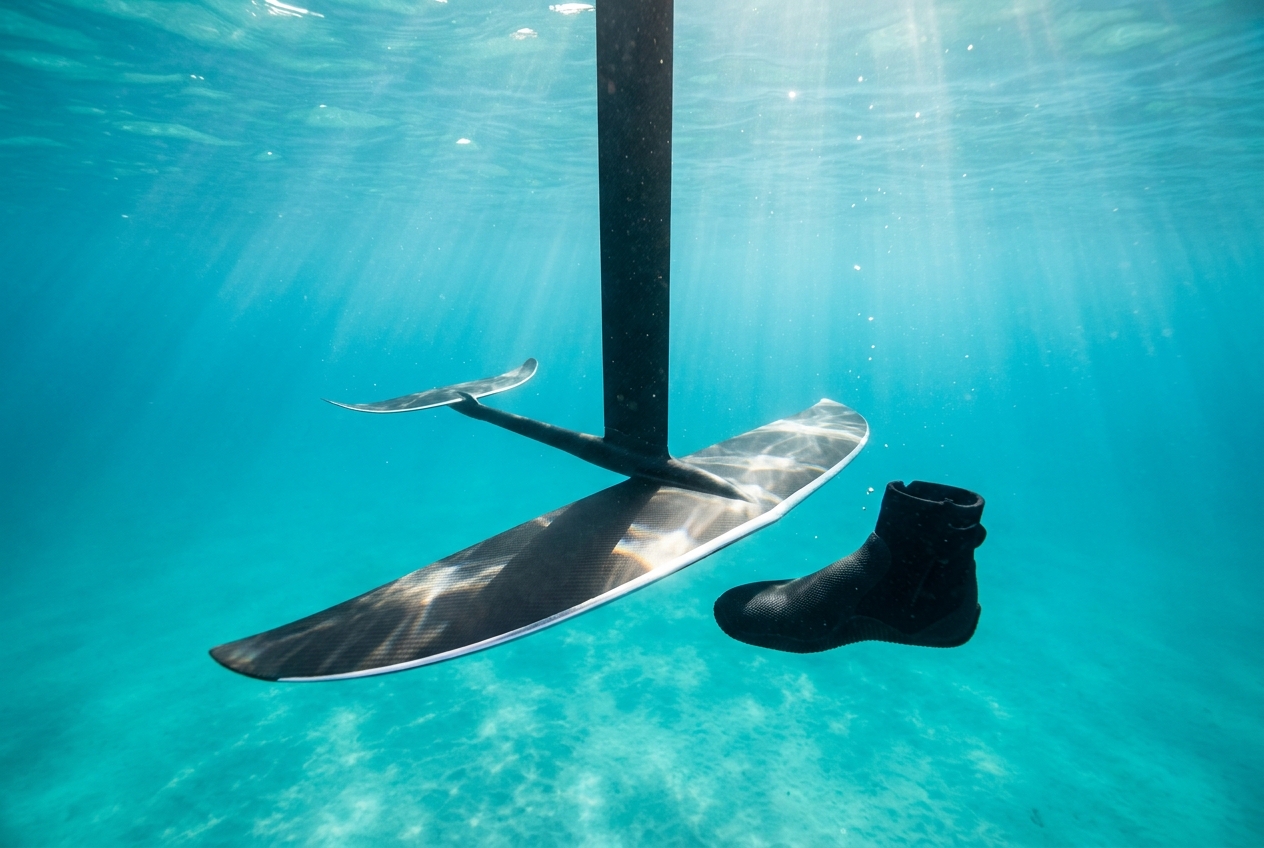
Contact with your own foil and mast causes more injuries than anything else, accounting for 25.9% of all recorded cases in the Gangl study. “The wings and mast have very thin, sharp trailing edges that can cause deep cuts in a collision,” Matosurf’s foil safety guide notes, and a mast also swings hard when the board tumbles in chop or white water.
Yves, a wing foiler with three years’ experience, found out how serious that can get during what he called an ordinary ride near Virginia Key, Florida. During a tack he fell from height directly onto the tip of his own foil and needed a total of 24 stitches inside and outside his foot.
He wasn’t wearing the neoprene boots he used to wear as a beginner. “If I’d been wearing booties, the injury would have been less serious,” he said afterward, and he now wears them every session regardless of water temperature.
- Wear cut-resistant neoprene boots every session. The Gangl study found this alone could significantly cut superficial foot injuries, yet only 6.6% of the riders it surveyed wore them.
- Add shin guards. The same study recommends them specifically to reduce the frequent superficial lower-leg cuts foiling produces, though this gear still isn’t common among surfers.
- Match your mast length to your level. A shorter mast reduces both how far you fall and how much leverage the foil has when it connects.
Do wing foilers collide with other people?
Barely ever, according to the data. Not one of the 356 injuries in the Gangl study came from contact with another water user, out of 415 riders surveyed worldwide.
That doesn’t make collisions a non-issue, because the study only measured what happened to wing foilers, not what a foil can do to somebody else. “A wing tip travelling at speed does the damage of a blade, and nobody on the surface can see it coming,” Matosurf’s safety guide warns, which is why the responsibility to keep clear of swimmers and boats sits with the foiler.
Visibility works against you too. “It is often hard to see through the wing, especially if there are no windows,” notes Tonic Mag’s safety guide, and that cuts both ways when a boat or another rider approaches from an angle you can’t check.
| What the injury made contact with | Share of injuries |
|---|---|
| Own foil or mast | 25.9% |
| Own board | 20.2% |
| Own wing | 7.0% |
| Another water user | 0% |
Why does exhaustion cause most wing foiling injuries?
Fatigue, not wind or waves, is behind most wing foiling injuries, and off-water fitness training is the most reliable way to push that fatigue later into a session. Individual riding errors, typically while foiling straight ahead or attempting a trick late in a session, accounted for 77.5% of all cases in the Gangl study.
Falls at that point are also where foot straps turn dangerous. Getting caught in a strap during a fall caused 24% of recorded ankle injuries and 6% of recorded knee injuries.
Tiredness compounds fast once conditions shift, because a session that started in comfortable wind can turn into a hard paddle home. “You never know when you may need to paddle the board or swim in if the wind drops or your wing leash snaps,” Tonic Mag’s guide points out.
What happens if you get stranded offshore?
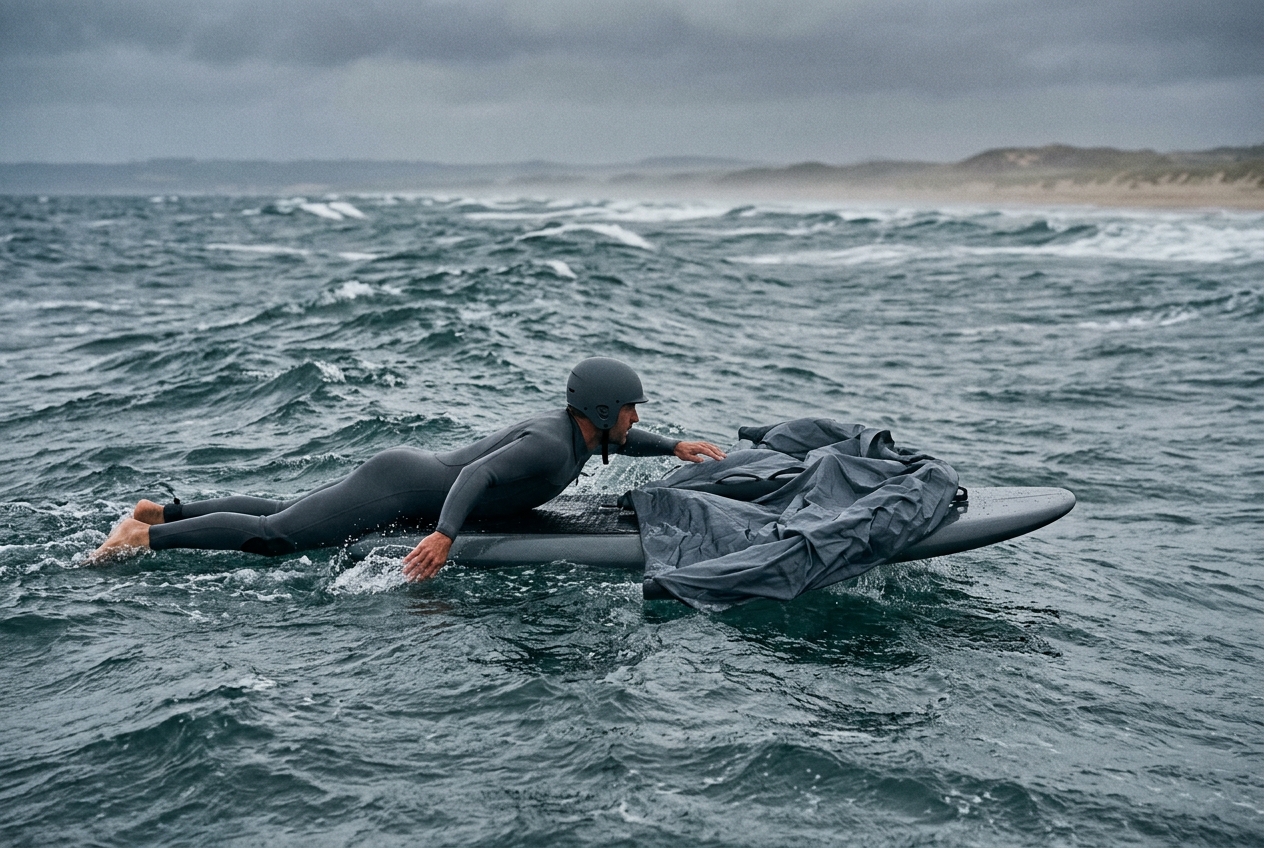
Wind dropping mid-session is the scenario that turns a routine outing into a rescue. Your board and wing become your flotation and your ride home, so both need to stay attached to you by their leashes rather than drift off on their own.
“A Personal Flotation Device… will keep you afloat if you lose your board and/or wing, giving you the chance to recover before heading to shore or signalling for help,” Ocean Safety’s guide notes. A wetsuit does similar work if help is slow, since it “will also help keep you warm until assistance arrives.”
Distance is what makes or breaks a bad situation. When Yves cut his foot on his own foil he was only 600m from the beach and still had to fight blood loss and shark-wary nerves to get in; he later reflected that if he’d been “1 or 2 miles offshore, as I usually am,” the same injury might have ended very differently.
- Stay attached to your gear. Don’t let go of the board or chase a drifting wing; both leashes exist so you keep your flotation.
- Get low and conserve energy. Lie prone on the board rather than treading water, and paddle steadily toward shore instead of sprinting.
- Keep the wing leashed even if it’s not powering you. A still-inflated wing adds buoyancy and stays visible to anyone looking for you.
- Signal early if you’re not making progress. A whistle or a phone in a waterproof pouch buys you time before real trouble sets in.
Picking conditions within your skill level in the first place is the best defence. If you’re still learning the basics, our wing foiling beginners guide is the place to start. Our wind range guide covers how to judge when it’s blowing more than you can handle before you launch.
What actually prevents wing foiling injuries?
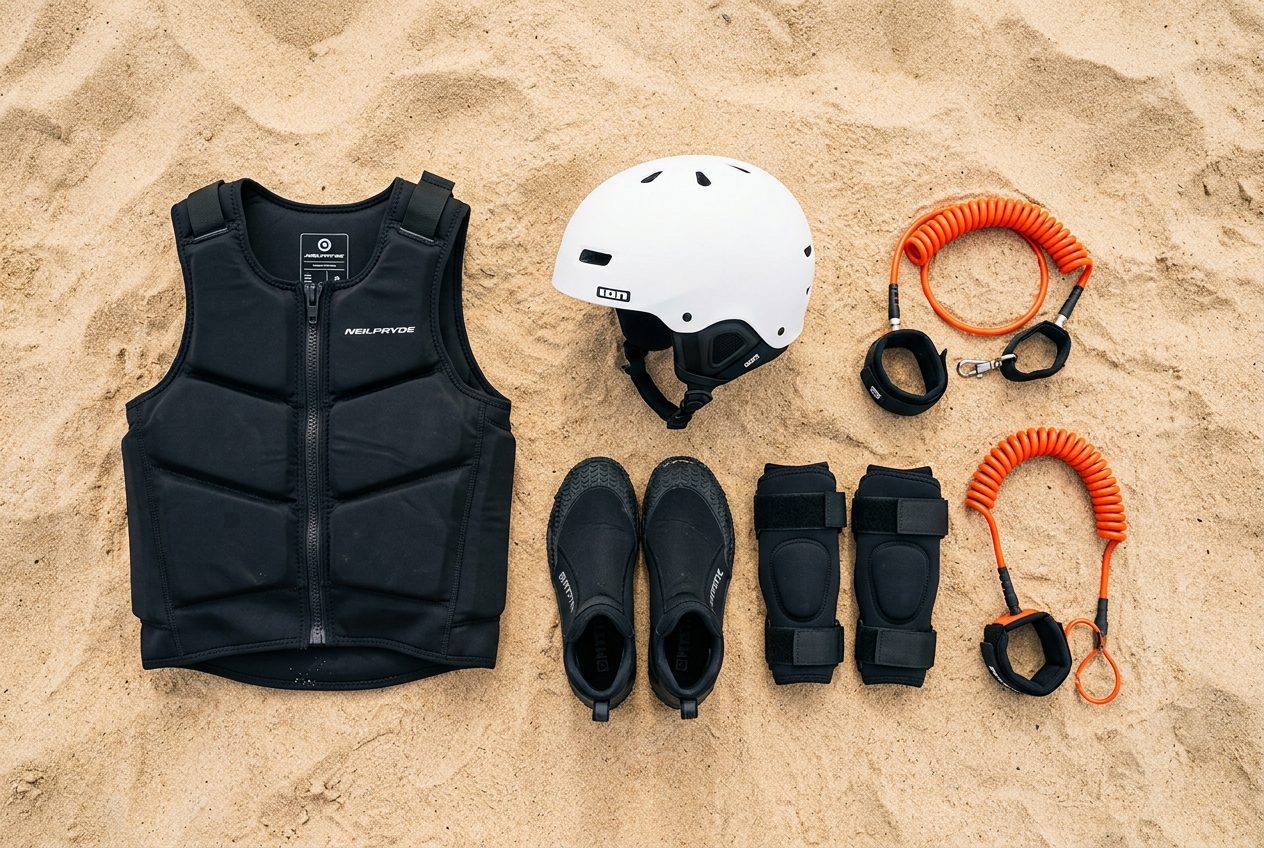
Most riders already carry some protection: 80.24% of the Gangl study’s participants regularly used protective equipment of some kind. Of that group, 91.3% wore a helmet and 71.17% an impact vest, but only 6.6% wore wetsuit boots.
| Protective gear | Share of protected riders wearing it |
|---|---|
| Helmet | 91.3% |
| Impact vest | 71.17% |
| Earplugs | 17.11% |
| Wetsuit boots | 6.6% |
Oddly, the study found no statistically significant drop in head or thoracic injuries between riders who wore protection and those who didn’t. That’s most likely because serious head and chest injuries are rare events either way in a sample this size, and the researchers still recommend both, since the gear costs little next to the injury it’s meant to prevent.
The bigger gap is footwear. Given that the foot and lower leg top the injury list, and that consistently wearing cut-resistant neoprene boots is shown to significantly reduce superficial foot injuries, wearing them every session rather than just in cold water is one of the easiest upgrades available.
For the fuller picture on leash setup, right-of-way rules and how to fall away from the board, our wing foiling safety guide covers the rest of the kit list.
Frequently asked questions
How common are wing foiling injuries?
About 31% of riders reported at least one injury in the past 12 months in the Gangl study of 415 wing foilers, an incidence of 5.7 per 1000 hours on the water. Most are minor: contusions are the most frequent type, followed by joint sprains, cuts and abrasions, mainly to the foot and lower leg.
Can a wing foil actually cut you badly?
Yes. The wings and mast have thin, sharp trailing edges, and contact with your own foil or mast caused 25.9% of all recorded injuries in the Gangl study. One rider needed 24 stitches after falling onto the tip of his own foil during a tack. Cut-resistant neoprene boots and shin guards are the recommended protection.
Do wing foilers collide with other people?
Rarely, according to the data. Not one of the 356 injuries recorded among 415 riders came from contact with another water user. The study only measured harm to wing foilers, though, and a wing tip at speed can do the damage of a blade, so the responsibility to keep clear of swimmers and boats sits with the foiler.
Do foot straps make wing foiling falls worse?
Sometimes. Getting caught in a foot strap during a fall caused 24% of recorded ankle injuries and 6% of recorded knee injuries in the Gangl study. The risk is highest when you're tired late in a session, which is when most riding errors and falls happen.
What should you do if the wind dies and you're stranded?
Stay attached to your board and wing by their leashes, since both act as flotation. Lie prone on the board and paddle steadily toward shore rather than treading water or sprinting. A PFD and a wetsuit buy time if help is slow, and a whistle or a phone in a waterproof pouch lets you signal early.
