
Some wind destinations make you work for it. You check three forecast apps, sacrifice a small goat to the weather gods, and still end up sitting on the beach watching a windsock hang limp. Gökova is not one of those places. Tucked into the eastern corner of the Gulf of Gökova near Muğla, on Turkey’s Aegean coast, the little village of Akyaka has built an almost embarrassingly reliable reputation among wind-sports travellers: through the heart of summer, the wind shows up nearly every single afternoon, like a co-worker who is somehow always punctual.
The magic ingredient is geography. Akyaka sits at the head of a deep, west-facing valley ringed by steep, pine-covered mountains that climb straight up from the shoreline. When the summer sun bakes those slopes, the heated air rises and pulls a steady sea breeze funnelling up the gulf, a thermal engine that runs day after day. Layer the larger Aegean “meltem” (the meltemi, the dry northerly that hammers the Aegean from roughly mid-May to mid-September) on top of that local thermal, and you get one of the most dependable wind setups in the Mediterranean basin.
For wing foilers, the combination is close to ideal: steady, gust-light wind over flat, shallow, bath-warm water, with a backdrop of green mountains that looks more like a Norwegian fjord than your mental image of Turkey. Akyaka has long been a kitesurfing and windsurfing stronghold, and the foiling crowd has quietly moved in to take advantage of the same conditions. This guide walks through the wind, the water, the spots, the local scene, and everything you need to actually get there and stay a while.
Wing Foiling Conditions
Wind Patterns and Seasonality
The Gökova season runs broadly from May to October, with the sweet spot landing squarely in the June-to-September window. May already delivers wind on roughly three-quarters of days, but from June to the end of September windless days become genuinely rare, riders and centres in the area describe something close to a 99% wind probability across those core months. Locals talk about around 150 rideable days a year, which is a staggering number for anyone used to chasing forecasts at home.
What makes Gökova special for wing foiling is the daily rhythm. Mornings are typically calm or light, perfect for a slow coffee and zero forecast anxiety. The wind usually switches on around 10 to 11am as the land heats up, builds through the early afternoon, and settles into a constant, reliable flow until sunset before dropping off again from roughly 5pm. Reported strengths cluster in the mid-teens to mid-twenties of knots: figures of 16–22 knots and 15–25 knots come up repeatedly, with the breeze often starting around 12 knots and climbing to 18–25 knots by mid-afternoon on a good day.
Crucially for foilers, the wind here is known for being constant and stable with few gusts, the kind of smooth, predictable flow that makes pumping onto foil and holding a clean line far easier than at a gusty coastal spot. The direction is essentially onshore/cross-onshore as it funnels up the valley, which keeps you blowing back toward the beach rather than out to sea. If you want to translate those numbers into the right wing and foil size for your weight, it’s worth running them through a wing foil calculator before you pack.
Water Conditions
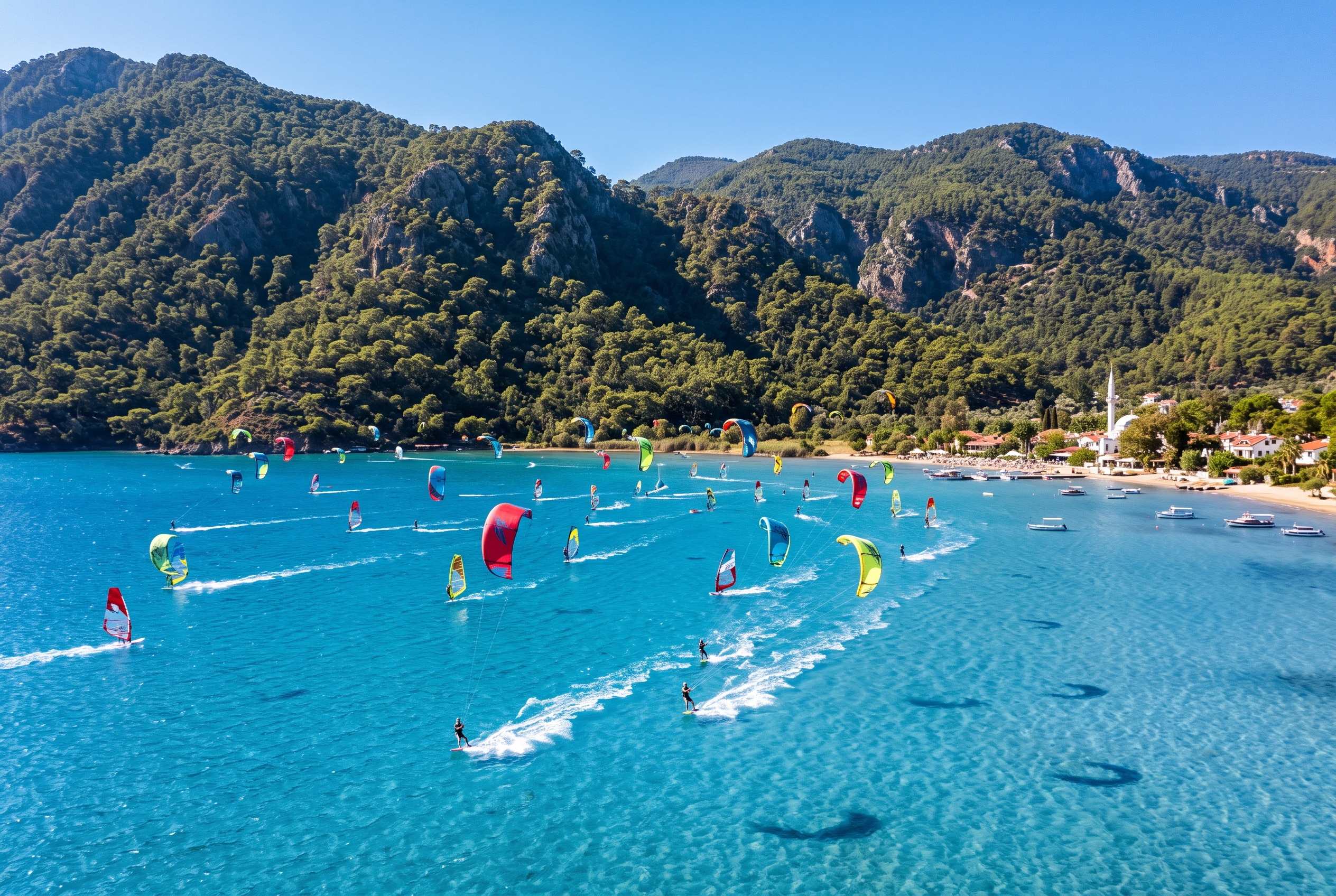
The riding area is a roughly 3km bay fringed by pine forest and a natural sandy beach. The bottom is sand, the water is flat and shallow close in, and there’s a lot of space even at the peak of the season, exactly the forgiving canvas you want when you’re learning to foil and would prefer your inevitable crashes to land in waist-deep, soft-bottomed water rather than over reef. Because the gulf is so sheltered and the wind blows along it rather than building big swell, the surface stays flat-ish, which keeps foiling smooth and lets you focus on technique instead of fighting chop.
Water temperature through the season sits in the comfortable range of roughly 18–25°C. In peak summer that means most riders are happy in a shorty or even boardshorts and a rash vest. There’s one charming local quirk worth knowing: cold mountain springs feed into the bay near the beach, so you’ll occasionally foil through a patch of noticeably cooler water, a genuinely welcome surprise when the air on the beach is pushing 40°C. Pack a thin wetsuit or shorty for the shoulder-season edges (May and October), but don’t expect to need much rubber in July and August.
Best Spots for Different Skill Levels
Beginners. The main Akyaka/Akçapınar beach area is about as beginner-friendly as wind spots get. The flat, shallow, sandy bay, the steady and gust-light thermal, and the onshore-ish direction combine into a low-stress learning environment. Shallow water near shore means you can wade out, sort out your gear, and practice your first foiling pumps without being swept anywhere alarming. This is a spot people specifically recommend for getting onto foil quickly and progressing fast, if you’re brand new, pair your trip with our beginner’s guide so you arrive knowing the basics.
Intermediates. Once you’re up and riding, the sheer consistency is what pays off here. With wind almost every afternoon and flat water for miles of bay, intermediates get the volume of water time that genuinely moves the needle, working on transitions, toeside, and your first proper tacks and gybes. The smooth, low-gust flow means you can dial in technique rather than constantly reacting to lulls and gusts.
Advanced. Experienced foilers will appreciate the long, open bay for laying down fast reaches and big carving turns, and the reliable mid-afternoon build that delivers proper power on the stronger days. While Gökova is fundamentally a flat-water freeride playground rather than a wave spot, the space and steadiness make it an excellent place to drill freestyle, refine high-speed foiling, or simply rack up the kind of mileage that’s hard to get at home. The bay is big enough that you can find your own patch of water even in August.
Local Wing Foiling Scene
Schools and Lessons
Akyaka has a mature, well-established water-sports teaching scene, it grew up around kitesurfing and windsurfing, and those same centres now cater to the wing-foiling wave. You’ll find professional, IKO-approved kite centres on the beach offering group and private lessons for every level, from total beginners to advanced riders looking to add foil to their quiver. Because Gökova’s wind is so reliable, lessons rarely get cancelled for lack of breeze, which is a real advantage if you’ve travelled a long way and have limited days.
For a sense of pricing, local kite academies advertise beginner courses from around €100, private one-to-one tuition (roughly six hours over a couple of days) around €300, and week-long beginner packages in the region of €660 that bundle course hours, some one-to-one coaching and rental days. Wing-specific lesson pricing varies by centre, so it’s worth contacting schools directly, but use these figures as a ballpark for what tuition costs in Akyaka.
Gear Rentals
Rental and gear storage are widely available for independent riders, so you don’t necessarily have to lug a full quiver through Dalaman airport. The beachfront centres rent equipment and offer storage for travelling riders, which is ideal if you’re flying in light. As with anywhere, check exactly what’s in the rental package, confirm the centre has wing and foil kit (not just kite gear) in your size, and read the small print on damage and repair charges before you sign, repair fees for trashed gear can sting. Booking rental and storage ahead of a peak-season trip is sensible, as the beach gets busy in July and August.
Clubs and Community
Akyaka has a friendly, laid-back, slightly boho water-sports community, it’s long attracted an international crowd of kiters, windsurfers and, increasingly, wingers and van-lifers chasing the reliable summer wind. The beach functions as the de facto social hub: shared rigging space, a steady churn of riders coming and going from the centres, and the easy camaraderie of a spot where everyone’s there for the same afternoon thermal. Several operators also run kite-and-yoga style camps, which tend to fold a sociable, communal vibe into the trip if you’re travelling solo and want built-in company.
Off the Water
Cultural Attractions
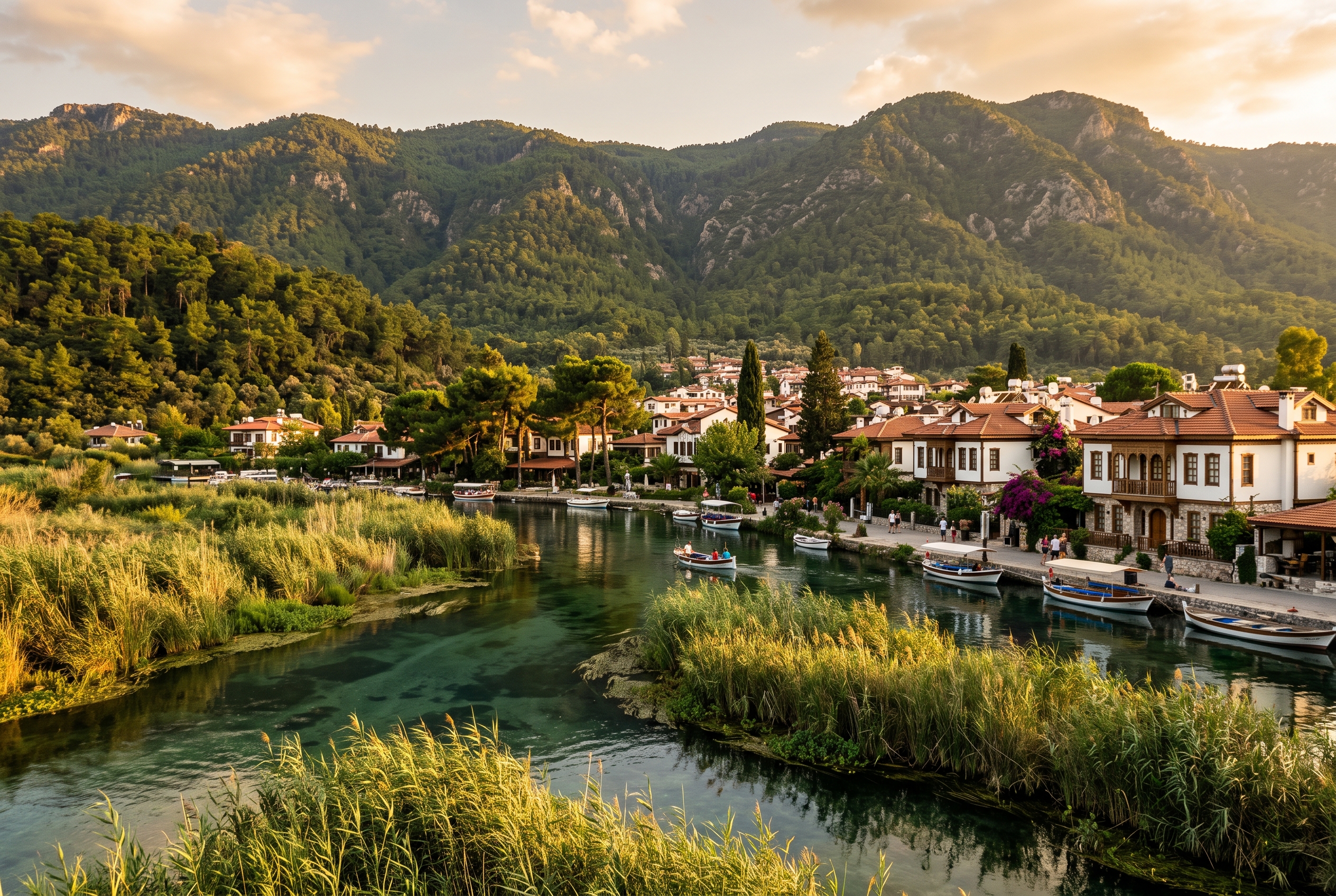
Akyaka has a distinctive architectural identity thanks to the traditional Ula-style wooden houses, timber-fronted, balconied buildings that give the village a cohesive, storybook character you don’t find in the concrete sprawl of bigger Turkish resorts. The village earned recognition as a “Cittaslow” (slow city), and it shows: the pace is gentle, the streets are walkable, and the whole place feels designed for lingering rather than rushing. Wander the lanes, browse the small local shops, and you’ll quickly understand why so many wind travellers end up extending their stay.
Dining
For a small village, Akyaka punches above its weight on food. There are cosy cafés, plenty of good restaurants, and a traditional weekly market for fresh produce, all wrapped in that relaxed, friendly atmosphere. The riverside and waterfront spots are the obvious move for a post-session dinner, think grilled fish, mezze, and the kind of long, unhurried meals that pair perfectly with the slow-city ethos. After a full afternoon on the water, refuelling on fresh Aegean seafood with the breeze finally dropping is hard to beat.
Nightlife and Entertainment
Akyaka’s nightlife is more “mellow evening out” than “rave until dawn,” which suits a destination built around early-morning calm and afternoon wind. Within walking distance you’ll find bars with live music and the occasional DJ, enough to round off a day on the water without wrecking tomorrow’s session. If you want bigger nights out, the resort towns of Marmaris and Dalyan are both roughly a 30-minute drive away and offer a livelier, busier scene when the mood strikes.
Nature and Sightseeing
The star of the show off the water is the Azmak River (Kadın Azmağı), a short, spring-fed river of astonishingly clear, icy-cold water shaded by reeds and trees. A gentle riverboat trip typically takes about half an hour, and you can also canoe or kayak it; either way it’s a serene, green counterpoint to the breezy energy of the bay. Beyond the river, the surrounding Gökova region is laced with pine forests, walking trails, and quiet coves, and boat trips out into the wider Gulf of Gökova reward you with secluded swimming stops. On a no-wind morning (rare as those are in summer), there’s plenty to fill the hours.
Practical Travel Information
How to Get There
Akyaka is wonderfully easy to reach. The nearest airport is Dalaman (DLM), roughly a 45-minute to one-hour drive away, about as painless a transfer as you’ll find for a wind destination. Bodrum–Milas (BJV) is the other option, around an hour to 90 minutes out depending on exactly where you’re headed and how the traffic behaves. Both airports handle plenty of seasonal international flights through summer. From either, you can arrange a private transfer, grab a taxi, or rent a car; a hire car is genuinely worth considering, since it gives you the freedom to explore the Azmak, the wider gulf, and the nearby towns on lighter days. For orientation, Akyaka is about 20 minutes from Marmaris and sits between Muğla city and the coast in the Ula district.
Where to Stay
Base yourself in Akyaka village itself, it’s compact enough that you can stay near both the Azmak and the sea and walk to most of what you need. Accommodation skews toward small, characterful local hotels, guesthouses and pensions rather than mega-resorts, many with pools and that authentic, low-key feel that defines the village. Rider-focused inns and water-sports-friendly guesthouses cluster near the centre and the beach, which keeps your daily commute to the rigging area refreshingly short. Some schools also run camp-style packages that bundle accommodation with lessons or rental, a tidy option if you’d rather not piece the trip together yourself.
Best Time to Visit
For maximum wind certainty, target June through September, this is when windless days all but vanish and the thermal fires up like clockwork. July and August deliver the strongest, most reliable breeze along with the warmest water and liveliest village atmosphere, but they’re also the busiest and hottest, with beach air temperatures that can climb past 40°C. May, September and early October are the shoulder-season sweet spots: still very good wind (May already runs around 75% of days windy), fewer crowds, milder land temperatures, and a more relaxed village. If your priority is uncrowded water with high odds of a session, late May or September is a smart play.
Budget Estimates
Turkey remains good value compared with most European wind destinations, which is a big part of Akyaka’s appeal. On the tuition side, expect beginner courses from around €100, private coaching around €300, and week-long beginner packages near €660; wing-specific rates vary, so confirm with the school. Daily beach access at the kite area has historically been charged as a small fee covering parking, toilets and showers. Independent riders should budget for gear rental and storage on top, and remember the usual sting of damage/repair fees if something breaks. Add accommodation in local pensions and hotels (typically affordable by European standards) plus food at the village’s cafés and restaurants, and Akyaka works out as one of the more wallet-friendly foiling trips going. Prices shift year to year, so treat these as a planning baseline and check current rates when you book.
Wrapping Up
Gökova and Akyaka earn their reputation honestly: a thermal-plus-meltem wind engine that runs almost every summer afternoon, a flat and shallow bay that’s kind to learners and fun for everyone else, bath-warm water, and a slow-city village wrapped in pine-green mountains that makes the off-water hours genuinely worth sticking around for. Add easy access from Dalaman and prices that won’t make your eyes water, and you have one of the Mediterranean’s most reliable, and most relaxing, wing-foiling trips.
If Aegean flat water has you hooked, it’s worth lining Gökova up against the other greats of the region. Compare it with the legendary flat-water lagoon of Lo Stagnone in Sicily, the wind-blasted bays of Paros, or the meltemi-hammered Greek classic that is Karpathos. Each has its own character, but few combine reliability, warm flat water and a charming village quite as neatly as Akyaka. Pack a light quiver, sort your sizes, and go enjoy the most punctual wind in the Mediterranean.
Frequently asked questions
When is the best season to wing foil in Gökova / Akyaka?
June to September is the core season, when windless days almost vanish. May, September and early October are quieter shoulder months with still-good wind and milder temperatures.
How much wind does Akyaka get?
The thermal and meltem typically build through the afternoon to around 15-25 knots (often 16-22), starting near 12 knots late morning and holding steady, with low gust, until about 5pm.
Is Gökova good for beginners?
Yes. The flat, shallow, sandy bay, steady low-gust thermal and onshore-ish wind make it one of the friendliest spots to learn to foil, and certified schools offer lessons and rentals.
What is the water temperature and do I need a wetsuit?
Water sits around 18-25°C. In peak summer a shorty or boardshorts and a rash vest is plenty; bring a thin wetsuit or shorty for the May and October shoulder season.
How do I get there and is it expensive?
Fly into Dalaman (DLM), about 45-60 minutes away, or Bodrum (BJV), around 1-1.5 hours. Turkey is good value: beginner courses from around 100 euros, private coaching around 300 euros, plus affordable local pensions.
