
Ask a kitesurfer where Asia hides its biggest, most relentless wind and a knowing look usually crosses their face before they say it: Penghu. This scatter of low, basalt-rimmed islands sits in the Taiwan Strait, dead in the gap between mainland China and the Taiwanese coast, a natural wind tunnel that funnels the northeast monsoon into something that borders on the absurd. From late autumn through early spring, the breeze here is not a feature. It is the entire personality of the place.
For wing foilers, that reputation is both a promise and a warning. Penghu (the old maps call it the Pescadores, Portuguese for “fishermen”) is consistently described as the windiest place in Asia between November and March, with the kind of pressure that has windsurfers and kiters reaching for their very smallest kit. It is also a genuinely beautiful, deeply Taiwanese place, columnar basalt cliffs, 700-year-old stone fish traps, temples, and some of the best seafood you will eat anywhere. Most foreign visitors come in summer for the beaches. The wind crowd comes in winter, for the part of the year locals spend complaining about.
This guide walks through what Penghu actually delivers on the water, who it suits, where to ride, and how to fold a wing trip into a wider Taiwanese island adventure. Spoiler: it is not a beginner’s first-week destination in peak season. But for the right rider, at the right time, it is one of the most reliable wind machines on the planet.
Wing Foiling Conditions
Wind Patterns and Seasonality
Penghu’s wind story is the northeast monsoon, full stop. The islands sit in the strait between China and Taiwan, and as the winter monsoon pours south it gets squeezed and accelerated through that corridor. The result is a wind season that runs long, generally September through May, with the heart of it, November to March, delivering the strongest and most consistent breeze in the region. This is the period that earns Penghu its “windiest place in Asia” billing.
The numbers are the part that makes newcomers blink. Typical winter wind speeds sit in the 30–50 knot range, and the kite crowd here rigs tiny, sails and kites in the 6 to 8 square metre range are normal. Statistically, the wind blows between roughly 17 and 40 knots for about 71% of the season, and tops 40 knots for another 13%. For a wing foiler, that translates to a lot of small-wing days and a fair number when the honest answer is to leave the wing in the bag and watch from the harbour wall with a hot drink.
The shoulders of the season are where wing foiling gets most appealing. October and the back end of the season tend to offer the more manageable, rideable strengths before the monsoon really sets its jaw. One caveat worth respecting: September and early October can still see typhoons passing through the region, which can shut things down entirely for a few days at a time. Check forecasts obsessively, Windguru’s Penghu station is the local default, and build slack into any trip.
Water Conditions
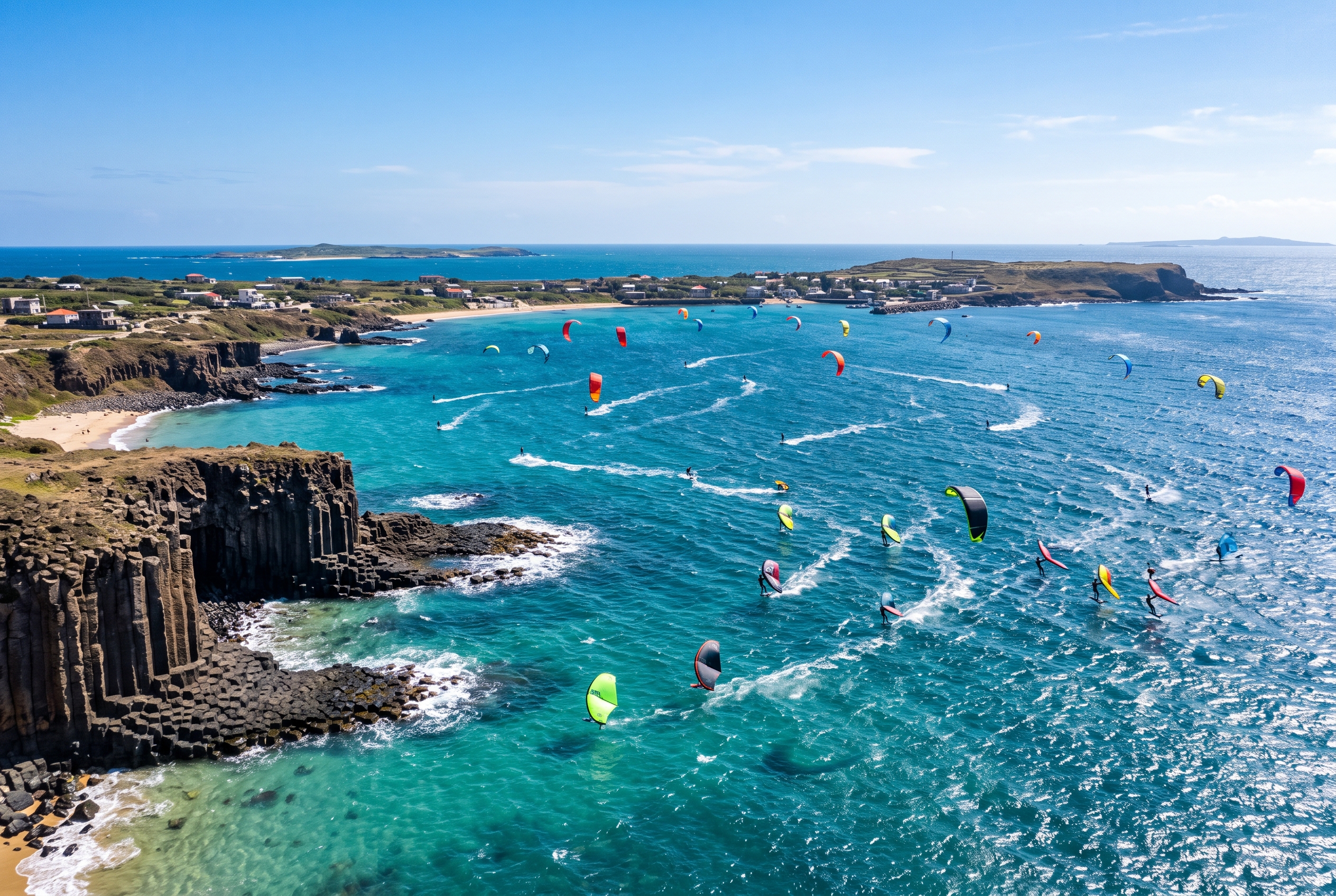
Penghu offers a genuine split personality on the water, and which side you get depends entirely on where you launch and which way the wind is blowing. The sheltered, man-made bay at Guanyinting in Magong stays flat and protected, a contained 400-metre pool spanned by the LED-lit Rainbow Bridge, while the exposed beaches on the windward coast serve up proper, organised swell when the monsoon is honking. Longmen, on the east, is well known for genuinely good waves once the wind pushes past 30 knots.
Water temperature is the other thing to plan around, and the swing is real. In October the sea is warm and pleasant enough that you can ride in boardshorts with air temperatures up around 25°C, t-shirt-and-shorts weather between sessions. By the depths of winter, January and February, water and air drop into the 15°C range and a wetsuit stops being optional. The cruel irony of Penghu is that the windiest months are also the coldest, so the strongest, most reliable conditions come bundled with rubber, chilly hands, and a need for warm layers the moment you derig.
Best Spots for Different Skill Levels
Guanyinting (Magong), beginners and flat-water sessions. The sheltered, shallow man-made bay beside the Rainbow Bridge in Magong is where windsurfers and learners feel safest, and in winter it’s a common sight to see sails out front of the local centre. The protected water and modest fetch make it the most forgiving place on the islands to find your feet, the obvious choice for early-stage wing foilers when the wider coast is a maelstrom.
Lintou, intermediate, with a seasonal twist. Lintou Beach on the south side is a foiler’s spot with a useful quirk: the wind blows offshore here in winter, which keeps the surface cleaner but demands respect and an honest self-assessment of your ability to get back upwind. Come summer the wind shifts to the south and turns onshore or side-onshore, which makes Lintou a properly good hydrofoiling beach in the warmer months. The wing-and-kite-and-windsurf crowd knows it well.
Longmen, intermediate to advanced, wave riders. Longmen Beach in the east is the most popular kiteboarding spot on Penghu, and it’s where the wave action happens, locals rate the surf as excellent once the wind tops 30 knots. Wing foilers have ridden it successfully, but this is firmly a strong-wind, organised-swell venue for confident riders, not a place to nurse your first downwind transitions.
Not sure which wing size matches the day’s pressure? Run the numbers through our wing foil calculator before you commit to a launch, in a place where the spread runs from 17 to 50-plus knots, that little bit of homework matters more than usual.
Local Wing Foiling Scene
Schools and Lessons
The wind-sports scene on Penghu is small, friendly, and refreshingly unpretentious, this is not a polished resort circuit. The most visible wing operation runs out of the Longmen area, where Jan offers wing foil instruction and a base for visiting riders; a structured two-hour beginner lesson is quoted around 6,000 TWD as part of a package. Windsurf instruction has a long history here too, with an Australian-run windsurf centre based at the sheltered Guanyinting bay in Magong, which is where most learners on the islands have traditionally started.
Because the community is compact and seasonal, the smart move is to make contact before you fly. Confirm a coach is on the island for your dates, that they have gear in your size, and, crucially, that the forecast suits lessons rather than survival sailing. A keen instructor will steer beginners to Guanyinting’s flat water and save the big-wind coast for those ready for it.
Gear Rentals
Rental and retail inventory exists but it’s boutique rather than warehouse-scale. The Longmen-based wing operation stocks a real quiver: boards (including custom 80–100 litre builds), F-One wings across a wide range of sizes from around 2.5 up to 8.0 square metres, and F-One foils, exactly the spread you want given how much the wind here swings. A beginner package bundling board, foil, wing, and lessons has been quoted in the region of 90,000 TWD.
That breadth of wing sizes is genuinely useful in Penghu, where the difference between a 5-metre and a 3-metre day can be a single afternoon. Still, given the small scale of the local market, serious riders often travel with their own foil and a couple of wings and rent or borrow only what they can’t pack. Bring a warm winter setup if you’re coming in the strong season, local stock of cold-water rubber can be limited.
Clubs and Community
The Penghu wind tribe is small but devoted, the kind of place where on a good day you’ll find a handful of kiters and windsurfers sharing a beach rather than a crowded lineup. Longmen typically gathers a small group of four to eight riders on windy days, and Guanyinting draws the windsurf regulars through the winter. It’s an easy scene to plug into: turn up, be friendly, and you’ll quickly get the local intel on which spot works for the day’s wind direction.
That intimacy is part of the appeal. There’s no scene politics, no jostling for water, just a tight group of people who’ve chosen to spend winter on a windswept rock because the riding is that good. For a wing foiler used to busy European or Australian launches, the solitude of a Penghu session can feel like a genuine luxury.
Off the Water
Cultural Attractions
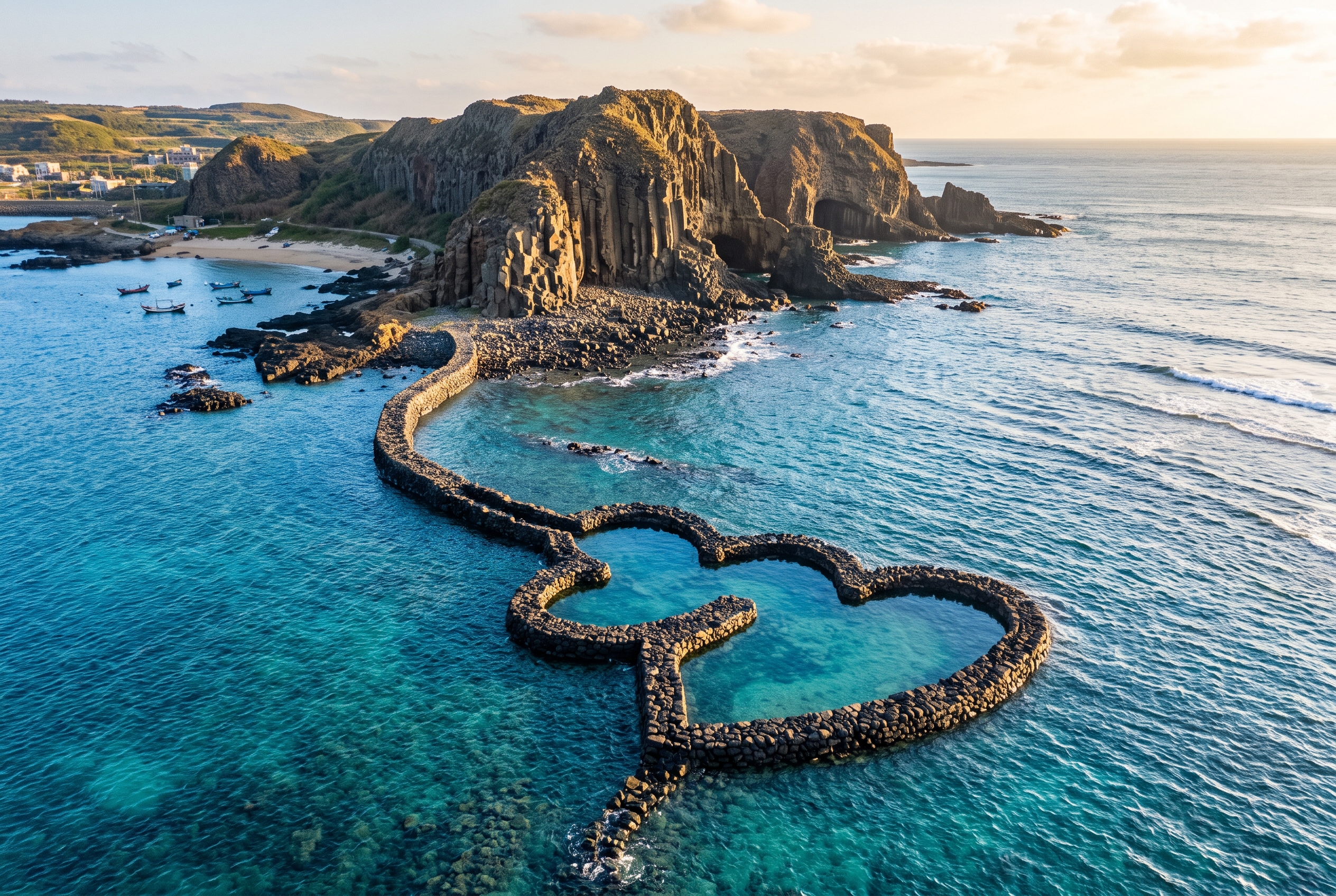
Penghu rewards a rest day. Magong, the islands’ capital, wears its history openly, wander its old streets, visit the Guanyin Pavilion temple that gives the windsurfing bay its name, and drop into the Penghu Living Museum for the backstory on island life. The Twin-Hearts Stone Weir on Qimei island is the photo everyone takes home: a 700-year-old basalt-and-coral fishing trap shaped, by happy accident, like two interlocking hearts, best seen at low tide when the sea drains out to reveal it.
Dining
The Pescadores didn’t earn their fishermen’s name for nothing. Seafood here is exceptional and absurdly fresh, expect oysters, squid, fish, and shellfish pulled from the surrounding waters and cooked simply. Magong’s night markets and back-street eateries are where to graze, and the islands have their own specialities worth hunting down, from cactus ice (yes, made from the prickly pear that grows wild here) to brown-sugar cake. After a 15°C winter session, a steaming bowl of seafood noodles is medicinal.
Nightlife and Entertainment
Let’s be honest about expectations: Penghu is not a party island, especially in the windy off-season when much of the tourist machinery winds down. The evening rhythm is night-market food, a few quiet bars in Magong, and early nights ahead of dawn-patrol wind checks. The one genuinely spectacular bit of nightlife is the LED-lit Rainbow Bridge at Guanyinting glowing over the water, and in summer the Penghu International Fireworks Festival lights up that same bay, drawing crowds from across Taiwan.
Nature and Sightseeing
The landscape is the real headline act. Penghu is a volcanic archipelago, and its signature feature is dramatic columnar basalt, hexagonal cliffs and sea-stacks that look engineered rather than grown. Rent a scooter and the main islands open up: hidden coves, turquoise shallows, the photogenic sweep of beaches like Shanshui, and a chain of smaller islands reachable by boat. A 90-minute boat ride south delivers you to Qimei (Seven Beauty Island) and that famous stone weir. Even the windiest week leaves room to explore.
Practical Travel Information
How to Get There
Penghu is an offshore county of Taiwan, and the fast way in is to fly. Magong Airport (MZG) handles a steady stream of short domestic hops, more than 30 services from across the main island, run by carriers including Uni Air and Mandarin Airlines, with flights from Taipei, Taichung, Tainan, Chiayi, and Kaohsiung. A one-way ticket typically runs around 1,700–2,300 TWD depending on origin and timing, and the flights are short.
The slower, cheaper alternative is the ferry. Most boats leave from Budai Harbour in Chiayi and dock at Magong’s Nanhai Harbour; a fast ferry covers it in around 1.5 hours, while standard sailings take roughly 4 hours. In summer there’s also a longer ferry from Kaohsiung (around 5 hours). One thing to weigh if you’re bringing your own foil quiver: flying is fast but you’ll fight baggage limits, while the ferry is far more forgiving of bulky board bags. Once on the island, a rented scooter or small car is the way to reach the wind spots.
Where to Stay
Base yourself in Magong. It’s the lively heart of the county, central to the airport, the harbour, the food, and the Guanyinting launch, the obvious choice for a first visit. Accommodation spans the full range, from simple guesthouses and B&Bs to the five-star Four Points by Sheraton Penghu. Riders chasing the Longmen waves sometimes stay out east near the beach (a local B&B sits about a minute from the Longmen launch), trading Magong’s buzz for being on the doorstep of the swell. For most wing foilers, Magong plus a scooter is the sweet spot.
Best Time to Visit
It depends on what you want. If you want maximum, near-guaranteed wind and you’re comfortable on small gear in big conditions, November to March is the engine room, but bring a wetsuit and warm layers for that 15°C water. If you’d rather have rideable strength, warmer water, and a more forgiving introduction, target the shoulders: October is a sweet spot, with warm seas and wind that’s strong without being savage, though keep an eye out for late typhoons. Summer flips Lintou into a friendly onshore foiling beach and brings the festival crowds, but the reliable monsoon is gone. For most wing foilers, October is the goldilocks call.
Budget Estimates
Penghu is comfortably affordable by Western standards. Flights from the Taiwanese mainland land around 1,700–2,300 TWD one-way; a structured beginner wing lesson is quoted near 6,000 TWD for a two-hour session, and a full beginner gear-and-tuition package has been quoted around 90,000 TWD if you’re buying in. Accommodation ranges from budget guesthouses up to international five-star, and food, especially the seafood, is great value at the night markets. Add a scooter rental and your daily on-island costs stay modest. The biggest variable is your gear strategy: travel light and rent, or eat the baggage cost and bring your own quiver.
Wrapping Up
Penghu is not a soft-landing destination, and it doesn’t pretend to be. It’s a wind machine, one of Asia’s most reliable, wrapped around a beautiful, low-key chain of volcanic islands where the riding is uncrowded, the seafood is superb, and the monsoon does exactly what it promises. The trade-off is real: the windiest months are the coldest, the conditions can tip from brilliant to brutal, and beginners need to pick their season and their spot with care. Get those right, Guanyinting’s flat water to learn, Lintou and Longmen when you’re ready, and October or the shoulders for sane strength, and Penghu delivers sessions you’ll be telling stories about for years.
New to the sport and wondering whether somewhere this windy belongs on your list yet? Start with our beginner’s guide to getting started, build your skills somewhere gentler, and keep Penghu as the goal. If you’d prefer warmer water and easier first sessions in the meantime, the steady trade winds of Sanur in Bali or the mellow lagoons around Langkawi in Malaysia make far friendlier classrooms before you tackle the strait.
Frequently asked questions
When is the best season to wing foil in Penghu?
November to March brings the strongest, most reliable northeast monsoon, making Penghu the windiest place in Asia. For warmer water and more manageable strength, October is the sweet spot, though watch for late typhoons.
How much wind does Penghu get?
A lot. Winter wind typically blows 30-50 knots, with the breeze between roughly 17 and 40 knots about 71% of the season and over 40 knots another 13%. Riders rig very small gear.
Is Penghu good for beginners?
Not in peak winter, when the coast is brutal. But the sheltered, flat, shallow man-made bay at Guanyinting in Magong is a forgiving place to learn, and lessons are available. Pick the shoulder season.
What water temperature and wetsuit do I need in Penghu?
In October the sea is warm enough for boardshorts, with air around 25C. By January and February water and air drop to around 15C and a wetsuit plus warm layers become essential.
How do I get to Penghu and what does it cost?
Fly into Magong Airport (MZG) on a short domestic hop from Taipei, Kaohsiung and other hubs for around 1,700-2,300 TWD one-way, or take the ferry from Chiayi (1.5-4 hours). A scooter gets you to the spots.
