
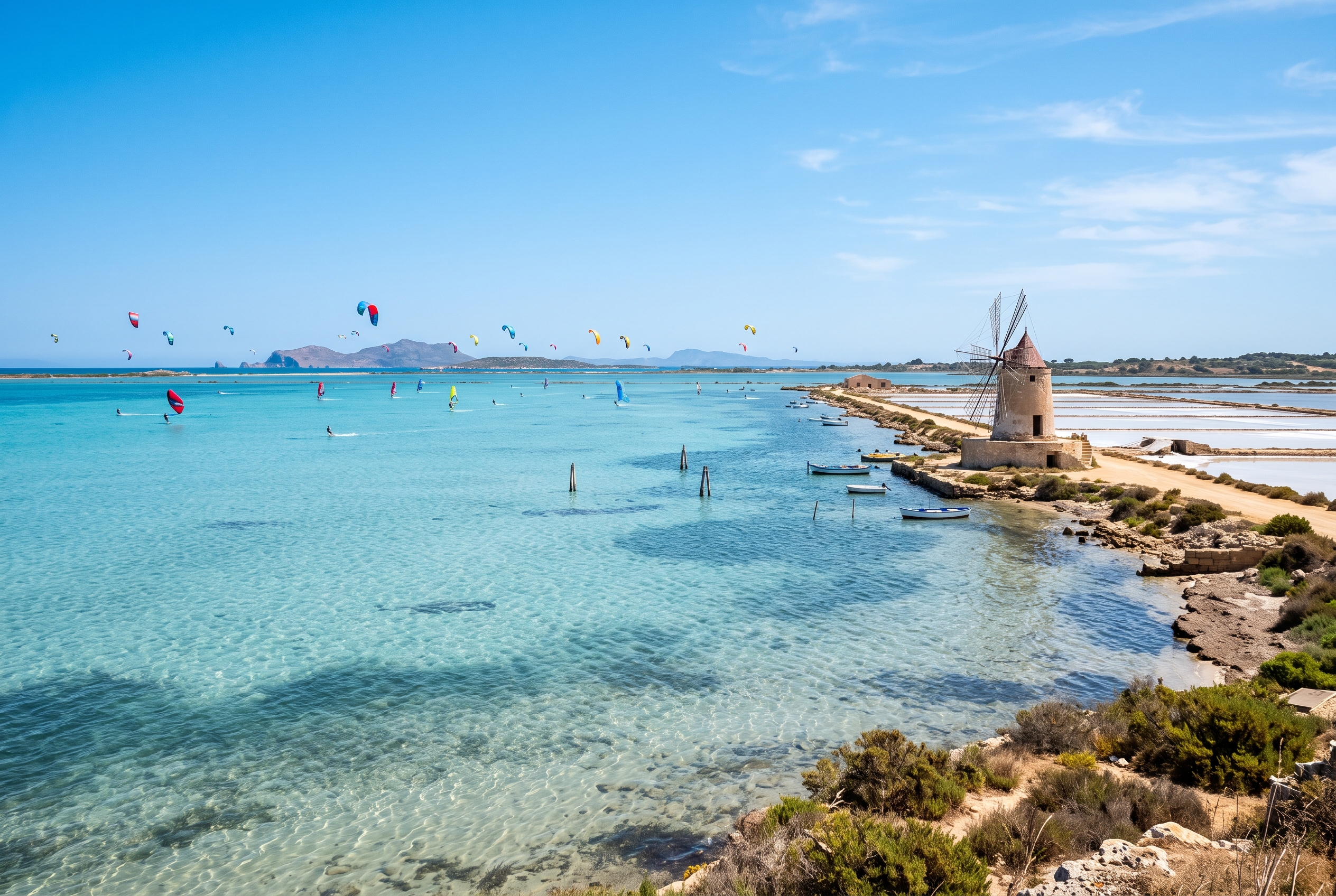
Ask a room full of wing foilers where to learn, and someone will say “Sicily” before you finish the question. They mean Lo Stagnone – a vast, shallow lagoon tucked between Marsala and Trapani on Sicily’s western tip that has quietly become the flat-water capital of Europe. Knee-deep turquoise water that stretches for kilometres, a thermal breeze that switches on almost every summer afternoon, and a shoreline dotted with ancient stone windmills and gleaming white salt pans. It is, frankly, a slightly unfair amount of perfect packed into one place.
What makes Lo Stagnone special is that it forgives. The water is so shallow across most of the lagoon that when you fall – and as a beginner you will fall – you simply stand up, sort yourself out, and go again. Add warm Mediterranean water, more than 300 windy days a year, and one of the highest concentrations of wing and kite schools on the planet, and you have a place that suits a nervous first-timer and a freestyle obsessive equally well. Here is everything you need to plan a trip.
Wing Foiling Conditions
Wind Patterns and Seasonality
Lo Stagnone runs on a thermal engine. As the Sicilian sun heats the land through the morning, a sea breeze fills in across the lagoon, typically building from late morning, peaking through the afternoon, and easing off towards sunset – a daily rhythm you can almost set your watch by in high summer. Through June, July and August those thermals usually blow a friendly 15 to 20-plus knots, which is the sweet spot for wing foiling: gentle enough that beginners are not overpowered, yet enough to fly a range of wing sizes as you progress.
The wider season stretches from around mid-March to the end of October, and locals will tell you there is rideable wind on something like 300 days a year. Spring and autumn are the stronger, gustier shoulders – you will see days pushing 30 knots and beyond – while summer is the most consistent and beginner-friendly. One quirk worth knowing: the local municipality bans schools from running lessons once the wind tops 25 knots, which tells you both how seriously the safety culture is taken and how rarely summer days blow out that hard.
Water Conditions
This is the headline act. The Stagnone lagoon is roughly seven kilometres long and three wide, and for most of that expanse the depth never exceeds one to one-and-a-half metres – ankle to waist-deep across huge stretches, deepening only as you head toward the southern end. The water is dead flat, sheltered from open-sea swell by the long barrier of Isola Lunga, so there is nothing to bounce you around while you are learning to balance on foil. It is the closest thing to riding on a giant, warm, salty practice pool that nature offers.
Temperatures are kind, too. Spring water sits around 18 to 25°C, and by summer it often climbs above 25°C – warm enough that plenty of riders go out in just a shorty or boardshorts. Come the cooler months it can drop toward 15°C, so a full wetsuit earns its place in spring and autumn. Bring booties regardless: parts of the lagoon bed are firm and walkable but others hide seagrass and the odd rock.
Best Spots for Different Skill Levels
Beginners have it made: the broad, shallow shelf along the eastern (mainland) shore near the kite village is where most schools set up, because you can wade out, water-start, and stay standing for almost the entire session. Improvers can range further out into the lagoon to find cleaner, steadier wind and more room to practise transitions and first foiling runs without an audience. Advanced riders chase the windier corners and the stronger spring and autumn days, working on jibes, tacks and freestyle on water that stays glassy even when it is honking. Because the whole lagoon is so forgiving, the progression from “swimming a lot” to “linking runs” happens noticeably faster here than at a choppy ocean spot.
Local Wing Foiling Scene
Wing Foiling Schools and Lessons
Few places on earth pack as many wind-sport schools into one shoreline as Lo Stagnone. The lagoon’s “kite village” is a continuous strip of centres, many of which run dedicated wing foiling programmes alongside their kite courses. Established names you will come across include ProKite Alby Rondina, the Duotone Pro Center (ION Club), F-One’s Sicily centre, KBC Sicily and Jamakite, among many others. Lessons are typically taught in shallow water where the instructor can stand beside you, which is exactly why complete beginners progress so quickly. If you have never touched a wing, budget two to three days of lessons to be riding around; if you can already fly a wing on a board, a foil-specific session or two is usually enough to get you up on the hydrofoil.
Gear Rentals
Because the centres are so well stocked, you can fly to Sicily with hand luggage and rent everything – wing, foil board and foil – once you arrive. Most schools offer hourly, daily and weekly rental, and many bundle storage, rinse-down and a safety boat into the deal. That is a genuine advantage of Lo Stagnone over more remote spots: you can demo this season’s wings and different foil sizes back to back without lugging a board bag across Europe. If you are travelling specifically to learn, renting also means you are not committing to gear before you know what suits you.
Local Clubs and Community
The scene here is international and friendly. In season the kite village hums with riders from across Europe, instructors switching effortlessly between English, Italian, German and French, and the easy camaraderie that flat-water spots tend to breed. Many centres double as accommodation and restaurants, so the social side – sunset beers watching the last riders come in, swapping notes on wing sizes – is built into the day. It is the kind of place where you arrive solo and leave with a WhatsApp group of foiling friends.
Off the Water
Cultural Attractions
The Stagnone is a nature reserve with serious history layered around it. A short boat shuttle from the lagoon shore lands you on the island of Mozia (San Pantaleo), once a thriving Phoenician city and now an open-air archaeological park complete with ancient walls, a sacred tophet, and the Whitaker Museum – home to the famous “Giovinetto di Mozia,” a marble youth carved in the 5th century BC. The crossing takes only 10 to 15 minutes but transports you a couple of thousand years. Inland, about an hour away, the medieval hilltop town of Erice rewards the drive with cobbled lanes, Norman walls and the Castello di Venere perched over sweeping views of western Sicily.
Dining Recommendations
You will eat extremely well. This corner of Sicily is famous for Trapani-style couscous – a fish-broth version that reflects the area’s North African ties – alongside the freshest seafood, sun-ripened tomatoes and, of course, Marsala’s own fortified wine. Save room for cannoli and a granita with brioche for breakfast. Many of the lagoon-side centres run their own kitchens, so a long lunch between sessions is easy, but it is worth heading into Marsala or Trapani for a proper evening out.
Nightlife and Entertainment
This is not a party-resort destination, and most riders would not want it to be – the rhythm here is early dinners, lagoon-side aperitivos and the kind of relaxed evenings that pair with dawn-patrol wind checks. Marsala’s historic centre has wine bars and easy restaurants for a livelier night, and the famous Marsala wine cellars offer tastings if you want to understand what the town built its name on. But the real after-dark event is the sky over the salt pans.
Nature Activities and Sightseeing
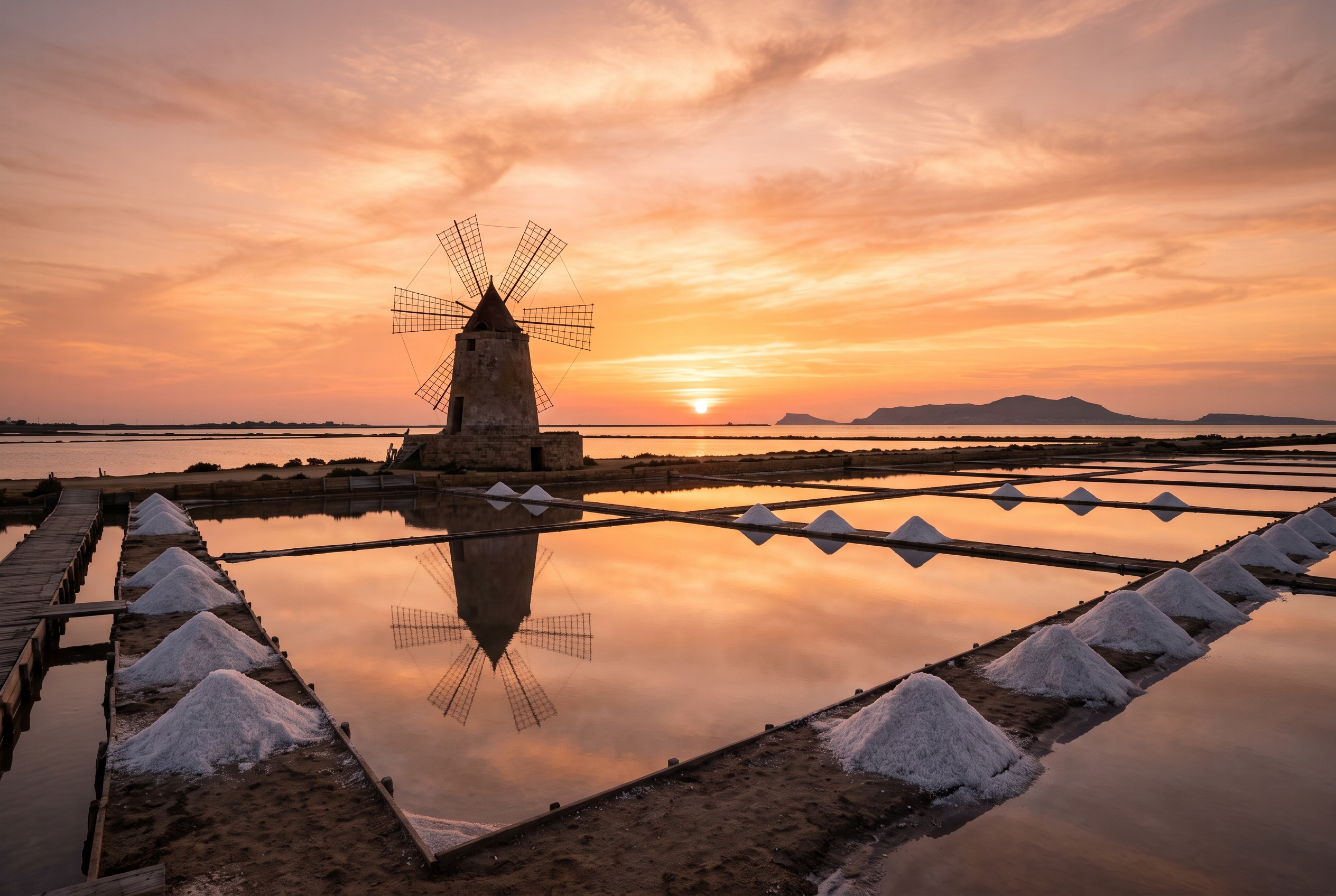
The Saline dello Stagnone – the working salt pans that ring the lagoon – are a spectacle in their own right, with restored windmills that once pumped water and ground salt now standing as photogenic monuments to the trade. At sunset the shallow pools turn molten orange and the windmill silhouettes reflect in perfectly still water; it is one of the most photographed scenes in Sicily for good reason. The reserve is also a haven for birdlife: flamingos gather here in late summer and autumn, joining herons and the occasional stork. For a bigger day out, the Egadi Islands – Favignana and its neighbours – are a short ferry from Trapani.
Practical Travel Information
How to Get There
Getting to the lagoon is refreshingly painless. The closest airport is Trapani–Birgi (TPS), barely six kilometres – about a ten-minute drive – from the kite village; a taxi or pre-booked transfer runs around €20. Palermo (PMO) is the bigger international gateway, roughly 90 kilometres and an hour away, with private transfers in the €70–100 range or a budget-friendly Salemi Lines bus toward Trapani for around €9. Catania, on the far east coast, is a last resort at three-plus hours by road. Renting a car is well worth it if you want to explore Erice, the Egadi ferries and Marsala on your down days.
Where to Stay
You can stay right on the lagoon or base yourself in town. Several centres offer on-site rooms and apartments – the most convenient option if you want to roll out of bed and onto the water – while campsites such as Lilybeo Village in Marsala and others near the spot suit budget travellers and van-lifers. For more variety in restaurants and a bit of evening buzz, Marsala and Trapani both have a good spread of hotels, B&Bs and self-catering apartments a short drive from the lagoon. Book early for July and August, when the kite village fills up.
Best Time to Visit
For the classic Lo Stagnone experience – warm water, reliable afternoon thermals and the full kite-village atmosphere – aim for May to September, with June to August the most dependable for steady, beginner-friendly wind. The shoulder months of April and October bring stronger, more varied conditions, cooler water and noticeably fewer crowds, which suits improvers and anyone who prefers a quieter scene. Outside that window the schools wind down and the wind turns less predictable.
Budget Estimates
Lo Stagnone sits in the mid-range for a European foiling trip – not as pricey as the marquee spots, and the airport-to-lagoon logistics are cheap. Your biggest variables are lessons and gear rental (booked by the hour, day or week, so a focused few days keeps costs down) and accommodation, which spans budget campsites through to comfortable lagoon-side apartments. Eating is excellent value by Western European standards, and short transfers mean you are not bleeding money on taxis. As a rough shape: keep it lean with a campsite, self-catering and a couple of rental days, or spread out with on-site rooms, a full lesson package and long Sicilian lunches.
Wrapping Up
If you are learning to wing foil, or you just want to rack up clean, low-consequence miles on glassy water, it is hard to argue with Lo Stagnone. The combination of shallow flat water, dependable summer thermals, warm seas, an unrivalled density of schools and a side order of salt pans, Phoenician ruins and Sicilian food makes it one of the most complete destinations in the sport – and one of the few where a total beginner and a seasoned freerider can have an equally brilliant week.
Planning a wider Mediterranean trip? Compare it with the alpine thermals of Lake Garda, the breezes of Sardinia, or Europe’s wind mecca at Tarifa. New to the sport? Start with our complete beginner’s guide to wing foiling, and dial in your kit with the free wing foil calculator before you go.
Frequently asked questions
When is the best time to wing foil at Lo Stagnone?
The season runs from about mid-March to the end of October. June to August is the most reliable, with daily afternoon thermal winds of 15–20+ knots and the warmest water, while spring and autumn bring stronger, gustier conditions and fewer crowds.
Is Lo Stagnone good for beginners?
Yes, it is one of the best beginner wing foiling spots in the world. The lagoon is ankle-to-waist deep and dead flat across most of its 7km expanse, so you can stand up after every fall, and dozens of schools teach in the shallows where the instructor stands beside you.
How much wind does Lo Stagnone get?
It is windy on around 300 days a year. Summer thermals typically blow 15–20+ knots, building through the morning and peaking in the afternoon, while spring and autumn can push past 30 knots. Schools stop lessons once the wind exceeds 25 knots.
How warm is the water and do I need a wetsuit?
Water is about 18–25°C in spring and often above 25°C in summer, warm enough for a shorty or just boardshorts in peak season. In the cooler shoulder months it can drop toward 15°C, so pack a full wetsuit for spring and autumn.
How do I get to Lo Stagnone?
The closest airport is Trapani–Birgi (TPS), about 6km (10 minutes) away with a taxi around €20. Palermo airport is roughly 90km (one hour), with transfers around €70–100 or a Salemi Lines bus for about €9. A hire car helps for exploring Marsala, Erice and the Egadi Islands.
